Category: Civilizational Fault Line

  • Mythology Among the Hebrews: The Nocturnal Baseline vs. The Solar Enclosure

    Reading Time: 9 minutes

    1. Mythology Among the Hebrews and its Historical Development Ignác Goldziher and Heymann Steinthal

    Goldziher begins by saying that there are two successive stages in the development of mankind: Nomadic and Agricultural.

    “In the former commences the chain of development, which is closed by the formation of perfect true society. First are formed communities, which though still standing only on the base of the family, yet represent a broadening of this base insofar as the notion of the family is first enlarged into the institution of a tribe and then this institution cannot always refuse to take in foreign elements.”

    The Nomadic Period in the Development of Mankind

    Political division into tribes is an important characteristic of the nomadic period but many civilized nations retain tribal divisions. The people have a “consciousness of belonging to one another”. Their names retain evidence of this heritage. This is evidence of their nomadic history.

    “The Kirdic nomadic tribes still call themselves Kötsher, or wandering. The name of the Zulus means ‘homeless‘ or ‘roaming’. This is also the meaning of the name of the Zûzȋm, the Canaanite aborigines, as well as the Canaanite Perizzî.”

    The Egyptians gave the name ‘Put’ to the many nomadic tribes that came into their country. The Egyptians also called them the ‘Runners’ and represented them in the hieroglyphs as a hare. The name of the Hebrews, Ibhrim, means the nomads, ‘for the word ‘ȃbhar means to pass through a land, or to cross a river, but also to wander about in general.’

    The Nomad’s Search for Pasture and Water

    “The nomad’s purpose in wandering is to find pasture for his herds– “green pastures beside still waters” (Psalms 23:2).” So the nomad sees cloudy skies as friendly. The fierce heat of the sun is experienced as an enemy. For this reason, cloudy heaven is personified in the myths of the nomads in the role of the conqueror. The nightly heaven defeated by the day is portrayed as a tragic figure and lamented. A nomad begins a journey in the afternoon and continues it during the night. If he travels at all by day it will be under the cover of clouds.

    The Day Begins at Night

    The Arabs tell the distance of a journey by the number of nights it will take to arrive at the destination.

    “Between Damascus and the place where Walid b. Yazid lived in the desert are four nights.” (Kitab al-aghani)

    It is this mode of counting time that holds to nomadic ideas long after a people have become agricultural. Julius Caesar said that the Gauls counted by nights, not by days. Tacitus said the same of the ancient Germans. For both Arabs and Hebrews, the day actually begins with evening.

    In the Korân and in the poetry of the Bedawi there are allusions to the starry heaven. The caravan songs refer to night-traveling.

    O how journey we, while dew is scattered out
    and desert-dust bedecks the lips of sumpter beasts.
    O how journey we, while townsmen sleep
    With limbs involved in coverlets… (as quoted by Wetzstein)

    Names of Nomads and City-dwellers

    The nomadic Arabs might call themselves ‘Star’s daughter’; Banû Badr, ‘Sons of the Full Moon’; or Banû Hilâl ‘Sons of the New Moon’. The Banû Temîm, Banû Ḍabbâ, and Banû Azd called themselves ‘Sons of Night’, (Banû Ṣarîm). But the townsman of Mecca called himself ‘child of the Sun’. Darkness, storm, wind and rain are his enemies.

    An old Hellenic name of the sun is Zeus Talaios, Tallaios, or simply Talos because he encourages growth. Clouds and rain are connected with Zeus Talaios when they are beneficial to the crops. For this reason, Zeus also becomes the Thunderer and Rain-giver.

    The division between solar ideas and the preference for the night sky is not always clear-cut, and nomadic tribes might receive elements of sun worship from townsmen. But according to Goldziher, sun worship always follows the worship of the night sky, never precedes it. (But in the Assyrian language, ‘Ibhrîm’ corresponds to a verb for the sun. I-bar-ru-u kib-ra-a-ti ‘marches, wanders through the lands.‘ This seems contradictory in my opinion.)

    The Nomad’s Sense of Superiority to the Agriculturalists and Townsmen

    Nomads often cherish a sense of nobility and feel superior to the agriculturalist bound to the earth, and so when a nomadic society begins to settle down they don’t always think of it as an advance. Arabian historian Ibn Chaldûn glorified nomadism against the life of the townsmen. He thought the nomadic stage was a simpler and more uniform stage and surpassed city life in nobility and purity.

    Muhammed said, ‘The Divine Glory (al-sakînat=shekhinȃ) is among the shepherds; vanity and impudence among the agriculturists.’

    And the Chalif ‘Omar said, “Learn your genealogies and be not as the Nabateans of al-Sawȃd; if you ask one of them where he comes from he says he is from this or that town.”

    The Changing Relation to Nature

    A nation’s relation to external nature changes when it passes from a hunting life to nomadism, or from nomadism to an agricultural life. Religion eventually drives the myths out, although they may live on in legends, sagas and fables. Monotheism was the first force to deny mythic elements in religion. According to Goldziher, this happened to the Hebrews with the development of Jahveism.

    Heroes, Patriarchs, and the National Idea

    With the development of the national idea, the Hebrew myths became patriarchs, while the myths of the Hellenes became “Gods and god-born Heroes”. It is possible that the Canaanite influence and the monotheistic tendency discouraged the development of a consistent theology from Hebrew mythology, but the Hebrews did have a memory of Heroic figures. Their heroic age took place between the entrance into Canaan and the time of the Monarchy.

    Heroes originally belonged to mythology, rather than theology. They were gigantic characters with no definite time or place. Heroes were localized over time and given a time and chronological framework. They are used to inspire patriotic feeling and so we find their stories at the beginning of national history. Theseus and Herakles were Greek patriots.

    The function and meaning of certain mythological figures change in the process of development. In Hesiod’s Theogony for example, the dominion of Uranus came before the dominion of Zeus. For Goldziher this indicates that before the Hellenic people embarked on a settled agricultural life, and brought Zeus, the bright sunny heaven, into the foreground, the center of their world was Uranus (Varuna), the gloomy overclouded sky. This points to the supremacy of the Night.

    Chaos, Darkness, and the Underworld

    In Hesiod’s theogony, Chaos is one of the powers preceding the rule of Zeus. Chaos signified darkness in general and Tartarus, ‘a gloomy pit never lighted by the sun’. But later the theological meaning of Tartarus becomes the subterranean place to which the souls of the dead go.

    Also, the word laylâ merely means ‘night‘. However, Job 36:20 uses the word in the sense of ‘nether world’.

    “Salmâweth also means ‘darkness’ in general. But it also refers to Orcus, god of the underworld and punisher of broken oaths.

    In mythology Tartarus is father of Typhon and Echidna, and Nyx. This is consistent with the nomadic idea that Tartarus is ‘father of waters and springs,’ and also ‘the first born’.

    The Myth of Civilization

    All agricultural societies have a myth of civilization, which is a sequence of the solar myth. The nomad has no permanent social system; laws and social order are irrelevant. Arts and manufacturing are inconceivable. He has no need for anything but his tents, herds and pasture ground.

    But the myths of the agriculturist speak of the bringer of arts and manufacturing, social order and law, and this is always a solar figure. The musician and smith are solar figures. So is the navigator and founder of cities. Apollo and Osiris were both inventors of agriculture and teachers of the arts. The Hellenes thought the agricultural life was the only morally perfect condition. And Roman poets in times of military conflict regarded peaceful agriculture as the happy state of the innocence of primeval mankind.

    On the other hand, the Voguls, who were hunters and fishermen, consider Kulyater, the builder of the first city, to be evil.

    “(Kulyater) dwelt in a house locked with seven iron locks. Tarom was angry with him, and seized him by one foot and he fell into the heart of the foaming sea.”

    The Persian Jemshîd is a solar hero. He is the builder of cities, the inventor of fine arts, and the cultivator of the vine. According to Goldziher, he was the Iranian Noah. He divided the nation into four classes: Scribes, Warriors, Agriculturists and Artists. There is no mention of the pastoral life in this division; only agriculture. In other words, Jemshîd put an end to nomadic tribal life.

    But like Prometheus, the god hurls Jemshîd down for his presumption. This came about because Zohak, ‘from whose shoulders dragons grow up’ conquered him. Jemshîd landed on the shore of China after a fall of 100 years, where he was devoured by the monster waiting for him at the bottom of the sea. However, Jemshîd rose again out of the sea, like Jonah.

    According to Goldziher, Zohak’s dragons are the dragons of storm and night. The sun is always at war with the storm and the night sky. In many cultures, it is the moon who weakens the sun and brings the flood.

    The Hebrew Myth of Civilization

    It is remarkable that in the biblical creation story the sun is the father of the human race. The Arabs call Adam Abû-l-bashar, ‘father of all flesh’. Adam’s name signifies ‘the Red’, which is etymologically the same as Edôm. If we accept the second chapter of Genesis at face value, the nomadic Hebrews have the same parentage as the Greeks, who called the mother of mankind Pyrrha, ‘the Red’.

    And the solar lineage continues, uninterrupted, in Cain. The posterity of Seth simply repeats the names of Cain’s descendants. Seth was not part of the original myth.

    Cain (Kayin) the Inventor of Agricultural Implements

    Cain is Kayin, the inventor of agricultural implements. This creates a problem under Goldziher’s system of interpretation. The killing of Abel appears to be a primitive nomadic idea. In other words, part of the war between the sun and the cloud. But crafts or manufacture would have to be a part of the culture before an artisan or blacksmith figure can be given a part in a people’s myths and the arts. Goldziher proposes that a solar figure would have been the murderer in the primitive myth as well, but he did not receive the name of Kayin until the stage of civilization.2

    Noah, the Second Father of the Human Race

    Noah, the second father of the human race, was a solar figure as well.

    De Vaux interprets the story of Cain (Genesis 4: 11-16) as the Hebrew condemnation of nomadism, arguing that wandering was imposed on him as a curse. But according to Goldziher, the Hebrew conception of the world glorifies the Nomadic life. The Hebrews thought God imposed the curse of agriculture on fallen humanity. Arab nomads agree on this point and include manufacturing and the arts in the same category.

    The Meaning of Cain

    Goldziher was aware of the confusion concerning the identification of mythical figures and thought this disagreement may have been the result of an error in the writings of Philo Herennius, who used Greek cosmogony to interpret the Phoenician myth of civilization. In Goldziher’s description of the Phoenician myth, Chrysoros was the Opener, Navigator, and Smith, a Solar character, and was the progenitor of Aypos or Ayporfs and Aypvrjpos… ‘From them are derived the agriculturists and those who hunt with dogs. These later are called Wanderers to and fro.’ It is possible that because the sons of Chrysoros were described as hunters and wanderers, hunting and the nomadic life were confused with the origin of agriculture.

    “Now hunter and wanderer and as we have seen, are attributes of the Sun, who shoots his rays at the monster of the storm, and is ‘a fugitive and a vagabond,’ engaged in a migration from east to west.”
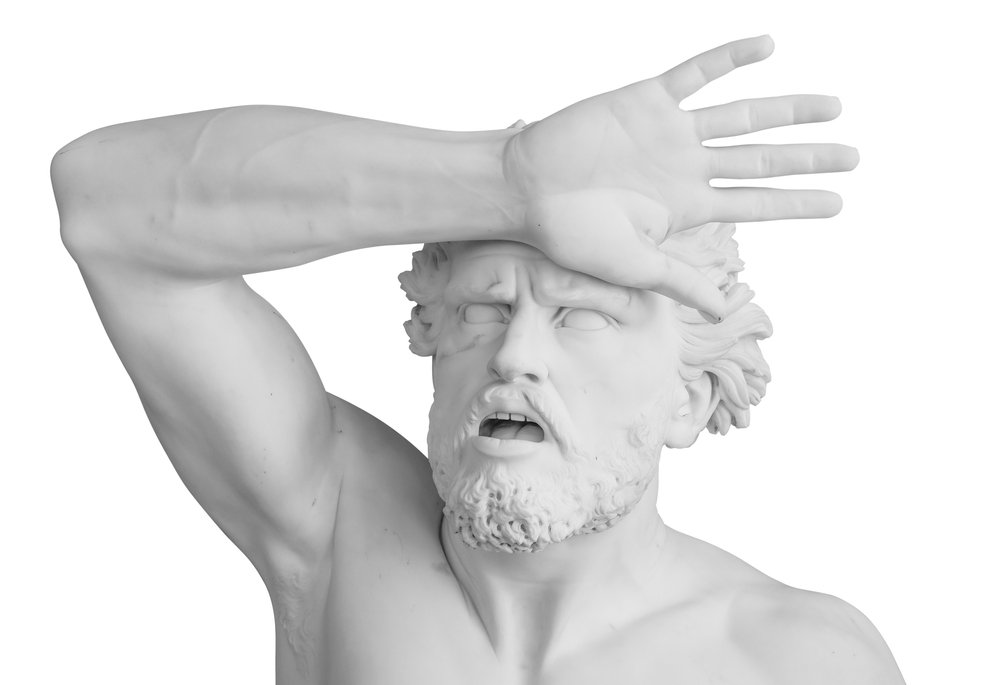
    Cain was a hunter and a wanderer, but not a nomad. 

    The authors:

    Ignác Goldziher

    Ignác Goldziher (1850-1921) was born in Székesfehérvár, Hungary. In 1868 while attending university in Pest he was awarded a fellowship by the minister of religion and education, Józsf Eötyös, to study abroad. In Berlin one of his professors was Heymann Steinthal, co-author of “Mythology Among the Hebrews”.

    Goldziher toured the Middle East between September 1873 and April 1874, where he was the first European to attend lectures at Al-Azhar Theological University in Cairo. While there he formed a friendship with the leader of Pan-Islamism, Jamāl al-Dīn al-Afghānī. Today he is best noted for his work on modern Islamic scholarship. His bibliography was compiled by Bernát Heller in 1927.

    “Mythology Among the Hebrews” published in English in 1887, was the first of two major Jewish works. In this book he refuted the thesis of French scholar Ernest Rénan, who denied the existence of Hebrew mythology.3

    Heymann Steinthall

    Heymann Steinthal (1823-1899) was a German philologist and philosopher. He studied at the university of Berlin, and in 1850 was appointed Privatdozent of philology and mythology. In 1863 he was appointed assistant professor at the Berlin University. From 1872 he was also privatdozent (unpaid lecturer) in critical history of the Old Testament and in religious philosophy at the Hochschule für die Wissenschaft des Judenthums. Steinthal and his brother-in-law, Moritz Lazarus, established the society for the new science of folk psychology in 1860.4

    The Problem of Unity

    Goldziher uses Steinthal’s and Lazarus’s theory of ‘folk psychology’ to interpret mythology and to explain differences in customs and the process of change from one mode of existence to another; from nomadic life to agricultural life in this case. The influence of Steinthal and Lazarus places the conversation about nomadism in the context of Europe’s pre-World War II conversation about the problem of unity in a nation of diverse people. Steinthal and Lazarus, were ‘emancipated’ Jewish intellectuals, and believed in the superiority of the ‘German spirit’ as expressed in philosophy, science and literature. They saw themselves working toward a unified German nation.

    The main criticism of their theory concerned the contradiction between the idea of a unique Jewish identity, and the idea of the German national spirit. The Jews, they claimed, were not a nation but a confession within the German nation and could serve the nation best if they kept their unique character. According to some of their peers, this was not consistent with the idea of a ‘harmonious Volksgeist’, the centerpiece of folk psychology. In spite of the theory’s critics, folk psychology made a contribution to the social sciences when its key concepts were used by scholars such as Georg Simmel and Franz Boas.5

    Sources and Recommended Reading:

    For further study on this topic, I highly recommend reading Mythology Among the Hebrews and its Historical Development by Ignác Goldziher. It provides invaluable depth to the historical and structural concepts discussed in this piece.

    You can find a copy of the text directly through my booklist here: [Mythology among the Hebrews and Its Historical Development a book by Ignác Goldziher – Bookshop.org US

    Note: By purchasing books through this link, you directly support local, independent bookstores. This publication also receives a small commission at no additional cost to you, helping to fund the upkeep and research of this ad-free blog.
  • The Shadow Gatekeepers: Food Shortages, Parallel Enforcement, and the Rise of Street Feudalism

    Reading Time: 4 minutes

    1. The Shadow Gatekeepers: Food Shortages, Parallel Enforcement, and the Rise of Street Feudalism

    We previously discussed what a worst-case scenario might look like. That article painted a grim picture, but there was a good reason for it. If we are going to prepare, we must know what we are preparing for. However, we didn’t discuss the slower processes that are usually involved in the breakdown of society. As we lay out in our Master Directory, The Corporate Enclosure of Reality: The Thousand-Year Pipeline of the State Spreadsheet, the overseers of these processes are the shadow gatekeepers. Their presence is manifest in food shortages, parallel enforcement, false-friend media personalities, and street feudalism.

    The Roman Empire experienced a low-burn social decay driven by resource scarcity. The fall of the Roman Empire was an institutional collapse. In this type of collapse, the macro-institutions of the state do not vanish instantly; they rot from within. Of course, this process is not limited to ancient history but there is a difference in the modern world’s timeframe. We don’t have the resource cushion of ancient Rome.

    Today, a slow-burn social decay can play out long before a sudden digital grid failure; we are in the midst of such decay and it is not limited to Washington. Trends through the fall of 2026 include the combination of a global super El Niño, which threatens agricultural production. El Niño is a weather pattern that suppresses water tables. As a result, scarcity is already impacting the social baseline. Although the majority still have enough food, it’s getting to the point where basic resources must either be rationed or become very expensive. Under these conditions, the social architecture fractures along three distinct fault lines.

    Where Are We in This Process?

    Similar conditions can be seen today, but again, without the resource cushion that Rome’s system enjoyed. Adequate food and water are indispensable to the maintenance of good governance and shortages inevitably lead to certain characteristic behaviors.

    • The Present Reality: Currently, a multi-year degradation is actively unfolding across our communities although everything appears normal for the majority. The high-altitude spreadsheet is still running, the power lines are humming, and the store shelves are not completely empty. However, the structural water tables are dropping, and food inflation is relentlessly hyper-inflating.

    • Do We Have Time? Yes, we do. This is not a false hope; it is a cold, strategic fact. The Active Slow-Burn is the window of opportunity. Because the terminal grid hasn’t snapped yet, the remnants possess a vital, high-utility buffer to step onto the physical environment, secure their analog backups, and build their horizontal networks before the panic turns raw.

    • The 72-Hour Terminal Shock (The Future Snap): This is the ultimate endpoint we analyzed in Part 2. Because our world is hyper-interconnected, once the slow-burn rots the system’s material cushions completely to zero, any sudden multi-system shock (like a coordinated cyber-strike or a total liquidity failure) will compress the remaining architecture instantly into a 72-hour terminal collapse.

    2. The Rise of Parallel Feudal Gatekeepers

    When a city council, a county water board, or local utilities fail to provide basic protection or fair resource distribution, a security vacuum materializes on the ground.

    • The Gang as Proto-State: Organized street gangs or weaponized neighborhood networks step directly into that vacuum. They do not call themselves criminals; they pose as a shadow government.
    • The Protection Racket: These gangs offer to provide physical safety to local storekeepers and families in exchange for explicit allegiance, resources, or cash tokens. If you refuse, you become an immediate target for extortion and theft.

    3. The Weaponization of Strategic Scarcity

    In a slow-burn collapse, food and water do not completely vanish overnight. Instead, they become geofenced tools of control.

    • The Resource Chokehold: Local managers, corrupt bureaucrats, or dominant street networks take physical control of localized water distribution nodes, public cisterns, and grocery supply trucks.
    • Engineered Compliance: They utilize this control to manufacture artificial scarcity. For example, they might reward compliant sub-populations with adequate nourishment and cut out independent neighborhoods or rival families who won’t submit to their demands.

    4. The Collapse of Universal Guardianship

    As a neighborhood’s economic well-being declines, traditional community institutions (like family units, churches, and local schools) undergo systemic disruption.

    • The Loss of Supervision: When parents are forced to spend 14 hours a day simply standing in resource lines or hunting for survival otions, informal supervision over youth vanishes completely.
    • The Pipeline of Enforcement: Deprived urban areas and social housing sectors rapidly transform into crime-prone environments. The local gang becomes the primary source of economic survival and social identity for the younger generation. This erases the traditional horizontal lineage of the family.

    5. The Seduction of the Controlled Alternative: The Screen-Dependent Trap

    Beyond the physical enforcement grids of corrupt local bureaucrats and street-level protection rackets, the most insidious gatekeepers of the modern era operate entirely through the digital glass. These are the fake-sincere alternative media operations—the slick YouTube channels, newly reformed broadcast celebrities, and high-production political commentators who suddenly claim to be on your side. Their determination to mislead and distract is particularly surprising outside of an election cycle.

    • The Forte of Mimicry: Mimicry of the language of the frontier is their forte. This gives them the ability to echo your deep anxieties about supply chain fragility, institutional corruption, and civilizational rot.
    • The Compliance Hook: And all the while, their compliance mechanism is nothing but a trap. It harvests white-hot public outrage to ensure you remain an anxious, immobilized consumer, glued to a screen rather than driving physical analog stakes into your local soil.

    The Inversion of the Watchman

    These smooth, market-tested operators function as a psychological containment network for public anger. The content is meant to keep their audiences locked into a perpetual, retroactive loop. It includes earnest debates about past institutional betrayals and a fascination with the sudden pivot of media magnates and self-appointed political populists. This is merely the emotional illusion of resistance; it is really aimed at soothing a passive, dependent audience.

    The Fruit of the Media Cage

    The media cage hooks your attention with white-hot outrage, only to leave you sitting alone in the dark—anxious, immobilized, and completely dependent on their next daily broadcast slot. They do not want you to build an independent community; they want you to subscribe to their alternative channel.


  • The Fragile Grid: Just-in-Time Amnesia and the Exodus Code of the Tens

    Reading Time: 6 minutes

    I. The Anatomy of a Modern Centralized Collapse

    As we continue to reveal the financial machinery of empires and their methods of control, the underlying anxiety of a looming collapse can make concentration difficult. Knowing how to prepare for collapse is the best way to reduce that anxiety. We start with the question of what a collapse might look like. This article will take a realistic look at our fragile grid, our just-in-time supply chain, and the question of how to organize an anxious, confused population. It’s easy to take the grid for granted when it’s working so, it’s important to understand its fragility. Then we look at the worst-case scenario. We should prepare for that, hoping that it won’t be that bad. We also have to address the question of how to organize our personal networks and keep track of everyone’s needs. That’s where the Exodus code of the tens comes in.

    Ancient catastrophes, like the fall of Rome could last for centuries. But ours will be sudden and explosive. The modern world is completely enclosed in a digital, interconnected spreadsheet. Under these conditions, a cascading multi-system failure is the worst possible scenario. In a society with no built-in lag time, the full effects of a collapse would be upon us in 72 hours.

    The Stages of Collapse

    • The Phase 1 Friction (The Digital Blackout):

    • For us, the ultimate failure point is not the sword; it’s the electronic ledger. The reality of the United States is an empire entangled in over-extended international conflicts. They put extreme pressure on the system, leaving no social or material cushion for a massive, coordinated cyber-strike or systemic infrastructure failure. Once the digital tracking networks are blinded, the online banking systems would freeze, the automated logistics registries would glitch, bank cards, credit cards and digital wallets would be useless.
    • The Phase 2 Enclosure (The Just-In-Time Break):

    • Modern society is conditioned to survive on a ‘Just-In-Time’ supply chain. This means that important retail networks carry less than a three-day buffer. In the event of a digital blackout, physical trucks will stop making deliveries of goods. Grocery distribution networks, pharmaceutical supply lines, and fuel depots will soon have nothing to deliver. High altitude cities like New York, Chicago or downtown Phoenix will be especially affected.
    • The Phase 3 Reaction (The Mean Enforcement):

    • The central government will panic in the face of this sudden chaos and resort to brutal methods of control. Repairing horizontal baseline communities will be the last thing on the agenda. Its compliance edicts will be desperate, erratic and enacted top-down. Curfews and digital rationing systems (Emergency Command Architecture) will forcefully continue the government’s central control.

    [THE LIQUIDITY SHUTDOWN] ──> Digital banking ledgers freeze ──> Transactional tokens lose meaning.
    │
    [THE JUST-IN-TIME FRACTURE] <── Supply-Chain Logistics Registry Snaps ─────────────┘
    (Trucks halt; food & water security collapses)
    │
    [THE REACTIONARY ENCLOSURE] ──> High-altitude cities panic; the state deploys desperate, mean enforcement.

    II. Terms

    High Altitude Cities:

    The term ‘high-altitude’ is both a physical and metaphysical description. In a city where humans live and work hundreds of feet in the air, people are completely detached from the soil. Because their food and water supply relies on continuous power grids, they represent the height of material dependency. To complicate matters, these buildings are largely inhabited by the technocratic class, accustomed to thinking of the population as data units rather than horizontal kin. They will escape those sterile buildings in search of shelter and sustenance.

    Emergency Command Architecture: 

    This is a pre-engineered digital system designed for emergency compliance and does not operate on commercial credit cards or cash. When the Just-in-Time logistics grid breaks down and commercial banking ledgers freeze, the managers will pivot to the Emergency Command Architecture waiting in their backup servers. FedNow, CBDCs, and Emergency Apps are this secondary ledger deployed through a centralized, state-controlled digital network. FedNow and CBDCs are software can. They can be pushed to your smartphone via emergency management apps.

    Tokens:

    The managers will load digital tokens into your account with an algorithmic script. This script will ration the goods you are allowed to have. This will limit your fuel per week, pounds of groceries, and the distance you may travel from your home. Your geographic boundary radius will be locked by your phone’s GPS tracking filter.

    The Exodus Code of Tens:

    This refers to the instructions Moses received from his father-in-law to carry the workload without falling apart himself. See the heading below: The Exodus Code of the Tens.

    III. Preparation

    • Anchor Physical Life Support Systems:

    • We begin by returning our understanding of normalcy to the horizontal baseline of human existence. The first considerations are physical life-support; clean water, storable food, medical supplies, and non-grid energy sources.
    • Build A Library:

    • Printed books on toolmaking, agricultural techniques, energy sources and the scriptures. Humans used to depend on this knowledge to survive, but we have been trained to forget it.
    • Horizontal Fellowship:

    • It’s crucial to learn to sit down face-to-face with our neighbors. Mutual aid networks and bartering lines are a collective shield and must be protected by vows of security. The next section will provide details on how to accomplish this.

    The Exodus Code of the Tens

    We already have a pattern for this type of organization in the Old Testament. When the camp of Moses and the Israelites was at the mountain of God, Moses’s father-in-law, Jethro, sent word that he was coming to visit. The day after he arrived at the camp, Jethro observed Moses sitting from morning to evening in judgment for the people. Jethro asked Moses about this business he was conducting and Moses answered:

    The people come to me to consult God. Whenever they have a disagreement, they come to me to have me settle the matter between them and make known to them God’s statutes and instructions.

    Jethro warned him that it was not wise to work like this day after day; he would wear himself out.

    The task is too heavy for you; you cannot do it alone, Now, listen to me, and I will give you some advice, and may God be with you. Act as the people’s representative before God, and bring their disputes to God. Enlighten them in regard to the statutes and instructions, showing them how they are to conduct themselves and what they are to do, But you should also look among the people for able and God-fearing men, trustworthy men who hate dishonest gain, and set them over the people as commanders of thousands of hundreds, of fifties and of tens. Let these render decisions for the people in all routine cases. Every important case they should refer to you, but every lesser case they can settle themselves. Lighten your burden by letting them bear it with you!…

    This is what we recommend in the event of a collapse. It will help us survive. However, there are some potential problems that we must face honestly. The first problem would be the political hostility that had been carefully promoted and encouraged by the managers.

    Hostility of Political Divisiveness Within Neighborhoods

    The Israelites complained, but at least they had something in common: their escape from Egypt. And they all looked to Moses as their leader. Today, political factions have torn our social environment apart. We don’t have thousands of like-minded people waiting to be divided into tens, fifties, hundreds and thousands. That’s not how we should start. We start with a cell of ten. Three to four families is the ultimate protective and tactical size to begin with. It’s small enough to develop trust and accountability, and not so big that it will draw unwelcome attention. But there will be others in local populations who have no intention of joining us.

    Preparing for the Trap of Local Oppression

    There are local gatekeepers in every community. Some have connections to local, state or federal government. There is a strong possibility that any one of them could cause mischief and oppression either in their own behalf or on behalf of a sponsor.

    • Abusing the Digital Compliance Filter

    One example of oppression would be limiting digital rations according to a person’s compliance and security profile. The tokens are not actual money down in the real world. They are temporary digital credit tokens or weightless permission slips. All they do is tell the other party that a centralized financial ledger in the clouds has validated your data profile and approved your transaction for that exact second. If you personally or your cell of ten refuses to submit to their decrees, they can easily turn your tokens off from a distant office.

    • Manufacturing Scarcity 

    Local bureaucrats may claim to be rationing and distributing food and water resources fairly for security purposes. But they are really using it to intimidate the population or enrich themselves.

    The Influx of Lone Refugees

    In the worst-case-scenario, which is what we are discussing here, there will be refugees without a cell. Perhaps even you or me will be alone. That’s how we should be thinking. Ancient nomads lived this requirement of taking others in. They knew any of them could end up alone in a hostile environment and need asylum. Therefore, they always welcomed refugees.

    • When the Just-in-Time logistics grid snaps and the high-altitude cities lose food and water security within 72 hours, millions of house-trained data units will flee the urban centers in absolute panic. They will wander out into the rural frontiers and small towns looking for survival.

    The Jethro Grid Response:

    • If you have organized your baseline into decentralized tens, fifties, and hundreds, your community will possess the structural framework to absorb these refugees safely. You don’t have to let a disorganized mass overrun your soil.
    • You integrate them by assigning them straight into an existing or newly formed “cell of ten,” under a proven leader who fears God and hates dishonest gain. Then you share with them the teachings of the horizontal baseline of the land, transforming them from panicked consumers into productive guardians at the wall.

    (One last warning against the Tyranny of the Camp: We do not invoke the Jethro Principle to invite modern literalist zealots to play the dictator. The wilderness structure was a temporary, mobile wartime formation traversing hostile territories and using wells that belonged to other tribes. True horizontal sovereignty requires decentralized, face-to-face cells built on mutual aid and an absolute hatred of top-down control—completely free from the punitive mischief of self-appointed prophets.) 

    This article is Part 2 of the Civilizational Fault Line Series. Read the foundational historical analysis in Part 1: Nomads and City Dwellers: Institutions and Worldview.

  • Nomads and City Dwellers: Institutions and Worldview

    Reading Time: 12 minutes

    Ancient Israel: Its Life and Institutions, Roland de Vaux

    Roland de Vaux observes that the Bible is limited as an exhaustive ethnographic record of ancient nomadic and urban institutions. While settled sheep-breeding groups do not offer a direct parallel, nomadic Arab societies share close ancestral and institutional ties with early Israelites, allowing pre-Islamic and traditional Arab life to clarify early Israelite organization. More information is available on the source material.

    Forms of Nomadism

    Nomads and City Dwellers
    Arab Bedouins

    The True Bedouin

    The true Bedouin (man of the desert) is a camel-breeder and can survive in regions where the annual rainfall is less than 4 inches. He has very little contact with settled people.

    Nomads who Breed Sheep and Goats

    Another type of nomad breeds only sheep and goats, which are not as hardy. The animals need to drink more often and can’t survive on the rough pasture suitable for the camels. They probably live in regions that get 4-10 inches of rainfall, traveling only on routes where they can manage the distance between watering holes. As a result, they have more contact with settled people.

    Tribes who Raise Cattle (The Semi-Settled Enclosure)

    Tribes who raise cattle represent the terminal stage of frontier erosion; they are no longer true nomads. Because cattle demand continuous water and cultivated grazing lands, these groups are forced to settle in fixed locations. In addition to herding, they till the soil and construct permanent houses.

    • The Hybrid Mutation: They often develop split-frequency, hybrid existences—living part of the year in fixed settlements and part of the year moving with the herds.
    • The Origin of the Cage: This fixed, high-resource lifestyle natively breeds the earliest forms of top-down exploitation. These hybrid tribes frequently accumulate exclusive property deeds at the extreme ends of their migration routes, utilizing serf labor to work the land. They cease to be a horizontal kinship clan and begin operating as localized feudal managers.

    The Israelite Paradox

    Forensically tracing this line of development unmasks a staggering truth regarding the people of Ancient Israel: they never possessed camels and held absolutely zero memory of life in the raw, deep open desert.

    Instead, Israel’s foundational memory was entirely that of a semi-nomadic, sheep-and-goat frontier population. Yet even after they crossed the threshold, settled down as a sedentary nation, and began building towns, they fiercely retained the cultural, legal, and spiritual characteristics of that original un-enclosed baseline. Consequently, the protective muscle memory of the horizontal nomadic life remained the dominant, revolutionary influence behind all authentic Old Testament institutions. This influence served as a permanent defense shield against the totalizing systems of imperial kings.

    [TRUE FRONTIER BASELINE (Camels)] ──> Total distance from state registries & city gates.
    │
    [THE ISRAELITE MARGIN (Sheep/Goats)] <────────────┴─> Vulnerable to watering hole routes; Retain horizontal vows.
    │
    [THE CATTLE FEUDAL ROT] ──> Settle fixed lands -> Accumulate property ledgers -> Deploy serf labor.

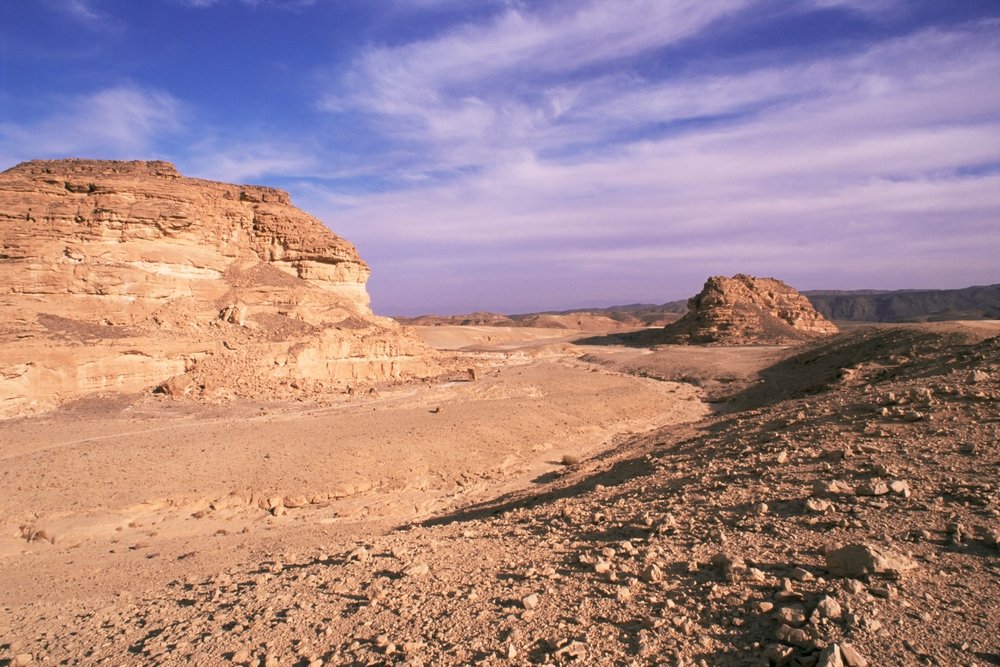
    Northern Sinai, Egypt

    The Structural Anatomy of the Tribe

    Because of the fierce, unyielding realities of physical survival out on the frontier, the foundational unit of civilization is the tribe. A tribe is not a geographic boundary or a state legal contract; it is a horizontal group of families bound together by a fierce, collective conviction that they are descended from a common ancestor.

    The Execution of Tribal Law

    Out on the un-enclosed frontier where the administrative matrix cannot reach, the parameters of law shift entirely away from written state registries and top-down judicial custom houses.

    • The Compact Perimeter and the Code of Hospitality

    To survive the harsh physical environment, the size of a tribal unit must remain tightly optimized. It must be compact enough to maintain rapid mobility, yet strong enough to guarantee its own localized safety.

    Because survival is a shared human struggle, a wandering individual must be able to count on an absolute, uncompromised welcome from neighboring groups if they are separated from their own clan line. In this un-enclosed landscape, anyone may need this survival insurance, and therefore everyone is bound by a sacred covenant to give it. This raw, face-to-face necessity is the direct historical origin of the ancient laws of hospitality and asylum.

    • Collective Responsibility vs. The Law of Blood Vengeance:

    The desert frontier possesses absolutely zero state police forces, bureaucratic monitoring networks, or centralized courts of justice. Consequently, justice is fundamentally decentralized.

    • The Collective Burden:

    An individual’s responsibility for an offense or a crime does not sit on a lone paper ledger; it belongs to their tribal group as a whole.

    • The Collective Shield:

    Likewise, any retributive punishment naturally encompasses all members of that group. This raw, absolute protocol of mutual defense and collective liability was the original, uncompromised form of the law of blood vengeance. If you strike one member of the line, you strike the entire house

    • The Refusal of the Ledger: The Soil vs. Blood Money

    Because unchecked blood vengeance natively triggered endless family feuds and generational assassinations, the frontier law was gradually amended as populations settled. Yet, even with the introduction of fixed judiciaries, the practice of blood vengeance persisted. While many regional tribes eventually accepted monetary compensation to settle a death, the ancient Hebrews fiercely rejected blood money. To their prophetic mindset, human life could never be digitized or settled through a financial ledger; to put a price tag on cold-iron.

    [THE IMPERIAL POLICE CAGE] ──> Centralized Courts ──> Written Registries ──> Individual Extraction Cops
    │
    [THE FRONTIER BASELINE] <── Compact Micro-Cells ──> Universal Asylum ◄─────────────┘
    (Collective Vows flat on the ground)
    │
    [THE JETHRO COUNTER-STRIKE] ──> Re-establishing the Base Ten to shield the clan from state mischief.

    The Power of the Tribal Surname

    The name or surname of that founding ancestor becomes the permanent, unassailable banner of the entire group.

    • The Sons of Code:

    • This surname is frequently, though not exclusively, preceded by the marker “sons of” (Bnei). The ancient scriptural baseline reflects this exact structural frequency, referring to the Hebrew collective interchangeably as “Israel” or the “sons of Israel.” 
    • The House of Code:

    • Alternatively, a tribe’s identity may be anchored by the phrase “the house of” (Bet), as seen when the prophets address the “house of Israel” or the “house of Joseph.” This is not unique religious isolationism; contemporary Assyrian state cuneiform texts follow the exact same structural usage when cataloging the independent Aramaic groups who lived in identical, un-enclosed conditions on the frontier. The name was their shield.

    [THE STATE APPARATUS CAGE] ──> Individual Data Units ──> Numeric Registries ──> Corporate Tracking Loops
    │
    [THE HORIZONTAL BASELINE] <── Families Bound to a Common Ancestor, a Shared Name, and the Soil ◄─┘
    │
    [THE COVENANTED SHIELD] ──> “Sons of Israel” / “House of Joseph” / The Clan Line holds the Wall.

    The Metaphysical Framework of Kinship

    For the nomad of the un-enclosed frontier, a genealogy is not a sterile family tree—it describes the entire social, economic, and defensive organization of the desert. Two allied tribes do not view themselves as corporate business partners; they view themselves as descendants of two ancestors who were brothers in the strict sense.

    1. Eponymous Ancestors and the Code of the Separated

    As these kinship charts expand across centuries, they naturally utilize eponymous ancestors—where a tribe is named after a defining historical action or landmark, which is later personified as a literal founding patriarch.

    • The Khoza’a (The Separated): When this group fractured from the Azd tribe during the great Yemenite dispersion, they were named for their act of defiance. Yet, the tribal genealogists later assigned them a personal ancestor named Khoza’a to cement their horizontal unity [1.1].
    • The Kholoj (The Transport): Transferred structurally from the ‘Adwan to the Al-Harith by the decree of Omar I, the genealogists cemented this political relocation by recording Kholoj as a literal surname within the Al-Harith bloodline [1.1].

    2. The Alliance Architecture: The Agedat (The Confederates)

    The ultimate proof of this fluid tribal architecture is found in the Mid-Euphrates region with the Agedat. Their very name explicitly confesses that they were formed as a confederation of separate, independent elements. Yet, to protect their collective autonomy, their political, economic, and defensive union is written and structured entirely as a single genealogical table.

    They proved that a tribe is not a biological cage, but a conscious covenant. Families regularly joined together simply because they shared the same territory, or because smaller, vulnerable groups needed to merge their hardware in order to resist stronger neighbors and maintain their absolute independence.

    The blood relationship that unites a people may be real or supposed. Every tribe has traditions about the ancestor from whom it claims descent. Kinship also explains the relationship between separate tribes. For a nomad, a genealogy describes the whole social organization of the desert. Each tribe descends from a single ancestor; two allied tribes descend from two ancestors who were brothers in the strict sense. 

    [THE IMPERIAL STATE REGISTRY] ──> Rigid Contracts / Tax Data Ledgers / Financializes Life & Death │ [THE HORIZONTAL CLAN CODE] <──────────────────────────────────────────────────────────────┘ Fluid Genealogies / Rewriting the Line to Protect Independence │ [THE REMNANT BASKET] ──> The Agedat Alliance model: Uniting by tens to defy the modern cage.

    The Law of Adoption: The Code of the ‘Genealogized’

    The absolute flexibility of the un-enclosed baseline is executed through the sovereign authority of the Sheikh or tribal elders to legally adopt entirely new individuals, families, or full clans into the corporate body of the tribe. 

    • The Total Integration:

    • The moment a newcomer crosses this threshold, they become completely attached to the tribe both in name and in blood. This is not a superficial legal fiction; the newcomers formally acknowledge the tribe’s founding ancestors as their own true lineage, integrate into the social defense loop, and intermarry within the collective. The Arabs define this total cultural and spiritual conversion as being ‘genealogized.’
    • A classical text of the geographer Al-Bakri maps the exact operational frequency of this frontier protocol:

      “And the Nahd ben Zaid joined the Benu al-Harith, became confederate with them and completely united with them; and the Jarin ben Rabban joined the Benu Zubaid, attached themselves to them and lived together, and the whole tribe with its confederates was attached to the same ancestor.” 

    Other factors can lead to the formation of a tribe. Sometimes families join together simply because they live in the same region. Or when stronger neighbors absorb weak elements. Alternatively, several smaller groups might combine in order to remain independent.

    The Federation Architecture: The Israelite Confederation

    Far from operating as a rigid, monolithic nation-state, the early layout of Israel was fundamentally a dynamic, horizontal Federation of independent tribes. The lines of kinship were constantly extended to absorb raw material from the outside to strengthen the defensive baseline.

    The Case of Caleb:

    • The tribe of Judah systematically absorbed the remnants of Simeon and seamlessly incorporated entirely foreign elements like the Calebites and Yerahmeelites. According to the foundational records in Numbers and Joshua, Caleb was originally a Qenizite—completely alien to the Israelite confederation. Yet, following centuries of shared frontier endurance, Caleb’s genealogy was formally attached straight to Judah. The son of Yephunneh was written directly into the lineage of Peres in I Chronicles 2, transforming an outsider into a frontline representative of the house.

    The Flexible Fission:

    • When a tribal unit grows too massive for its local resources, it executes a tactical split to preserve its mobility [1.1]. Yet, even when separated in space, the groups fiercely retain a core family solidarity, uniting instantly for common defensive operations. This mirrors the great ‘Anezeh and Shammar federations of the Syrian desert, as well as the ancient paradigm of Abram launching a military rescue the moment his separated kinsman Lot was taken prisoner by imperial kings.

    The Logistics of Territory: The Battle for the Wells:

    • Out on the un-enclosed frontier, a tribe’s relationship to the land is defined entirely by physical resources, not paper state boundaries, while cultivated fields might be held privately by individual families, the vital pasture lands are owned by the tribe in common.

    Because territorial lines are fluid, the ultimate friction points down on the soil always center on food and water security—specifically the control of wells and cisterns. Every clan was intensely aware of the location of these watering places, leading to constant, systemic clashes between rival shepherds:

    • Abram and Lot: Internal re source strains trigger immediate, amicable separation to prevent structural fratricide.
    • The Abimelek Intrusion: Centralized local gatekeepers and foreign servants aggressively attempt to seize wells dug independently by Abraham.
    • The Isaac Endurance: Isaac must wage a campaign to physically defend his rights over the vital wells he dug between Gerar and Beersheba.
    • On the un-enclosed frontier, if localized negotiation failed to protect the water baseline, the dispute was settled by direct, horizontal warfare. You protect your well, or your family dies.

    [THE IMPERIAL WATER CADASTRE] ──> State Claims the Water / Taxes the Well / Restricts the Radius │ [THE FRONTIER LOGISTICS (The Well)] <─────────────────────────────────────────────────────────┘ Common Pasture / Private Wells / Defending the Water by Force │ [THE MODERN MITIGATION] ──> Organizing the street by tens to protect the local water baseline.

    The Law of Hospitality and Asylum: The Covenant of the Salt

    Out on the un-enclosed frontier, hospitality is not a polite social choice; it is an absolute survival necessity that mutated over time into a sacred virtue. The guest is strictly protected. Caring for him is an honor. 

    The Buffer and the Radius:

    A stranger enjoys absolute hospitality for three days, but even after crossing the perimeter, their right to protection remains active. Certain tribes define this boundary with raw, organic precision: “until the salt he has eaten has left his stomach.” In larger tribal networks, this defensive shield holds an absolute radius of 100 miles for three additional days.

    The Gēr Protocol:

    • A man who leaves or is violently expelled from his home is recognized among the Arabs as a dahil or jār, and among the Hebrews as a gēr—meaning “he who has come in.” Under the uncompromised law of asylum, the horizontal clan will protect him and even avenge him against foreign extraction forces. This ancestral custom is the direct genetic origin of the scriptural Cities of Refuge, mirrored when Abraham spares no expense to show hospitality to the three travelers at Mamre, and when Laban welcomes Abraham’s servant. 

    The Language of the Tent: The Linguistic Subversion of the Cage

    The absolute proof that the un-enclosed baseline dominated the Israelite consciousness is in the Hebrew language itself. Long after the conquest—after the population had settled down and constructed stone walls—their everyday language still didn’t use the verbal architecture of the city.

    • The Home:

    • In both prophetic poetry and ordinary everyday speech, a fixed stone house was a tent (ohel).
    • The Morning:

    • The act of leaving early in the morning, was expressed as, “to load the beasts of burden.”
    • Life and Death:

    • The vocabulary of existence remained anchored to the frontier. The cut tent-rope, the pulled-out peg, or the tent itself carried off, represented death. Broken ropes and a tent collapsed in the wind represented societal desolation. Conversely, structural security was a tent with tight ropes and firm pegs, while an extended tent symbolized an expanding tribe. 

    [THE IMPERIAL URBAN GRID] ──> Fixed Brick Walls / Written Titles / Static Enclosures of the Cage │ [THE LINGUISTIC RESISTANCE] <──────────────────────────────────────────────────────────────┘ Calling a Stone House a “Tent” / Keeping the Software Mobile │ [THE TIGHT-PEG PERIMETER] ──> Driving your stakes deep into the dirt; keeping your baseline un-enclosed.

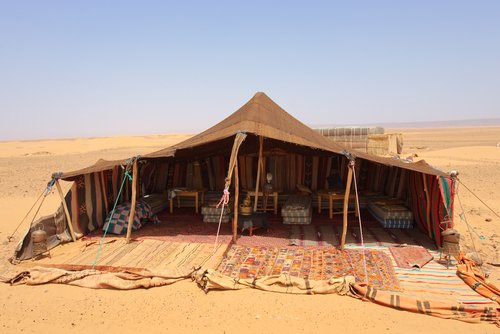
    • A Tent with Tight Ropes and Firm Pegs

    The Federation of Israel

    Israel absorbed other tribes too. The twelve tribes were a federation. The tribe of Judah absorbed the remnants of the tribe of Simeon. Judah also incorporated foreign groups like the Calebites and Yerahmeclites. The Calebites were originally outside of the Israelite confederation, according to the Books of Numbers and Joshua. Caleb was the son of Yephunneh the Qenizite, (Numbers 32:12; Joshua 14:6,14). The Calebites had contact with Israel from the time of the sojourn at Qadesh. Caleb’s genealogy was eventually attached to Judah. He was named at Qadesh as Judah’s representative for the exploration of Canaan (Numbers 13:6).

    The son of Yephunnch becomes the son of Hesron, son of Peres, son of Judah and brother of Yerahmeel, (I Chronicles 2:9, 18, 24) or another foreign group (I Samuel 27:10) attached to the line of Judah (I Chronicles 2:9). These fusions probably took place frequently.

    If a tribe becomes too large, it may have to split up. But the groups retain a feeling of family solidarity and unite for common enterprises. This is the case with two federations of the Syrian desert, the ‘Anezeh and the Shammar. Abram and Lot separated, but when Lot was the prisoner of the four victorious kings, Abram went to his rescue. (Genesis 14: 12-16)

    Territory

    Tribal members owned the cultivated land in their territory privately. But the tribe owned pastureland in common. However, it was not possible to define the territorial boundaries. This could lead to disputes, especially over the use of wells or cisterns.

    Everyone was aware of the location of watering places and knew who their owners were. However, sometimes quarrels would break out between shepherds. Abram’s herdsmen quarreled with Lot’s. (Genesis 13:7) Abimelek’s servants seize a well dug by Abraham. (Genesis 21:25). And Isaac struggled to maintain his rights over the wells he had dug between Gerar and Beersheba (Genesis 26: 19-22). If the tribes could not settle these disputes peacefully, they settled them by war.

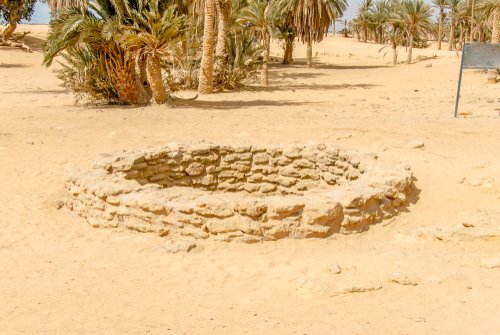
    An Ancient Well

    About The Author

    Roland de Vaux

    Roland de Vaux (1903-1971) entered the Catholic priesthood in 1929, and became a Dominican the same year. Jerusalem became his residence in 1934 and he spent the rest of his life there. He was there first as a student, then as a teacher at the Ecole Biblique, a French Catholic theological school in East Jerusalem. He developed an interest in archaeology while in Israel under the influence of William F. Albright, Kathleen Kenyon and Benjamin Mazar. His team took part in the excavations of Khirbet Qumran and several caves near Qumran. The excavations were led led by El-Assouli, caretaker of the Palestine Archaeological Museum. This is now the Rockefeller Museum in East Jerusalem. De Vaux’s sources, include texts about pre-Islamic Arabs, ethnographic studies about the Arabs of today, and his own archaeological work.((Roland de Vaux Biography, historical archive collection.))

    Sources and Recommended Reading:

    For further study on this topic, I highly recommend reading Ancient Israel: Its Life and Institutions by Roland De Vaux. It provides invaluable depth to the historical and structural concepts discussed in this piece.

    You can find a copy of the text directly through my booklist here: [Ancient Israel a book by Roland De Vaux – Bookshop.org US]

    Note: By purchasing books through this link, you directly support local, independent bookstores. This publication also receives a small commission at no additional cost to you, helping to fund the upkeep and research of this ad-free blog.