This is a Series covering the Epistle of James. I will use the commentary by James B. Adamson, M.A., Ph.D. Dr. Adamson was a graduate of the University of Edinburgh and Cambridge. He was awarded his Ph.D. degree in 1954 with a thesis entitled An Inductive Approach to the Epistle of James: Materials for a Fresh Study.
Then his lust having conceived gives birth to sin: and when sin is full grown it brings forth death.
James 1:15 reminds Adamson of Thomas à Kempis’s analysis of temptation (the phrase, à Kempis, indicates his home town of Kempen, Germany. His name is Thomas Hemerken ). Adamson believes James 1:15 and the other verses in this section inspired Hemerken’s analysis.
At first it is a mere thought confronting the mind; then imagination paints it in stronger colours; only after that do we take pleasure in it, and the will makes a false move, and we give our assent..1 (Note 101a, p. 72)
Adamson Demonstrates the Theology and Psychology of the Process
Stage One: I see something in a shop. I say to myself: “I should love to have that–but I can’t afford it.” That is the first stage. I am feeling the pull and lure of the bait, but I have suffered no more harm as yet.
Stage Two: “I know! I will steal it!”That is, lust, impregnated by the devil, “conceives” the notion and “gives birth’ to the act of theft. Adamson says we should not read too much into the twin image of conception and birth. The grammar behind “having conceived gives birth” is similar to the Hebrew construction rendered “she conceived and bore” (Genesis 4:1, etc.), the participle and finite verb in this instance bringing “thought and act together as a single stage between the temptations on the one hand and death on the other”(Hort)2. “Lust” produces “sin.” James expresses this single idea by the metaphorical parallel of motherhood, signified by the two chief steps–the first and the last–of that single process. “Conceives and bears” are not two separate points.
Stage 3: That sin , unless (however late, like the penitent thief) I properly repent before my physical death, will, “being fully grown,” cause my damnation and my spiritual “death” at the Day of Judgment. This agrees with Ropes and supplements him. The “consummation” and the death are in the “next world,” not in our earthly existence.
The Analogy of a Human Infant Growing to Full Manhood
James is picturing the growth of sin from birth onward in the analogy of a human infant growing to full manhood. In other words, in the context of a human conception, birth, and growth to maturity.
“Sin, when full grown, when it becomes a fixed habit…brings forth death.”
The immediate cause of death is sin, and sin, when full-grown, is in its very nature self-destructive, containing seeds of death in its womb and nurturing its unborn chid until the time of delivery. (Adamson,pp. 73-74)
The Imitation of Christ, tr. Ronald A. Knox and Michael Oakley [1959], p. 32. ↩︎
F. J. A. Hort, The Epistle of St. James, i.1-iv.7 (1909). ↩︎
James 1:14
But each man is tried by assault of evil by his own lust, as he feels the pull of its distraction and the enticement of its bait.
PossibleMeanings of the Word ‘Desire‘ in the New Testament
This section is basically a discussion of the meaning of the word desire in the New Testament. Desire is not necessarily evil. James B. Adamson illustrates this point by citing Luke 22:15. He explains that is why the adjective, evil, must be added in Colossians 3:5. He also quotes John Baillie:
Animal desire is not in itself evil, it only becomes evil when, in man, it seeks the aid of spirituality–of freedom and reason and the judgment of value–in order to convert its relativity into an absolute and its finitude into infinity.1
The fifteenth-century poem The Cuckoo and the Nightingale illustrates the neutral use of the English word lust:
James’s Use of the Terms ‘desire‘in 1:14 and “you desire‘ in 4:2
However that is not the meaning James intends by ‘desire‘ or ‘you desire’. From the context he means sin. Adamson tells us that the themes of 1:9-21 are renewed in 4:1-12. The most important need here is to relate 4:5 (and 6) to 1:14.
James 4:5
Or do you suppose it is an idle saying in the scriptures that the spirit that has taken its dwelling in us is prone to envious lust?

James 1:14
  But each man is tried by assault of evil by his own lust, as he feels the pull of it detraction and the enticement of its bait.
The words ‘his own‘ (lust) in 1:14 have the opposite meaning of ‘the spirit which God implanted in man’ in 4:5. His own lust implies his own desire, not God’s instigation. A man’s own desire often substitutes some private and individual end for the will of God.’3
On the other hand, it would be extreme to think that desire for a good dinner must be evil. And although ‘desire’ is personified in James 1:15, Adamson says that is only literary.
The Influence Toward Evil
When evil does come, it comes from the appetite of man’s body. It’s part of ‘the world of iniquity’ mentioned in James 3:6. Since the Fall, some evil is inherent.
There is No Reference to Satan as the Tempter
There is no reference to Satan as the Tempter in James 1:14. Adamson contrasts1 Enoch 49:4.;The Clementine Homilies 3:55. For James to refer to Satan would have been substituting one excuse for another.
James Uses A Fishing Metaphor
James’s metaphors of the ‘pull of its distraction and the enticement of its bait’ are probably based on his fishing experience in Galilee…but he was assuredly not the first to use a fishing metaphor. The rabbis wrote: ‘As man throws out a net whereby he catches the fish of the sea, so the sins of man become the means of entangling and catching the sinner.’
The word ‘hooked‘ is also a description of a drug addict. “Each man experiences assault of evil by his own lust, as he feels himself being pulled astray by it and enticed by it as by a bait.” (Adamson p. 71)
The next paragraph, pages 71-72, analyzes the choice of participles in the translation from the Greek words. It’s quite detailed, and will not be helpful to most readers, so I haven’t included it. However, the last paragraph deals with the theological implications of James 1:14.
The Theological Implications
Adamson argues that there is enough of a basis for the theological implications of James 1:14 in the Old Testament and in Judaism that it is not necessary to ‘resort to Qumran’.
We think James’s view of the flesh as inherently but not entirely evil agrees with that of Paul: “it is better to marry than to burn” (1 Corinthians 7:9); “tempts” here introduces a sentence about lust which the mind in the case to be contemplated happens to have a duty to disobey..
If I’m not mistaken, Adamson’s closing remark refers only to this last paragraph of the commentary. He says, “Only the apparent attempts by some theologians to dissociate lust and the body from Satan made some of our remarks necessary.”
Invitation to Pilgrimage (1944), p. 56. Cf. Menninger, op. cit., pp. 138ff (as cited by Adamson). ↩︎
Similarly in the papyri; see MM. p. 239 (I think he’s referring to the previous note 86, the Greek word for lust). ↩︎
F. J. A. Hort, The Epistle of St. James, i. 1-iv. 7 (1909) p. 24. ↩︎
Let no one under trying assault of evil say, “My trial by assault of evil comes from God.” For God is invincible to assault of evils, and himself subjects no one to assault of evil. (James 1:13)
This article will cover Adamson’s short summary of this section, verses 13-21, but the commentary itself will be limited to verse 13. He obviously considers this verse particularly important and not in a good way. He seems to regret the very idea it represents. The fact that he took such care with this verse is instructive in itself.
II. The Academic Hesitation
The question of the source of assault by evil was important to James. Adamson understood this, and his anxiety is evident. I attribute any difficulties in the organization of this section to his dismay at what this verse implies. I have tried to simplify it by presenting it somewhat out of order compared to his text.
III. James Contends Against an Amoral Philosophy
The clear implication of this verse is that the Christians who James addressed had the idea that ‘assaults of evil’ may come from God. In Adamson’s opinion, this is theological duplicity based on an amoral philosophy.
…for, if God is not constantly good, there is no such thing as “good.”(Adamson p. 68-69)
However, the opposite implications are clear in James 1:19-21:
Wherefore, my beloved brothers, let every man be swift to hear, slow to speak, slow to wrath:
for a man’s wrath (or “anger”) does not express in action the righteousness of God.
Wherefore strip off all filthiness and prodigality of vice and with meekness accept the implanted Word (implanted by those who have preached the gospel to you), which is able to save your souls.
IV. Summarizing the Logic in James 1: 13
Adamson begins his summary by saying that “James…is in the midstream of apostolic doctrine...The Christian is God’s man, not the world’s; and so, as his loyal child, he is bound by God’s law”
The Problem of Evil
He mentions the philosophical problem of evil. (Philosophy deals with the question of why evil exists in a world created by a God who is all-good and all-powerful.) But James does not approach the problem from that angle. His approach is uniquely Christian. Adamson quotes John Coutts on this:
James has no philosophical answer to the problem of evil…He cannot explain why people are pushed almost beyond endurance–but he offers a practical answer: faith in a God of pure goodness.3
V. The Christian Answer to the Problem of Evil
The assaults of evil are the result of lust, and lust is alien to God. (What James means by ‘evil’ is explained below.) There is a reward for the faithful who resist these assaults. Endurance in the face of assaults comes from sincerity of faith.
He has given us Christians the “word of truth” with a view to our becoming a sort of “firstfruits.” Therefore, in accordance with that gift and purpose, we must live as in v. 19 (say, in a word, “peaceably”); for as Christian children of God we must by our conduct manifest God’s implanted gift (of “truth,” involving “righteousness,” v. 21), and that is not achieved by “wrath” (and its concomitants, as in 4:1-4).(p. 69)
VI. Terms: The Use of the Word “Tempt”
Adamson says the use of the word “tempt” may perplex some readers, for example when the Israelites tempt God in the desert, or when God tempts Abraham.4 But God’s tempting is different from the devil’s, (or man’s). God does not desire the candidate to fail, but to succeed.
Nevertheless, Adamson doesn’t think this innocent interpretation is the true meaning of “temptation” by God in the Lord’s Prayer. Furthermore, James uses it in its most sinister sense. He says it never comes from God, and yet believers should rejoice in it.5
The following quote is from footnote 80 on page 69:
Probably the best paraphrase, if not direct translation, of the petition in the Lord’s prayer is “Grant that we may not fail in the test” (cf. C. C. Torrey, The Four Gospels [1933], p. 292), with which may be compared our Lord’s admonition to the disciples in Gethsemane: “Keep awake, and pray not to fail in the test” (Mark 14:38a). The Jewish service for morning prayer contains the similar petition: “Do not bring us into the power of temptation; let not the evil inclination (yetser) have sway over us,” See C. F. D. Moule, “An Unsolved Problem in the Temptation-Clause in the Lord’s Prayer,” Reformed Theological Review 33(1974), pp, 65-75
VII. The Grammer of Natural Consistency
James is not referring to God’s sorrow at men’s sin, God’s sorrow at His Son’s crucifixion, natural disasters, or disease. James is clearly referring to moral evil or sin.
As for the construction of the phrase “invincible to assault of evils, “grammatici certaint on the classification of this genitive case: adjectives formed like this regularly negative the idea of the cognate verb.” Adamson provides the Greek phrase in the notes on page 70.
The sentence in question in the above paragraph is “For God is invincible to assault of evils, and himself subjects no one to assault of evil.” The second half of the sentence denies that God ever instigates a man to sin, but both halves represent a single truth.
If God were not invincible to evil he could not escape becoming at least sometimes the ally of sin; as it is, the invincible good is ipso facto incapable either of leading others or itself being led into sin (see Jas. 1:17; 3:10-12, on the argument from natural consistency).
VIII. The Universal Script of Outside Evasion
But of course, the implication of this verse is not an unfamiliar idea. It is found not only in historical accounts but in the Bible itself. (Or it was at one time). Adamson’s approach might be surprising for anyone who has become too complacent about this concept. Adamson is not complacent. He is either attacking the verse or offering apologies for early Christians.
He begins by listing possible sources of confusion. First, he says the early Christians may have misunderstood a clause in the Lord’s Prayer.
The Lord’s Prayer
(He does not provide the verse in question. Interestingly, the offending clause, “Lead us not into temptation”, is not in my Bible. In the Catholic Bible NABRE, Matthew 6:13 says, “and do not subject us to the final test, but deliver us from the evil one.” Luke 11:4 has similar wording. However the offensive version is familiar to some of us today, and it was obviously familiar to Adamson. Commentaries like this may have been instrumental in changing the Bible’s wording.)
Human Nature
Another possibility for the confusion of James’s congregation is the human tendency to attribute evil to outside causes. Adamson gives a quote often attributed to Homer. (Adamson p. 69)
Our nature in itself doth abhor the deformity of sin, and for that cause [men] study by all means how to find the first original of it elsewhere. (Richard Hooker, Of the Laws of Ecclesiastical Polity, Book V)
Correcting a Jewish Doctrine? Nascent Gnosticism
Others have argued that 1:13 is a polemic against a Jewish doctrine of two natures in man. Alternatively, James may have been aware of some kind of ‘nascent Gnosticism that casts doubt on divine integrity’. (p. 69)
The Power of the Planets
People might also blame the stars as the source of evil assaults. Of course, this would not bring the same level of scorn from Adamson, as it doesn’t blame God for assaults of evil. It is more in the category of humans’ tendency to excuse their own part in these assaults. However, Adamson cites Moffatt2 (p. 19) who spoke of using the stars as a source of evil assaults.
Moffatt suggested that the phrase “the Father of the heavenly lights,” 1:17, is an implicit denial of the stars’ power over human destinies according to astrology.
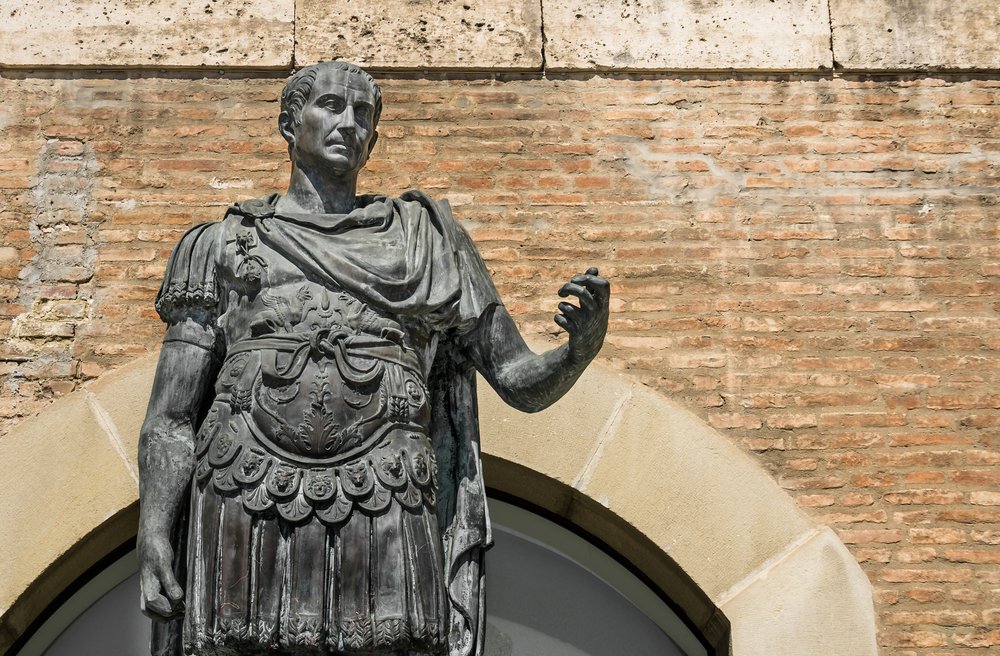
Adamson also cites a play by Shakespeare in which Julius Caesar denies the power of the stars. (I.ii.134, as cited by Adamson)
The fault, dear Brutus, is not in our stars But in ourselves, that we are underlings.
Julius Caesar
IX. Conclusion: The Goodness of God
This section ends with assurances about God’s goodness. The first quote is from Marcus Aurelius:
The Reason (Logos) which rules the universe has no cause in itself for doing wrong. (Moffatt, p. 18)
This second quote is from Mayor’s commentary on James6. (p.50)
God is incapable of tempting others to evil, because He is Himself absolutely insusceptible to evil.”
The last section of Adamson’s commentary on James Chapter 1 covers James 1:12 to James 1:27. However, he takes a break after James 1:12. He labels the next section 13-27 and briefly discusses verse 13 in particular. Due to this organization, I decided to limit this article to James 1:12. Adamson’s translation is as follows:
Happy is the man who with constancy endures trying assaults of evil; for when (upon trial) he has been approved, he will receive the crown of life, which God has promised to those who love him.
Endurance
This section begins by saying that the idea of endurance is familiar in Judaism. Adamson cites two of the sources from the select bibliography (p. 40) who find tribal references to Jacob and Issachar (A. Meyer1, pp. 270ff. and B. S. Easton2, p. 26). But the idea of endurance is also typical of James.
Happy is the man who here and now, from day to day, withstands peirasmos: he is progressing toward salvation (as in 1:3), and if (as 1:4 requires) he endures to the end, then at last, winning final approval, he will receive the final reward, the crown of life. (Adamson p. 67)
(Adamson prefers the word happy (beatus) in this context to blessed (benedictus).
Peirasmos
Regarding the meaning or sense of the word peirasmos, Adamson agrees with Ropes3 (p. 150) who says the phrase ‘has been approved” is another way of saying endures, and not a further condition of receiving the crown. The word contains the notion of a trial, but also trial and approval (1Corinthians 10:18; 13:7; 2 Timothy 2:15).
The Crown of Life
The next paragraph discusses ‘the crown of life’. Adamson tells us that the victor’s prize in the Greek games (the crown, head-wreath, chaplet, or circlet) was worn in religious and secular feasts. It was given and received as a public sign of honor. But in the Bible there is a difference. Paul makes a distinction between this crown and the crown the Christian is hoping to win.
The Greek Games Compared to Christianity
In Corinthians 9:24, 25, he reminds us that in the races only one competitor received the prize. In Christianity, however, the Christian is not competing against his fellow athletes. Adamson compares it to a scholastic examination. In other words, there is no reason why all candidates should not pass the test.
But still, this image was relevant. The clue is in Hebrews 12:1, which describes the crowd of spectator-witnesses, the past heroes of the faith, and the stripping off of encumbrances, like clothing (see James 1:21).
…it is the race of endurance; and the model of endurance, and the founder and perfecter of the faith which by endurance we must maintain, is Jesus. Whereas the athletes have human competitors, the Christian’s adversaries are the powers of darkness, trying to drive him out of the course and prevent his ever finishing it. (Adamson, p. 68)
But perhaps the metaphor of the fight would have been a closer parallel to the biblical contest. Here, Adamson quotes R. Simeon b. Lakish4:
It can be compared to two prize-fighters, one of whom was stronger than the other. The stronger prevailed over the weaker and then placed a garland over his own head.
James Differs from Paul in this Regard
But James is not like Paul in this regard. He does not pursue the metaphor of athletic competitions. The crown is the reward of the Christian’s effort but this effort is a struggle against evil rather than fellow competitors. And eternal life is the crown.
Conclusion
Some later manuscripts specifically mention ‘the Lord’ or ‘God’ as giver of this promise to those who love him. However, the promise does not appear in so many words in the Old Testament. Adamson concludes this section by listing related New Testament verses which he thinks provide evidence of an otherwise unrecorded saying of Jesus.5 These are 1 Corinthians 9:25; 1 Peter 5:4; 2 Timothy 4:8, and especially Revelation 2:10.
Finally, he argues that the ‘strong liturgical flavor’ of James 1:12 is another confirmation.
Dibelius Shows (p. 87) that the words ‘those who love him’, common enough in the LXX and later Jewish and Christian tradition, are traced back by the Rabbis to Judges 5:31.6 Man’s duty of love to God is as old as any in Hebrew religion, and from Ezekiel onward the prophets take up the theme with renewed emphasis, in which they are followed by Jesus and, after his example, by James and Paul.
By ‘the flower of the field’ the prophet doubtless meant the blaze of gorgeous blossoms which accompanies the first shooting of the grass in spring, alike in the Holy Land and on the Babylonian plain (Hort p. 15).
According to Adamson, in the Mediterranean region the spring is brilliant but very brief. The flowers only live for a short time every year. H. B. Tristram is quoted:
The downs of Bethlehem in February are one spangled carpet of brilliant flowers…In May all traces of verdure are gone.
The Flower and its Implications for the Rich
In verse 11, the implications for the rich are described poetically by means of ‘the flower’. Adamson’s focus in this section is the intricacies of the Greek words. For example, he informs us that the Greek ‘aorist‘ is used here.
Needless to say, aorist has a complex meaning, not to mention the various words chosen by the other scholar’s listed in his bibliography. Much of this section explains the translations that Adamson rejects and his reasons for his own choices. In my opinion, including every word of this part of the text would be fruitless for those of us who don’t read Greek. Normally my main interest is in making his conclusions as clear as possible for all readers. However, the importance he gives this verse demands attention–his commentary takes up three pages. In this case, I summarize it as accurately as I can.
Regarding the word aorist, Adamson thinks it may represent the Hebrew perfect in order to emphasize the suddenness and completeness of the withering. Here is a reminder of what verse 11 says:
For the sun arises, with the scorching wind, and parches the grass, and the flower among it falls off, and the beauty of its appearance perishes: so he who is (only) rich shall wither in his ways.
The Scorching Wind
Rather than using obscure tribal references as some do, or the comparison of Christ to the rising of the sun, Adamson chose ‘scorching wind’. He thinks it is a better description of the vividness of the country life.
No one who has ever lived in Palestine can forget the sirocco (sharqiya)–the blasting, scorching southeast wind which blows there in the spring; once begun it blows incessantly night and day. (Adamson p. 63)
The temperature hardly seems to vary. Flowers and herbage wilt and fade, lasting as long as ‘morning glory’. Anemones and cyclamen, carpeting the hillsides of Galilee in spring, have a loveliness that belongs only to the past, when the hot wind comes. Drooping flowers make fuel. The fields of lupins are here today and gone tomorrow.
Adamson was certain that James must have seen the flowers that bloom on the Galilean hills as they wilt in the scorching wind.
Appearance
The word ‘appearance’ also rates its own examination. Adamson prefers the ‘easier’ meaning of appearance or show, and he illustrates its use with verses from the Old Testament. He credits Ropes for these references.
Genesis 2:6
2 Samuel 14:20
Job 41:13
Beauty
As for the word beauty, Adamson prefers Ropes’s ‘goodly appearance’. He doesn’t think it should be allegorized too far. He says that we don’t think of the ‘pride’ of flowers, but of their short-lived beauty. The point is mainly that they perish. That’s why grass is often included in such Old Testament comparisons. And when we speak of the glory of flowers, or the sunrise or sunset, it is not the glory of pomp and pride as in plutocrats.
The Withering of the Unbelieving Rich
These verses are describing the fate of the unbelieving rich. Their withering is a simile.
The picture of the rich ‘withering’ continues the simile of the fading flower: the verb, found only in the NT, is picturesque and may be used of the dying out of a fire.4 (Adamson p. 64)
The verb is also used for many kinds of gradual enfeeblement (Wisdom 2:8) It is found in Philo, in connection with wealth5, and in 2 Talmud.
The children of man are like the grasses of the field, some blossom and some fade.6
Ways
Adamson’s choice of the translation of ‘way’ is summed up in his view of James as an artist. This refers to the way James organizes his composition.
Which passes away, the rich man or his riches?
Hort poses this question, and he answers it by saying that the point is in the separation of a man from his wealth at death. Then follows a discussion of the state of the dead in Hebrew thought, and the problem of wealth without righteousness. Adamson concludes that the common fact of mortality has a special lesson for the rich, because they have a special temptation to forget it. He quotes Pindar:
If any man who has riches excels others in beauty of form and has proved his strength by victory in the Games, let him remember that he puts his raiment on mortal limbs and in the end of all is clad with earth.7
If any man fosters his wealth with honesty, abounding in possessions and winning good fame, let him not seek to be a god.8
Conclusion
Yet Hort perceives the truth. James indeed, as Hort says, has in view ‘not death absolutely but death as separating riches from their possessor and showing them to have no essential connection with him’. The pride of wealth ‘substituted another God for Jehovah and denied the brotherhood of man’. Speaking of his friend, a poor Christian, a wealthy unbeliever remarked: ‘When I die, I shall leave my riches. When he dies he will go to his’.9 In effect, this is what James is saying: Remember you are mortal and wealth per se does nothing for your soul: so be glad that by humbling yourself in Christ and the brotherhood you are likely to win the treasure of life everlasting. The old Hebrew thought of the premature end of the wicked and rich appears in James’s statement of his principle, which in fact is equally valid if the the man lives in wealth to the age of a hundred; besides, James is convinced that the end is at hand (see James 5:3, 8) (Adamson p. 66).
J. H. Ropes, The Epistle of St. James. ICC (1916). ↩︎
F. J. A. Hort, The Epistle of St. James, i. 1-iv. 7 (1909) ↩︎
See J. Blanchard, Not Hearers Only 1 (1971), p. 68. Cf. K. Menninger, Whatever Became of sin?, on ‘the sin of affluence’ (pp. 149ff). ↩︎
As comforting the lowly poor and chastening the haughty rich.
(in the equality of Christian brotherhood) Let the brother of humble degree exult in his being made high,
(in the equality of Christian brotherhood) let the brother of humble degree exult in his being made high,
and the rich (brother) in his being made low: for he (in his being-only-rich) shall pass away like the flower among the grass.
For the sun arises, with the scorching wind, and parches the grass, and the flower among it falls off, and the beauty of its appearance perishes: so he who is (only) rich shall wither in his ways (James 1:9-11, Translation: Adamson p. 61)
Adamson begins by focusing on James’s intended meaning of the terms. His analysis is based on the Greek language version, and both New Testament and Old Testament verses.
Brother
Concerning verse 9, Adamson says the wording in Greek is significant for understanding who is meant by the word, ‘brother’. He argues that we must read ‘brother’ with the rich (v. 10) as well as with the lowly (of humble degree). This is contrary to another view which assumes that the phrase the rich refers to the non-Christian man in general. Adamson agrees with the argument provided by Ropes.
My Approach to Adamson’s Bibliography
Ropes is one of the entries in Adamson’s ‘select bibliography’, which begins on page 40. Adamson sometimes disagrees with the authors on this list. Or he agrees with them and uses their works to illustrate his own view. In the discussion of ‘brother’ he depends completely on Ropes’s argument that ‘brother’ does not refer to the non-Christian man in general. So, I included the citation. If the reader is not comfortable with this approach, please compare my summary against Adamson’s book.
Ropes’s Rebuttal of the View that ‘Brother’ means the Non-Christian Man1
The refusal to supply ‘brother’ is unnatural.
The addition of ‘let him exult’ would require excessive irony.
[‘Brother’ has a] loose connection with the context and especially with the initial and continuing idea of peirasmoi.
Exalted
For ease of reading, I’ll repeat Adamson’s translation of verse 9: ‘let the brother of humble degree exult in his being made high‘. In this section, Adamson lists several verses to demonstrate the use of the verb exult.
The Old Testament
In the Old Testament, the verb ‘exult’ is used for any ‘proud and exulting joy’. (Hover or click on the citation to read the verse.).
Psalms 5:11
Psalms 32:11
Jeremiah 9:23
Ben Sira 39:8
The New Testament
The verb is used frequently in the New Testament, especially by Paul who uses it more than thirty times.
2 Corinthians 7:14
Romans 5:3
2 Corinthians 12:9
2 Corinthians 11:12 (Ropes p. 145)
According to Adamson, the way the verb is used here harks back to the exhortation to joy of James 1:2 and it stresses the opposition to double-mindedness. The moral quality of this joy depends on the occasion.
To exult is bad in James 4:16. Adamson offers the following verses for comparison, and leaves it to the reader to decide if these verses support his view that they refer to the moral quality of exulting joy:
Romans 2:17
Romans 2:23
Romans 3:27
Romans 4:2
1 Corinthians 1:29
1 Corinthians 4:7
2 Corinthians 11:18
Galations 6:13
1 Corinthians 5:6
In the following verses the exulting is good:
Romans 5:2
Romans 5:11
Philippians 3:3
Romans 15:17
1 Corinthians 1:31
‘Lowly’ as Referring to the Outward Social Status
Adamson argues that when James used ‘lowly’ he did not have in mind the Christian grace of humility. That would be to ‘spiritualize’ the word. He was referring to outward social status, like the status of a slave or a beggar. In other words, ‘poverty in relation to glorying and contempt, a state despised by the mass of mankind’ (Hort)2.
Here Adamson refers us to Luke 1:52 and Romans 12:16.
Luke 1:52
Romans 12:16
The Greek word means ‘low’. This is not a virtue in mind or status, as in classical thought, but rather it is like our ‘poor-spirited’. In the LXX (the Septuagint), the word may mean literally ‘poor’ (1 Samuel 18:23).
Lowly can also have a religious connotation
But it sometimes has a special religious connotation when contrasted with the ‘rich’:
Psalms 10:2
Psalms of Solomon 2:35 (a collection of ancient Jewish religious poems)
James also used ‘lowly’ in an inward spiritual way (4:6). The two uses were sometimes associated in Jewish literature (Ben Sira 10:30f).
Among Christians, humility is the virtue of voluntary acceptance or confession of a low or subordinate status in esteem or function; (compare) Phil. 2:1-13, the locus classicus on Christian, and Christ’s, humility.
Even under Christianity, the metaphor implicit in the word ‘humility’ is not very pleasing in an equalitarian age. In Jas. 1:9 the meaning is literal, referring to a man’s mean social station in life. ‘Highness’, ‘exaltation’, refers to the present spiritual status which, by virtue of his relation to Christ, the Christian now enjoys. (Adamson p. 62)
Philippians 2:1-5
If there is any solace in love, any participation in the spirit, any compassion and mercy,
complete my joy by being of the same mind, with the same love, united in heart, thinking of one thing.
Do nothing out of selfishness or out of vainglory; rather, humbly regard others as more important than yourselves,
each looking out for his ow interests, but (also) everyone for those of others.
Have among yourselves the same attitude that is also yours in Christ Jesus.
Philippians 1: 6-11
Who, though he was in the form of God, did not regard equality with God something to be grasped.
Rather, he emptied himself, taking the form of a slave, coming in human likeness; and found human in appearance,
he humbled himself, becoming obedient to death, even death on a cross.
Because of this, God greatly exalted him and bestowed on him the name that is above every name,
that at the name of Jesus every knee should bend, of those in heaven and on earth and under the earth,
and every tongue confess that Jesus Christ is Lord, to the glory of God the Father.
2:12-13
So then, my beloved, obedient as you have always been, not only when I am present but all the more now when I am absent, work out your salvation with fear and trembling.
For God is the one who, for his good purpose, works in you both to desire and to work. (NABRE)
Abasement
In verse 10, Adamson focuses on the word ‘abasement’. Here it means self-abasement. This refers to a new mind of humility which Christians adopt. James urges this adoption on some of the brothers in 4:10, 13-16.
The Flowers of Palestine
Adamson likens James to Peter in his use of Isaiah 40:6,7. Its theme: ‘all flesh is grass’. He translates it as ‘the flower among the grass’ and emphasizes that flowers are profuse in Palestine. He names anemone, cyclamen, and lily
Cyclamen in Spring
Credit: Gideon Pisanty (Gidip)
Adamson also cites Matthew 6:28, 30:
Why are you anxious about clothes? Learn from the way the wild flowers grow. They do not work or spin.
If God so clothes the grass of the field, which grows today and is thrown into the oven tomorrow, will he not much more provide for you, O you of little faith?
Hort’s description of the flowers of Palestine:
By ‘the flower of the field’ the prophet doubtless meant the blaze of gorgeous blossoms which accompanies the first shooting of the grass in spring, alike in the Holy Land and on the Babylonian plain (Hort p. 15).
According to Adamson, in the Mediterranean region the spring is brilliant but very brief. The flowers only live for a short time every year. H. B. Tristram is quoted:
The downs of Bethlehem in February are one spangled carpet of brilliant flowers…In May all traces of verdure are gone.
The Flower and its Implications for the Rich
In verse 11, the implications for the rich are described poetically by means of ‘the flower’. Adamson’s focus in this section is the intricacies of the Greek words. For example, he informs us that the Greek ‘aorist‘ is used here.
Needless to say, aorist has a complex meaning, not to mention the various words chosen by the other scholar’s listed in his bibliography. Much of this section explains the translations that Adamson rejects and his reasons for his own choices. In my opinion, including every word of this part of the text would be fruitless for those of us who don’t read Greek. Normally my main interest is in making his conclusions as clear as possible for all readers. However, the importance he gives this verse demands attention–his commentary takes up three pages. In this case, I summarize it as accurately as I can.
Regarding the word aorist, Adamson thinks it may represent the Hebrew perfect in order to emphasize the suddenness and completeness of the withering. Here is a reminder of what verse 11 says:
For the sun arises, with the scorching wind, and parches the grass, and the flower among it falls off, and the beauty of its appearance perishes: so he who is (only) rich shall wither in his ways.
The Scorching Wind
Rather than using obscure tribal references as some do, or the comparison of Christ to the rising of the sun, Adamson chose ‘scorching wind’. He thinks it is a better description of the vividness of the country life.
No one who has ever lived in Palestine can forget the sirocco (sharqiya)–the blasting, scorching southeast wind which blows there in the spring; once begun it blows incessantly night and day. (Adamson p. 63)
The temperature hardly seems to vary. Flowers and herbage wilt and fade, lasting as long as ‘morning glory’. Anemones and cyclamen, carpeting the hillsides of Galilee in spring, have a loveliness that belongs only to the past, when the hot wind comes. Drooping flowers make fuel. The fields of lupins are here today and gone tomorrow.
Adamson was certain that James must have seen the flowers that bloom on the Galilean hills as they wilt in the scorching wind.
Appearance
The word ‘appearance’ also rates its own examination. Adamson prefers the ‘easier’ meaning of appearance or show, and he illustrates its use with verses from the Old Testament. He credits Ropes for these references.
Genesis 2:6
2 Samuel 14:20
Job 41:13
Beauty
As for the word beauty, Adamson prefers Ropes’s ‘goodly appearance’. He doesn’t think it should be allegorized too far. He says that we don’t think of the ‘pride’ of flowers, but of their short-lived beauty. The point is mainly that they perish. That’s why grass is often included in such Old Testament comparisons. And when we speak of the glory of flowers, or the sunrise or sunset, it is not the glory of pomp and pride as in plutocrats.
The Withering of the Unbelieving Rich
These verses are describing the fate of the unbelieving rich. Their withering is a simile.
The picture of the rich ‘withering’ continues the simile of the fading flower: the verb, found only in the NT, is picturesque and may be used of the dying out of a fire.4 (Adamson p. 64)
The verb is also used for many kinds of gradual enfeeblement (Wisdom 2:8) It is found in Philo, in connection with wealth5, and in 2 Talmud.
The children of man are like the grasses of the field, some blossom and some fade.6
Ways
Adamson’s choice of the translation of ‘way’ is summed up in his view of James as an artist. This refers to the way James organizes his composition.
Which passes away, the rich man or his riches?
Hort poses this question, and he answers it by saying that the point is in the separation of a man from his wealth at death. Then follows a discussion of the state of the dead in Hebrew thought, and the problem of wealth without righteousness. Adamson concludes that the common fact of mortality has a special lesson for the rich, because they have a special temptation to forget it. He quotes Pindar:
If any man who has riches excels others in beauty of form and has proved his strength by victory in the Games, let him remember that he puts his raiment on mortal limbs and in the end of all is clad with earth.7
If any man fosters his wealth with honesty, abounding in possessions and winning good fame, let him not seek to be a god.8
Conclusion
Yet Hort perceives the truth. James indeed, as Hort says, has in view ‘not death absolutely but death as separating riches from their possessor and showing them to have no essential connection with him’. The pride of wealth ‘substituted another God for Jehovah and denied the brotherhood of man’. Speaking of his friend, a poor Christian, a wealthy unbeliever remarked: ‘When I die, I shall leave my riches. When he dies he will go to his’.9 In effect, this is what James is saying: Remember you are mortal and wealth per se does nothing for your soul: so be glad that by humbling yourself in Christ and the brotherhood you are likely to win the treasure of life everlasting. The old Hebrew thought of the premature end of the wicked and rich appears in James’s statement of his principle, which in fact is equally valid if the the man lives in wealth to the age of a hundred; besides, James is convinced that the end is at hand (see James 5:3, 8) (Adamson p. 66).
James 1:5-8 as translated by James B. Adamson, p. 55:
But if any of you is lacking knowledge (of God’s way and will), let him ask of God, who gives it to all as a simple (unconditional) gift and chides not (the petitioner for previous ignorance).
But let him ask in faith, with no halting between two opinions: for the man who halts between two opinions is like a sea of waves, the way it is blown and beaten under the winds.
Let not that (sort of) man imagine that he will get anything from the Lord.

A man who is of two minds is unsteady in all his ways.
Verse 5: The Problem of Knowledge
Adamson begins this section with a reference to Genesis 2: 17 and 3: 22, which he says may have a doubtful meaning. Below are the two verses in question taken from the Catholic Bible NABRE:
Gen. 2:17
[The Lord God gave the man this order: You are free to eat from any of the trees of the garden] except the tree of knowledge of good and evil. From that tree you shall not eat; when you eat from it you shall die.
Gen. 3:22
Then the Lord God said: See! The man has become like one of us, knowing good and evil! Now what if he also reaches out his hand to take fruit from the tree of life, and eats of it and lives forever?
What is Clear in These Verses: Knowledge is an Attribute of Yahweh and He Monopolizes It
Adamson argues that one thing is clear regardless of whatever doubts one might have. In the early Hebrew cult of Yahweh knowledge is an attribute that is jealously monopolized by the divinity. The later Hebrew religion, however, is similar to Christian faith in the bond of wisdom between God and his believers. An old commentary on Psalms 99:4 says that sometimes Wisdom means Law (Midr. Ps. on 99:4). The rabbis taught that this Wisdom/Law was needed to defeat the Evil Spirit in man. They also taught that it is a gift that can’t be bought by man; its source is God and it is freely given.
The Later Hebrew Religion to Christian Faith
Adamson tells us that in all Christian temptation wisdom is to be had ‘just for the asking’. Then, in the next paragraph he demonstrates that there are no suitable adverbs to describe the mind of such a giver. He gives a few examples of adverbs that are not quite adequate: kind; generous; wholehearted. James uses an adverb meaning ‘simply’. This word is often used in Greek to contrast with another Greek word meaning complex variety in nature or art (Please see the Greek words in the notes, p. 56). The King James Version uses ‘liberally’, but Adamson thinks ‘liberally’ is too much like ‘profusely’. In his opinion, ‘freely’ has the fewest and least defects.
God gives his wisdom to men not only just for the asking but also without chiding a man for his previous sins. Apparently, James had in mind the tendency of humans to remind others of any favors they might have done for them. Adamson cites Bunyan: “It appeareth that He (Christ) is free, because he giveth without twitting.” Twitting, according to Adamson means ‘rebuking’ or ‘taunting’.
A Typical Hebrew Prayer for Wisdom in Righteousness
Adamson concludes that James 1:5 has the characteristic Jewish faith in God as its source. He compares Psalms 19:12 as an illustration of a typical Hebrew prayer for wisdom in righteousness. The psalmist has praised the law of the Lord in 7-11. Then in Psalms 7:12 he proceeds to ask pardon for any offenses he may have committed against that law, unconsciously or knowingly.
Who can be aware each time he offends? O cleanse thou me of my unconscious sins.
Verse 6: Faith
Luther called verse 6 one of the best verses of the Epistle. James teaches faith is the essential condition of prayer. The best light on this verse is Hebrews 11:6 according to Adamson:
Anyone who comes to God must believe that he exists and that he rewards those who search for him.
Faith in What?
In James 1:6, ‘faith’ does not refer to faith in the Christian religion. It means confidence in prayer. It means the petitioner’s belief and trust that God will hear his prayer and grant it. And if it is denied, this denial will be according to God’s superior wisdom. Jesus prayed with this faith in Matthew 26:39 and in Mark and Luke. Therefore, this teaching of James is identical with that of Jesus. Adamson quotes C. L. Mitton((The Epistle of James (1966).)):
Here and in the Synoptic Gospels it means primarily the simple act of coming to Jesus with some need in complete confidence that He can and will deal with it. It was this attitude of faith that seemed to release powers in Jesus that made all things possible. Often when Jesus had healed an ailing man or woman, his explanation of the healing was: ‘Thy faith hath saved thee’ (p. 30).
Adamson adds that these links of faith reveal the relation of God and men as partners in human life.
Doubt
The doubter is incapable of making a choice between the alternatives before him, whether or not to believe that God will grant his prayer (Please see the Greek words in the notes, p. 58). He probably believes in God but is not confident that he will get what he wants.
The rendering ‘uncertainty and indecision’ is an unprecedented New Testament meaning. It seems to have developed from the verb meaning in the present, “I am making up my mind between two alternatives.” Adamson compares this to the classical use, akin also to the idea of self-debate contained in the middle. Some have disputed the translation, but the meaning is not disputed.
The Analogy Between Doubt and a Sea of Waves
Doubt: A Sea of Waves
This verse contains a marine analogy, ‘like a sea of waves, the way it is blown and beaten under the winds’. The translation is simple for the most part, although Adamson provides a long paragraph about possible allusions on pages 58-59. We get the sense of the doubter inclining toward one alternative (say, to believe in prayer) and then toward the opposite alternative. He is never able to settle upon either one so he is in constant agitation without making any progress to a result. Adamson likens him to the Lake of Galilee, a sea of waves. Although readers of this verse might know there could be a storm on the Lake, they assume the winds and their effects on the waters are no more than normal. Waves on the Mediterranean however might be driven by a tempestuous wind. For this see Acts 27:4, 7, 9 and 14.
The Mediterranean Sea
What is necessary is a real, vigorous wind, not any slight rufflement: it can come in a tempest, as in that which wrecked Odysseus’ ship– “the surge loosed the sides from the keel”. But Adamson thinks what James has in mind is the more normal, but quite vigorous action of the winds exemplified in Thucydides ii.84, in the naval battle off Naupactus.
The point of comparison in James is the unsettled behavior of the waves to and fro, like the doubter’s mind. It’s as if the winds drive them in one direction today and perhaps in another direction tomorrow.
Verse 7
For his commentary on verse 7, Adamson refers the reader to Excursus B (pp. 92ff.) which begins on page 90.
Verse 8: The Divided Mind
The adjective ‘of divided mind’ (see the Greek in the notes p. 59) is only found here and at 4:8. Adamson goes into some depth on the idea of the divided mind. He says this concept is not in LXX (the Septuagint) or in Greek literature before James, but it soon became current in post-apostolic writings:
In the Church Fathers
[It was] especially found in Hermas, sometimes linked with “prayer” and “simplicity” (40 times), Clement of Rome, Epistle of Barnabas, Didache, and the Apostolic Constitutions. We are aware of scholars who have judged that the Epistle of James has neither structure nor pedigree, but if James was the author of this Epistle, it is not surprising but rather inevitabe that the occurrence (and perhaps invention) of this word here set Clement (c. A.D. 96) and the others to using it profusely: Lightfoot, Westcott, and Zahn, among others, believed that Cement knew and used the Epistle of James. The hypothesis that James here is quoting from a lost book like Eldad and Modad appears unnecessary. (Adamson p. 60)
What Does it Mean?
Divided mind literally means of two minds. Here and in 4:8 the point is doubt, not duplicity. In James the word describes a mind distracted by lusts and temptations. This idea is from John Bunyan’s “Mr. Facing-Both-Ways.” It was epitomized in real life by Augustine’s prayer: “O Lord, grant me purity, but not yet.”((Confessions vii. 17.)). Kierkegaard saw that doubt and indecision can degenerate into despair:
Is not despair simply double-mindedness? For what is despairing other than to have two wills? For whether the weakling despairs over not being able to wrench himself away from the bad, or whether the brazen one despairs over not being able to tear himself completely away from the good: they are both double-minded, they both have two wills.((S. Kierkegaard, Purity of Heart Is To Will One Thing (E. T. 1938), p. 61.))
The Greeks
The idea of a man divided in doubt or hesitation is common enough in Greek. Homer says Achilles’ heart within his breast “was divided in counsel” (as quoted by Adamson, p. 60).
The Old Testament
The Old Testament notion of the double heart, is literally ‘with heart and heart’. Adamson says this is the root of Jame’s locution (see Ps. 12:2; 1 Chr. 12:23; Sir. (Ecclesiastes) 2:12-14). This is close to the rabbinic doctrine of man’s spirit as originally pure and so to be returned to God. It is similar also to the doctrine of the two Yetsers, good and bad, though essentially one, seated in the heart. He gives the example of prayer being offered with a divided heart, part for God and part for the world.
It is necessary to discuss some terms before we begin Adamson’s commentary on James 1:3-4. As in any scholastic examination, the terms matter. In this article James B. Adamson discusses the importance of approbation and the two-fold law of testing.
Approbation
Approbation is a formal noun meaning approval or praise. Adamson compares approbation in Christianity to a scholastic examination course. It requires endurance under trial and temptation.
Peirasmos
According to an online source: “The matter of significance about peirazo (the verb form) is that it is used in both a good sense and a bad sense. It can have the idea of testing with the purpose of bringing out that which is good, or it can have the idea of testing with the purpose of bringing out that which is bad.”
Translations By Adamson and the Catholic Bible
Peirasmos doesn’t actually appear in Adamson’s translation of James 1:3-4, at least not in that form. This is Adamson’s translation:
You must realize that your approbation is accomplished by constancy in endurance. But let that constancy perfect its work, so that you may be perfect, and complete in everything part, lacking in nothing (but able to withstand any kind of assault of evil by which you may be tried. (James 1:3-4)
Nor does the word peirasmos appear in the Catholic Bible’s translation.
For you know that the testing of your faith produces perseverance. And let perseverance be perfect and complete, lacking in nothing.
So, why bring the word up? In both translations ‘peirasmos’ is present in a different form. According to the website cited above, the same Greek word is used for ‘trial’ and ‘tempted’. In the translations of Adamson and the Catholic Bible, ‘assault’ and ‘testing’ are used in the place of peirasmos. Adamson’s next statement makes sense in that light.
The Probationary Function of Peirasmos
Experience itself shows the probationary function of peirasmos: the wind of tribulation blows away the chaff of error, hypocrisy, and doubt, leaving that which survives the test, viz., the genuine element of true character (Adamson p. 54).
Adamson argues that Judaism has a similar understanding of peirasmos. Both Judaism and Christianity regard peirasmos as training and testing the seeker after righteousness in his battles with adversity and with his own evil inclinations.
The Yetser Ha-Ra
Judaism speaks specifically of the internal testing by the yetser ha-ra. This is the name for the willful animal impulses that are indispensable to the survival of the human species. The main Jewish idea emphasized here by Adamson is that God purifies the righteous each one according to his rank and his deeds. He cites b. Pes. 118a. I didn’t find this source in the bibliography, but I believe he is referring to Pesachim 118a.
Rav Ḥisda said: What is the meaning of that which is written: “Give thanks to the Lord for He is good” (Psalms 136:1)? It means give thanks to the Lord who exacts one’s debt, the punishment for a person’s sins and wickedness, in accordance with the goodness of each individual. God punishes each person based on his means. He punishes a wealthy person by taking his ox, and He punishes a poor person by means of his sheep. He punishes the orphan by taking away his egg, and He punishes the widow by means of her chicken. God punishes each person based on his ability to endure deprivation, and He does not punish people with more than they can handle.
Adamson says the concept of the evil inclination is important in James’s doctrine of peirasmos. James describes its activity in 1:13 as well as the verse under discussion, James 1:2.
No one experiencing temptation should say, ‘I am being tempted by God’, for God is not subject to temptation to evil, and he himself tempts no one. (James 1:13)
Did Temptation Have This Double Meaning in the First Century?
Some have questioned if ‘temptation’ had this meaning in the first century. But because James used ‘peirasmos’ it’s generally agreed that it did.
Adamson’s ‘Constancy in Endurance’
Before I end this article, I have to mention a possible source of confusion in this section of Adamson’s commentary. It’s his discussion of ‘endurance’ and ‘perfection’ on page 55. He explains that in verse 3 he used the phrase ‘constancy in endurance’ instead of ‘endurance’.
In the usual text “endurance” is the result achieved; in our emended text, in endurance, it is the means and method by which we strive for (and, we hope, win) approbation.
He believes Christian constancy is ‘that permanent and underlying active trait of the soul from which endurance springs’. It means ‘steadfastness’, or ‘staying power’, and not patience. Here he cites Romans 5:3:
Not only that, but we even boast of our afflictions, knowing that affliction produces endurance…
And 2 Peter 1:6:
…knowledge with self-control, self-control with endurance, endurance with devotion…
Adamson argues that in Romans 5:4 the present tense of ‘works’ signifies progress, not completion. So, it is not a question of more of our fruits which will give completeness of Christian character but of continued striving by God’s grace to see that our endurance be unremittingly carried on till our death. Therefore, ‘Perfect’ and ‘complete’ and ‘lacking in nothing’ have a different meaning than we normally give them. In his view, they are the essence of the doctrine.
A Request for Correction or Clarification
Sadly, I missed some of Adamson’s tonal qualities when I read this the first time. At the moment I’m surprised that these simple verses sound so demanding and joyless and that it isn’t apparent until one tries to share them. The most relevant concern that comes to mind is that perhaps some won’t be able to apply them to our present conversation.
On the other hand, my concern might say something about our secular times. I appreciated the commentary when I read it myself, but I lose confidence in it when I share it. In one sense, to be concerned about strenuous admonitions ignores the fact that we witness demanding and joyless policies and practices every day with no accompanying encouragement. Life is not a trivial thing even in the best of times.
The Concluding Paragraph of This Section
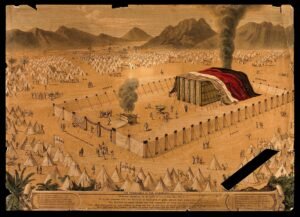
Ancient Tent Camp
Perfection, at first conceived in terms of OT cultic requirements (e.g., Exod. 12:5), later came to mean completeness in wholehearted dedication to Israel (Deut. 18:13), as in Noah and others (e.g., Gen. 6:9); here James continues the OT idea of perfection as a right relationship to God expressed in undivided obedience and unblemished life. Balance pervades the Epistle of James: here–characteristically–James has sounded the prelude (1:3) to the theme to be developed in 1:16-21.
James’s Capacity for Joy Even in the Trials of Life
It is fitting to call this verse the crucible of patience. But joy is an important part of it. In Adamson’s view, when James exhorts his audience to see joy even in the trials of life, he is in tune with the capacity for joy found in Greek art and literature. This article will explain the meaning of peirasmos and the defiance of joy in the Christian context.
Adamson argues that James writes and thinks in Greek better than any other New Testament author. Perhaps that’s why he objects to the inclusion of the ne nos inducas (“Lead us not…”) in the Lord’s prayer. He believed this had a different spirit than the opening words of James.
Deem it nothing but an occasion for joy, my brothers, whenever (on each occasion when) you encounter trying assaults of evil in their various forms. (James 1:2)
Sympathy for the Poor
In Adamson’s opinion, no New Testament author expresses more sympathy for the poor or more indignation at their sufferings. But it was the joy James saw in their sufferings that makes him stand out among the Christians of that period.
Mastery of the Greek Language
Adamson continues his praise for James arguing that James is close to the Greeks in his mastery of their language. He thinks this puts him in the company of ‘the unidentified author of the Epistle to the Hebrews’ or, for that matter, in the company of Aeschylus.
This is Agamemnon, my
Lord husband, slain, the deed of this right hand
Fulfilling justice; thus this matter stands.
(Aeschylus Agamemnon 1403-1405, as translated by Adamson)
Peirasmos
According to Adamson, the dominant ideas of the Epistle are the duty and the reward of endurance under peirasmos, a ‘certain and not distant victory’. The words and example of Jesus inspire this approach. He cites Luke 6:22.
Peirasmos roughly means temptation or temptations. (The KJV translation, Strong’s translation, and an outline of Biblical usage can be seen here.)
The Concept of Christian Joy
In the following paragraph, Adamson discusses the concept of joy. Christian joy is a kind of activity. He compares it to Aristotle’s notion of happiness. However, the word ‘happiness’ falls short of Aristotle’s thought in Greek, and ‘joy’ in English falls short of the Christian’s thought.
Christian joy is a man’s pleasure in his (and his brothers’) progress toward Christian salvation; and it is not undiluted pleasure. Judaism also ‘baptized moral joy into religion’ (Adamson p. 53).
Adamson cites the rabbis (b. San. 101a and Exod R. i.1); and R. Joshua B. Levi (Ta’an. 8a), who declared that ‘He who gladly accepts the sufferings of this world brings salvation to the world’.
Pagan philosophy understood this concept in much the same way: ‘True joy is an exacting business’ (the Stoic Seneca, p. 53).
Lucio Anneo Seneca
Internal and External Temptations
Some commentators have argued that James distinguishes between internal and external temptations. But Adamson tells us that in the Christian life, there is no effective difference. Both external and internal stimuli can goad a man into sin. This is due to the defects inherent in human nature.
When it comes to sexual lust, for example, the temptation of straying thought is no less real or potent than a provocative woman. (Adamson’s term was ‘ provocative temptress’. I am aware of the importance of words and meanings when it comes to Bible verses and commentary, so I’m making you aware of this change. I changed it because I believe Adamson’s commentary on the Epistle of James is worthwhile and I prefer not to lose readers in the first chapter. This particular word choice is not representative of Adamson’s work.)
The Greek Version Regarding Internal and External Temptations
I’m afraid I don’t understand Adamson’s point here well enough to summarize the rest of the paragraph. It was obviously important to him because he provided his argument in careful detail so, I’ve included the direct quote. Don’t be discouraged. Most of the book is enjoyable to read.
In the Greek of this verse, the picturesque adjective ‘various’, or ‘varied’, (ποικίλος) is in an emphatic position; and it would not have been wasted here by a master of the language on a tepid armchair dichotomy to signify or emphasize such difference as may exist between ‘external’ and ‘internal’ temptations. There are no otiose adjectives in James’s style; in 1:2 (against Ropes, one of the sources listed in his bibliography) ‘varied’, as the order shows to the discerning, is as emphatic as the noun ‘endurance’ in the next verse and the adjectives and participial phrase in v. 4, and the noun’ wisdom’ and the adverb ‘simply’ in v. 5. If James had wanted to use peirasmos in a selective sense he would scarcely have given it the expansive and emphatic ‘varied’ in hyperbaton without any indication that the sense of the noun was restricted. It is only in a clear context that peirasmoi has the narrower meaning. The Greek verb, encounter, note #18 on page 54, is apt for both kinds of temptation (Hort, against Mayor). Like the Latin incido it can have a deliberate meaning, as in a memorable passage in Xenophon, but it often indicates an unplanned and frequently, as here, an undesired incident. Much of the strength of temptation lies in our never knowing what it is going to do next.
James B. Adamson begins his commentary with the assumption that James is the brother of Jesus. He argues this point in detail in his introduction. I have chosen not to include that detail because I prefer to start right away with the text of the Epistle and Adamson’s related commentary. However, if anyone is interested in the arguments presented in the introduction, please let me know and I will write about them. Alternatively, readers can order the commentary.
James, a bond slave of God and the Lord Jesus Christ, to the Twelve Tribes of the Dispersion, salutation. (James 1:1)
Considering the Term ‘The Twelve Tribes of the Dispersion
Adamson begins by highlighting meaning of the term ‘the twelve tribes of the dispersion’ as it would have been used by ‘James the Lord’s brother’. He argues that this term could not refer figuratively to the whole multiracial Christian Church because the Epistle reflects the earliest stage of the teaching of the gospel. That would imply the most Jewish milieu. Therefore, it seems clear that James was not addressing Christianity’s ‘spiritual catholicity’. His theology and eschatology is that of a Jew who, like Jesus, focused on his own people.
To continue the argument, if James was implying a new spiritual meaning for the twelve tribes, he would not have added ‘of the Dispersion’, which gives it the historical application. ‘Of the Dispersion’ implies ‘the ancient, restricted, physical and national privileges of the Jews under the Covenant. Nor did James refer only to non-Palestinian Jewish Christians. The rabbis believed the Palestinian Jews represented all the twelve tribes of Israel.
The Bond Slave of God and Jesus
As far as I can tell, this identification of James as Jesus’s brother is not a controversial position even though Adamson’s approach is unique. That said, it seems to me that it has at least one controversial implication as Adamson explains below. It has to do with James identifying himself as the bond slave of God and Jesus. Adamson argues that James uses this term in a spirit of loyalty and devoted service to both God and Jesus. He explains that Paul also uses this term in an opening, in his Epistle to Titus. The concept is Hebrew (‘ebed) rather than Greek.
It is used in loyalty and respect toward prophets and rabbis, e.g. Gamaliel, Johanan b. Zakkai, and here toward God and our Lord Jesus Christ, as in the (non-Pauline) Epistle to the Hebrews…
Since proverbially no man can be the servant of two masters, it may be that James, in order to obviate any possible offense to the cherished monotheism of orthodox Jewry, is here emphasizing that service to Christ is also service to God, since they are both One (John 5:17; 9:4; 17:4), but we doubt whether such subtlety in the opening is truly in keeping with the character of this Epistle.
We hold that James, the Lord’s brother, is here writing as a Jew–not ‘a Jewish Christian’…, but a Christian Jew–to Jews, and that he was writing with full hope that the Jews as a whole would turn to Christ… (Adamson, pp. 50, 51)
Adamson looks ahead in the Epistle to the verses in which James will preach both aspects of the Christian religion, faith and works. He tells us that James will stress both aspects to the Jews as descendants and heirs of Abraham. However James is not teaching the same concept as Paul in Gal. 3:7:
Realize then that it is those who have faith who are children of Abraham.
Paul is concentrating on one aspect of Christian duty and the same aspect of God’s Fatherhood, the spiritual aspect. In this sense, Abraham’s fatherhood of the Jews is only symbolic. In James, however, prominence is given to God without prejudice to Christ. James understands that Jesus did not come to supplant but to supplement the Father. He did not come to supersede God’s Old Testament lessons to the Jews, but to reinforce them and extend them to the Gentiles.
To James, therefore, Christianity is not a new religion but the consummation of the old; and we shall never see Old Testament and New Testament as an intrinsic unity unless we grasp this fundamental truth enshrined in our Epistle.
In some verses, Prominence is Given to ‘God‘
Adamson lists the following verses in which James gives prominence to God without prejudice to Christ: 1:1, 5-8, 12-15, 16-21, 26, 27.
In Others, James Gives Prominence to Christ
Christ is the focus in 2:1:
Do not try to combine faith in the Lord Jesus Christ, our Glory,
with worship of men's social status.
And Finally, James Speaks of God
James speaks of God again in 2:19-25; 5:1-6 (esp. v. 5), in the prophetic tone of the whole passage 5:7-8, 9-11, 14-15, and in the example of Elijah in 5:16-18.
Adamson’s View of Who James Was Addressing
In the view of Adamson, James addresses his Epistle both to Christian and non-Christian Jews, outside and within Palestine:
see Paul’s practice in Acts 17:1-4 (esp. v. 2, ‘as his manner was’); also Gamaliel’s attitude (Acts 5:34-40). To Christian Jews Jesus is peculiarly the fulfillment of their eternal hope of ultimate restoration from the Dispersion (see2 Esdras 13:40; Tobit 13:3-5, 15-18; Rev. 21:10-17 and Rev. 18-21. On that note James opens his Epistle, the note of suffering but hopeful brotherhood.
The Word Salutation
According to Adamson, the word salutation is the usual greeting with which Greek letters of all periods opened. (He cites Acts 15:23 and 23:26.) In Hebrew (and ancient Syriac and modern Arabic) the regular greeting is “Peace!” In Latin it is “Health!” (Salve or Salvete, in Letters Salutem, i.e., salutem dicit). In Greek it is “Joy be to you.”
This first article in the series will introduce James B. Adamson and explain why the sincere sovereign is a fitting description; his commentary explodes the corporate narrative. At the time of publication, James B. Adamson, M.A., Ph.D. was a Presbyterian minister in Santa Rosa, CA.
The Sayings of Jesus, the Tradition of Elijah and Moses, and the Style of the Psalms and the Prophets
James B. Adamson was convinced that James was a master writer whose knowledge and choice of Greek bestow on his epistle a sustained unity of style and content that bears a close affinity with the Synoptic Gospels and the sayings of Jesus. The substance and authoritative tone of this epistle follow in the tradition of Elijah and Moses, and the style and diction resemble some of the outstanding qualities of the Psalms and the prophets. (W. Ward Gasque, Eastern College)
Adamson’s view of James was unique among scholars at the time he was writing this commentary. However, there is general agreement with his view that James was committed to Jewish Christianity. His epistle has been called ‘the Amos of the new Covenant’.
The Prophet Amos
Adamson Wanted to Address an Error Made by Luther and Subsequent Commentaries
Adamson wrote in his preface that one of his most important aims was to combat what he considered a fatal error made by Luther. And unfortunately, subsequent commentaries repeated this error. These sources argue that James’s epistle lacks cohesion of thought or design. Adamson disagrees and uses the structure of the epistle to identify its date and authorship. For example, he argues that James 5: 1-8 has a strong Old Testament and Jewish element. This is especially evident in the verb ‘howl,’ in 5:1. This verb occurs here alone in the New Testament, and in a passage of prophetic character, Isaiah 34:1.
Come now, you rich, weep and howl over your coming miseries. Your wealth has rotted, your clothes are moth-eaten: Your gold and silver is corroded, and the corrosion shall be for evidence against you, and shall devour your flesh like fire; you have laid up treasure in days that are coming to an end. See, the wages of the workers that have mowed your fields, which you have withheld from them, cry aloud; and the outcry of the reapers has reached the ears of the Lord of Hosts. You have lived on the earth in luxury and wantonness; you have fattened your hearts for the slaughtering day. You have condemned and murdered the just man; he does not resist you.
Hold out then, brothers, in patience till the coming of the Lord. See the farmer waits for the precious fruit of the earth, with persevering patience over it, until it shall have had the winder and spring rains; You too must persevere with patience, and fortify your hearts; for the coming of the Lord is near.
Jesus Reading the the Synogogue
James thus takes us back to the techniques of the Old Testament and the synagogue, comforting the afflicted in the Hebrew manner with a prediction of the fall of their enemies and oppressors, in the same way as, for example, the comprehensive curse of Isa. 34 upon the evil is immediately followed by the next chapter’s sublime comfort for their victims (Adamson, p. 12).