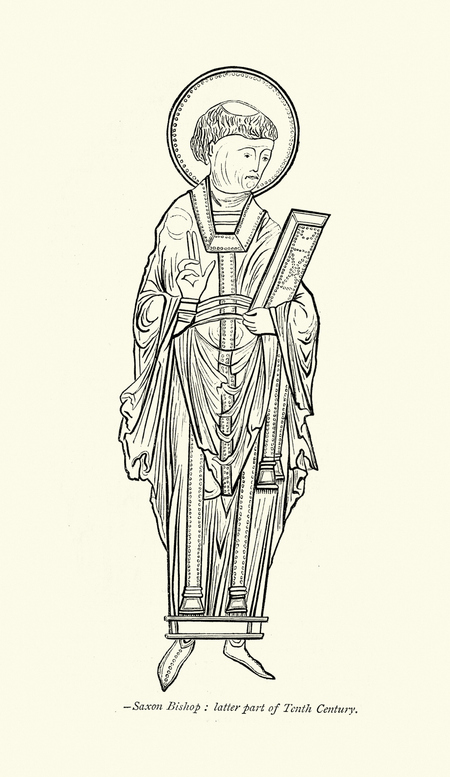
For several decades our government has behaved as if this country doesn’t belong to us. This can be explained in two ways. Either the country is ours and the government is cheating us, or it never belonged to us at all. Foreign political analysts like to call us Anglo-Saxons. Maybe they know something about our government that we don’t know. Christians say they are strangers and pilgrims on the earth. Maybe it’s fitting for Americans to acknowledge they are strangers and pilgrims in Anglo-Saxon country.
America and the Anglo-Saxon Outlook
I criticized Professor Wen Yang recently when he said Anglo-Saxons are the worst people ever. There may be some truth in this, but it’s too extreme. I think it would be better to explain Anglo-Saxon behavior as the result of a flawed social organization.
Wealth Inequality and the Plight of the Male Sex
Anglo-Saxon wealth inequality stems from a long-standing flaw in social organization. It is fostered and perpetuated by the institution of boarding school. According to Alan Macfarlane, this institution may have even created our economic system. He has argued that boarding school was the beginning of capitalism.
Before boarding school, economic activity took place in the household. However, sons who were sent off to boarding school ceased being part of that household. This severed the link between economic activity and the household.
Boarding school breaks the social bond between a boy and his family and makes him vulnerable to generic male influences and organized male cabals. In addition, his former household looses the connection and benefit derived from his economic activity. He loses benefits as well when his household ceases to participate in his efforts. This explains how capitalism became the stomping ground of independent (i.e. lonely) men.
Great Personal Wealth leads to Radical (i.e. antisocial and inhuman) Independence
There are additional dangers for men who become radically independent. I would put it like this: A man’s mental and spiritual health depend entirely on his family ties. Unaccountable wealth destroys family ties. I would argue that seizing wealth from these men would be more rescue than punishment.
There have always been proposals for small improvements in ruling class behavior. Policy-makers, politicians, and religious leaders in the mold of Pope Francis hold out hope that the existing system can be preserved. However, that hope has proven to be futile.
Conservatives Should Have Appreciated Pope Francis When They Had Him
Pope Francis was economically pragmatic. He fought for justice within the economic system and preached against ‘unfettered capitalism’, but he defended everyone’s part in the system. If the wealthy had listened to him perhaps they could have prolonged their privilege. However, in the last ten years they have demonstrated that capitalism itself is a run-away train. Furthermore, they enjoy riding on that train. The more unequal things get the better they like it. This position never was acceptable, but now the spell has been broken.
Wealth Inequality is a Curse
There is no justification for wealth inequality. It is a curse that can no longer be tolerated. The world’s wealth must be returned to families. That’s where it began and that’s where it should be used. Wealth does no good to anyone in the bank accounts or tax havens of a handful of sociopathic men.
However, in order for a seizure to work, the system must be overhauled. Otherwise these people will return to their old ways. The system must protect the wealth of families first. this can only be done by something like bridewealth, which I have argued for previously. This system served to safeguard a family’s wealth and protect mothers at the same time. Husbands benefitted from the system as well, but there were limits in place. By contrast, economic limits do not exist today. Instead, additional burdens are imposed on women.
There are core philosophical differences between Europe and the ‘Anglo-Saxon nations’ of Great Britain and the United States. Europeans seem to be aware of this, but the American people are not, maybe because the American educational system does not identify America as Anglo-Saxon. Instead, we are encouraged to think of ourselves as a melting pot with a diverse heritage. As a result, I believe we are poorly equipped for dialogue with the rest of the world. On the other hand, I suspect our leaders are aware of their Anglo-Saxon identity. If so, this might explain their recent behavior. Are they operating on the premise of Anglo-Saxons v the World? More importantly, is America’s behavior inspired by hubris, or are Americans responding to a sense of isolation?
I recently watched a video attributing the turmoil in the world to a breakdown in Anglo-Saxon philosophy and politics. In that video, Professor Wen Yang attributed the current turmoil in the world to a cultural and spiritual lack in Anglo-Saxon philosophy. He included the United States in the Anglo-Saxon category because he considers the US an extension of the British Empire.
Yang has issued a challenge that should not go unanswered. If we the people are considered Anglo-Saxons by virtue of where we live or who our allies are, we had better be able to respond to such accusations. The purpose of this article is not to introduce a new cause, but to explore what the Anglo-Saxon label means for conversation and analysis.
Is Anglo-Saxon Culture Uncivilized Compared to the rest of the world?
Credit: duncan1890
In Yang’s opinion, the Anglo-Saxon problem is very old. But while his argument might provide an explanation for the behavior of the United States in recent decades, his premise that the Anglo-Saxons missed the Axial Age can be disputed. Yang specifically attributes the behavior of the US and her allies in the Middle East to a lack of Axial Age influence and a resultant breakdown in Anglo-Saxon philosophy.
The Axial Age is a term coined by the German philosopher Karl Jaspers. It refers to broad changes in religious and philosophical thought that occurred in a variety of locations from about the 8th to the 3rd century BCE. As we will see, Yang’e analysis implies that the Anglo-Saxon nations have remained uncivilized and irreligious while other cultures progressed spiritually and morally. In this context, it might even be racist. Is Anglo-Saxon culture uncivilized compared to the rest of the world? However one answers this question, the Axial Age argument is not useful or even accurate.
The British Contribution to the Debate
Alan Macfarlane, an authority on Anglo-Saxon culture, has a completely different interpretation of the influence of the Axial Age. There is scholarly consensus that it was Japan that missed the Axial Age, and that Japan was the only world civilization to never experience it. Furthermore, the consequences of missing it were not necessarily negative.
Macfarlane explains the Axial Age as follows: for the civilizations that were affected by it, the world they knew was separated from an ideal philosophical world that was held in opposition and tension to that world. This resulted in the creation of world religion. The Japanese never separated their world. Therefore, Japan is not an actual civilization. Japan is an ancient shamanic civilization.
Macfarlane reached this conclusion independently, but he has since discovered that Robert Bellah1 and Shmuel N. Eisenstadt2 discovered it as well.
Apparently, missing the Axial Age does not lead directly to an Anglo-Saxon-type society.
Is America Really Anglo-Saxon?
Now we have to confront the question of whether America really is Anglo-Saxon. According to Alan Macfarlane, the United States does not have a key ingredient of Anglo-Saxon culture: boarding school. Boarding school was so influential in British culture and economics, another explanation would be needed for the presence of Anglo-Saxon characteristics in the United States.
What is an Anglo-Saxon? Origins of Europe and Britain
According to Macfarlane, the origin of the Anglo-sphere was the Anglo-Saxon invasions after the fall of Rome. Anglo-Saxon society had a peculiar family system. They had small, nuclear families, but they sent their children away to boarding school. Public education (the British name for boarding school) is the oldest institution in Britain, and it goes back to the Anglo-Saxon period. In Britain, children were, and still are, sent away between 8 and 13 years old. Macfarlane argues that this custom had the effect of splitting economic and social unity.
Romantic Love and Common Law
The children who are sent away are no longer a member of the unit of production in that household. This practice led to the development of romantic-love marriage, in addition to its economic effects. Romantic love was not inspired by the troubadours. It was a natural result of boarding school. Love was a self-choice.
Boarding school also had common law effects. The development of Britain’s legal system was unique. British law protected the individual, in contrast to law on the Continent, which did not protect the individual. However, Europe has adopted many aspects of British law, so this difference is no longer noticeable.
The British Trust
The trust, is another interesting feature. A trust is a non-government hybrid unit that turns things into people and vice versa. It was devised as a vehicle to get around the king’s inheritance tax. All of the major British economic institutions were trusts. And Anglo-Saxon trusts became a key device for modern capitalist democracy. However, the British trust is not like the corporation on the Continent.
Trusts explain how the Catholic Church can exist in Britain. Religions set themselves up as trusts. Trusts made non-conformity possible.
Trusts also explain the relation of Britain to its empire. First, trusts can be dissolved. The British empire disappeared in 20 years because the empire was a trust. Another an important difference with Continental empires is that in Britain, these relations often continued as part of the Commonwealth after they were ‘dissolved’.
Continental empires on the other hand, were were familistic, relational, and therefore, difficult to break out of. And once a part of the Continental empire broke away, it was out for good.
The Cruel Streak in Anglo-Saxon Culture
Finally we get a suggestion that these cultural practices have had both good and bad effects. On the negative side, there is a cruel streak in Anglo-Saxon culture. British society is based on confrontational, competitive, games, which are formed as clubs. Everything is individualistic and contractual. Parliament is a game, life is a game. And all of the games have teams. The Anglo-Saxon world is unfair in many ways, but it is made tolerable by humor. Humor in capitalist society acts like myth in other societies.
The Need for Understanding
There is tension between the Continent and Anglo-world. However, Macfarlane aims to promote peace by describing the natural characteristics of civilizations. He argues that ignorance of these characteristics can lead to misunderstandings, which are more serious today because a rapid rise in population has resulted in pressure on resources and migration. Several spheres are being mixed together. This has never happened before. These factors, combined with rapid changes in technology, have created a confused world. His books include: How to Understand Each Other3, and China, Japan, Europe and the Anglo-Sphere, a Comparative Analysis4. His point of view is a valuable addition to this discussion.
Conclusion
Anglo-Saxons may have a well-developed sense of humor, but clearly, there is nothing funny about the United States’ behavior in recent decades. Analysis is important, but the Axial Age doesn’t explain what we’re seeing. On the other hand, an understanding of Anglo-Saxon culture might be a good place to start.
I was going to compare Anglo-Saxon and Continental philosophy, but I realized the focus should be on the Axial Age. The following papers deal with philosophical differences and might be useful for further exploration:
Two Traditions of Liberalism by James H. Nichols, Jr. This is a review of João Carlos Espada’s book The Anglo American Tradition of Liberty: A View from Europe.
The Anglo-Saxon Conservative Tradition5 by Rod Preece. This book can also be read on JSTOR. Preece argues that the distinguishing mark between old and new conservatism is not between the old world and the new but between Anglo-Saxon nations and others. Anglo-Saxon ideology is best understood as Lockean liberalism.
The Axial Age and Its Consequences, Edited by Robert N. Bellah and Hans Joas, Harvard University Press, 2012 ↩︎
EISENSTADT, SHMUEL N. “The Axial Age : The Emergence of Transcendental Visions and the Rise of Clerics.” European Journal of Sociology / Archives Européennes de Sociologie / Europäisches Archiv Für Soziologie, vol. 23, no. 2, 1982, pp. 294–314. JSTOR, http://www.jstor.org/stable/23997525. Accessed 27 Mar. 2024. ↩︎
Alan Macfarlane, How to Understand Each Other, CAM Rivers Publishing, 2018 ↩︎
Alan Macfarlane, China, Japan, Europe, and the Anglo-sphere, CAM Rivers Publishing, 2018 ↩︎
Rod Preece, “The Anglo-Saxon Conservative Tradition.” Canadian Journal of Political Science / Revue Canadienne de Science Politique, vol. 13, no. 1, 1980, pp. 3–32. JSTOR, http://www.jstor.org/stable/3230084. Accessed 25 Mar. 2024. ↩︎
Cookie Consent
We use cookies to improve your experience on our site. By using our site, you consent to cookies.