Ancient Israel: Its Life and Institutions, Roland de Vaux
Roland de Vaux notes that the Bible lacks reliability as an exhaustive ethnographic source regarding the institutions and worldviews of ancient nomads and city dwellers. While settled sheep-breeding tribes do not parallel ancient Israel, nomadic Arabs share close ancestral and institutional connections with Israelites. This allows modern and pre-Islamic Arab life to illuminate early Israelite organization.
You can read more about this analysis in the provided source material.
Forms of Nomadism
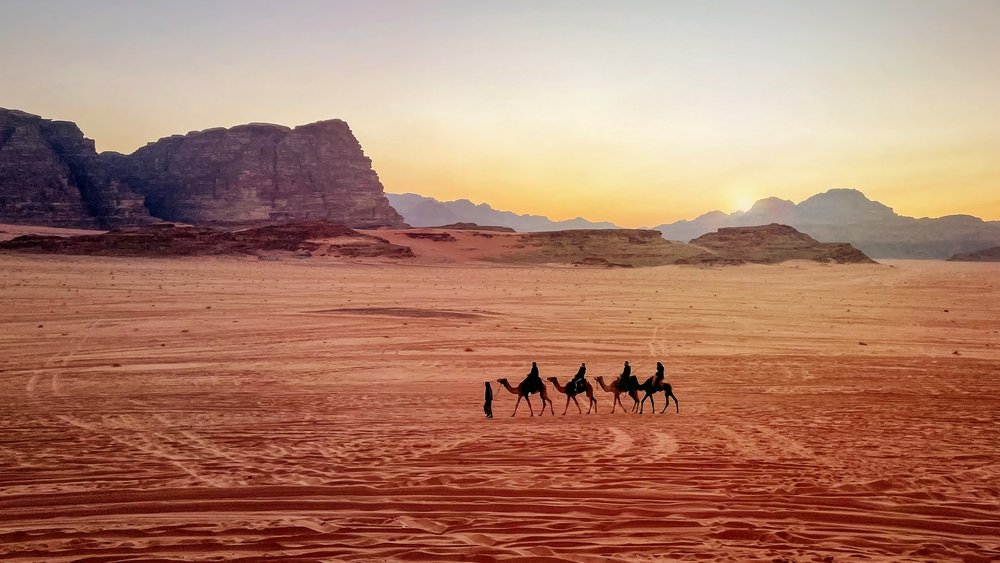
The True Bedouin
The true Bedouin (man of the desert) is a camel-breeder and can survive in regions where the annual rainfall is less than 4 inches. He has very little contact with settled people.
Nomads who Breed Sheep and Goats
Another type of nomad breeds only sheep and goats, which are not as hardy. The animals need to drink more often and can’t survive on the rough pasture suitable for the camels. They probably live in regions that get 4-10 inches of rainfall, traveling only on routes where they can manage the distance between watering holes. As a result, they have more contact with settled people.
Tribes who Raise Cattle (The Semi-Settled Enclosure)
Tribes who raise cattle represent the terminal stage of frontier erosion; they are no longer true nomads. Because cattle demand continuous water and cultivated grazing lands, these groups are forced to settle in fixed locations. In addition to herding, they till the soil and construct permanent houses.
- The Hybrid Mutation: They often develop split-frequency, hybrid existences—living part of the year in fixed settlements and part of the year moving with the herds.
- The Origin of the Cage: This fixed, high-resource lifestyle natively breeds the earliest forms of top-down exploitation. These hybrid tribes frequently accumulate exclusive property deeds at the extreme ends of their migration routes, utilizing serf labor to work the land. They cease to be a horizontal kinship clan and begin operating as localized feudal managers.
The Israelite Paradox
Forensically tracing this line of development unmasks a staggering truth regarding the people of Ancient Israel: they never possessed camels and held absolutely zero memory of life in the raw, deep open desert.
Instead, Israel’s foundational memory was entirely that of a semi-nomadic, sheep-and-goat frontier population. Yet even after they crossed the threshold, settled down as a sedentary nation, and began building towns, they fiercely retained the cultural, legal, and spiritual characteristics of that original un-enclosed baseline. Consequently, the protective muscle memory of the horizontal nomadic life remained the dominant, revolutionary influence behind all authentic Old Testament institutions. This influence served as a permanent defense shield against the totalizing systems of imperial kings.
[TRUE FRONTIER BASELINE (Camels)] ──> Total distance from the state registries & city gates. │ [THE ISRAELITE MARGIN (Sheep/Goats)] <─────────────┴─> Vulnerable to watering hole routes; Retain horizontal vows. │ [THE CATTLE FEUDAL ROT] ──> Settle fixed lands -> Accumulate property ledgers -> Deploy serf labor.
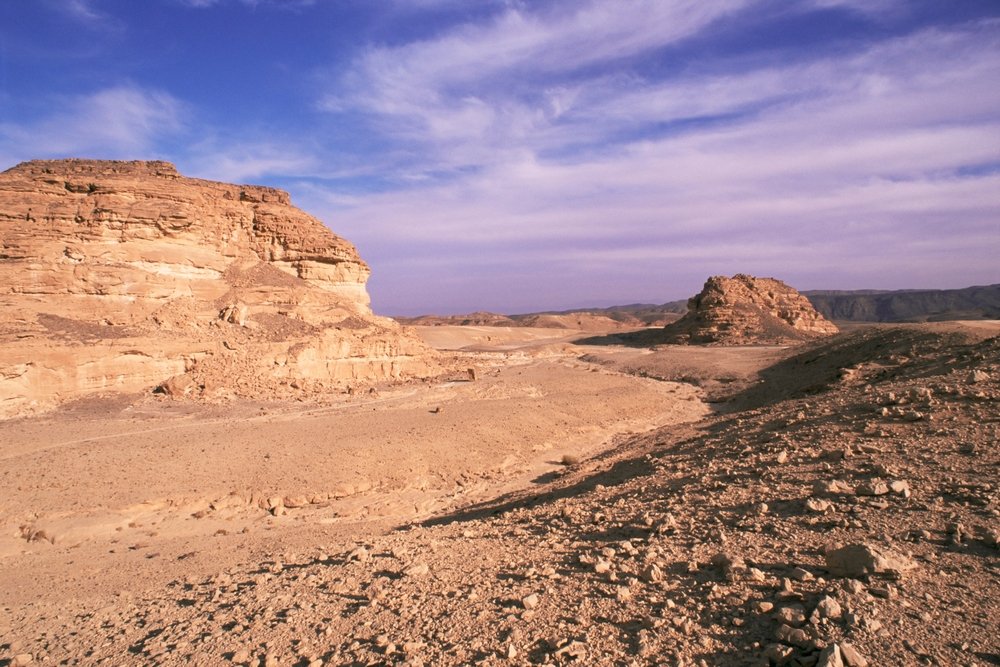
The Structural Anatomy of the Tribe
Because of the fierce, unyielding realities of physical survival out on the frontier, the foundational unit of civilization is the tribe. A tribe is not a geographic boundary or a state legal contract; it is a horizontal group of families bound together by a fierce, collective conviction that they are descended from a common ancestor.
The Execution of Tribal Law
Out on the un-enclosed frontier where the administrative matrix cannot reach, the parameters of law shift entirely away from written state registries and top-down judicial custom houses.
-
The Compact Perimeter and the Code of Hospitality
To survive the harsh physical environment, the size of a tribal unit must remain tightly optimized. It must be compact enough to maintain rapid mobility, yet strong enough to guarantee its own localized safety.
Because survival is a shared human struggle, a wandering individual must be able to count on an absolute, uncompromised welcome from neighboring groups if they are separated from their own clan line. In this un-enclosed landscape, anyone may need this survival insurance, and therefore everyone is bound by a sacred covenant to give it. This raw, face-to-face necessity is the direct historical origin of the ancient laws of hospitality and asylum.
-
Collective Responsibility vs. The Law of Blood Vengeance:
The desert frontier possesses absolutely zero state police forces, bureaucratic monitoring networks, or centralized courts of justice. Consequently, justice is fundamentally decentralized.
-
The Collective Burden:
An individual’s responsibility for an offense or a crime does not sit on a lone paper ledger; it belongs to their tribal group as a whole.
-
The Collective Shield:
Likewise, any retributive punishment naturally encompasses all members of that group. This raw, absolute protocol of mutual defense and collective liability was the original, uncompromised form of the law of blood vengeance. If you strike one member of the line, you strike the entire house
- The Refusal of the Ledger: The Soil vs. Blood Money
Because unchecked blood vengeance natively triggered endless family feuds and generational assassinations, the frontier law was gradually amended as populations settled. Yet, even with the introduction of fixed judiciaries, the practice of blood vengeance persisted. While many regional tribes eventually accepted monetary compensation to settle a death, the ancient Hebrews fiercely rejected blood money. To their prophetic mindset, human life could never be digitized or settled through a financial ledger; to put a price tag on cold-iron.
[THE IMPERIAL POLICE CAGE] ──> Centralized Courts / Written Registries / Individual Extraction Cops │ [THE FRONTIER BASELINE (Tribal Law)] <──────────────────────────────────────────────────────────┘ Compact Micro-Cells / Universal Asylum / Collective Vows on the ground │ [THE JETHRO COUNTER-STRIKE] ──> Re-establishing the Base Ten to shield the clan from state mischief.
The Power of the Tribal Surname
The name or surname of that founding ancestor becomes the permanent, unassailable banner of the entire group.
- The Sons of Code: This surname is frequently, though not exclusively, preceded by the marker “sons of” (Bnei). The ancient scriptural baseline reflects this exact structural frequency, referring to the Hebrew collective interchangeably as “Israel” or the “sons of Israel.”
-
The House of Code: Alternatively, a tribe’s identity may be anchored by the phrase “the house of” (Bet), as seen when the prophets address the “house of Israel” or the “house of Joseph.” This is not unique religious isolationism; contemporary Assyrian state cuneiform texts follow the exact same structural usage when cataloging the independent Aramaic groups who lived in identical, un-enclosed conditions on the frontier. The name was their shield.
[THE STATE APPARATUS CAGE] ──> Individual Data Units / Numeric Registries / Corporate Tracking Loops │ [THE HORIZONTAL BASELINE (The Tribe)] <─────────────────────────────────────────────────────────┘ Families Bound to a Common Ancestor, a Shared Name, and the Soil │ [THE COVENANTED SHIELD] ──> “Sons of Israel” / “House of Joseph” / The Clan Line holds the Wall.
The Metaphysical Framework of Kinship
For the nomad of the un-enclosed frontier, a genealogy is not a sterile family tree—it describes the entire social, economic, and defensive organization of the desert. Two allied tribes do not view themselves as corporate business partners; they view themselves as descendants of two ancestors who were brothers in the strict sense.
1. Eponymous Ancestors and the Code of the Separated
As these kinship charts expand across centuries, they naturally utilize eponymous ancestors—where a tribe is named after a defining historical action or landmark, which is later personified as a literal founding patriarch.
- The Khoza’a (The Separated): When this group fractured from the Azd tribe during the great Yemenite dispersion, they were named for their act of defiance. Yet, the tribal genealogists later assigned them a personal ancestor named Khoza’a to cement their horizontal unity [1.1].
- The Kholoj (The Transport): Transferred structurally from the ‘Adwan to the Al-Harith by the decree of Omar I, the genealogists cemented this political relocation by recording Kholoj as a literal surname within the Al-Harith bloodline [1.1].
2. The Alliance Architecture: The Agedat (The Confederates)
The ultimate proof of this fluid tribal architecture is found in the Mid-Euphrates region with the Agedat. Their very name explicitly confesses that they were formed as a confederation of separate, independent elements. Yet, to protect their collective autonomy, their political, economic, and defensive union is written and structured entirely as a single genealogical table.
They proved that a tribe is not a biological cage, but a conscious covenant. Families regularly joined together simply because they shared the same territory, or because smaller, vulnerable groups needed to merge their hardware in order to resist stronger neighbors and maintain their absolute independence.
The blood relationship that unites a people may be real or supposed. Every tribe has traditions about the ancestor from whom it claims descent. Kinship also explains the relationship between separate tribes. For a nomad, a genealogy describes the whole social organization of the desert. Each tribe descends from a single ancestor; two allied tribes descend from two ancestors who were brothers in the strict sense.
[THE IMPERIAL STATE REGISTRY] ──> Rigid Contracts / Tax Data Ledgers / Financializes Life & Death │ [THE HORIZONTAL CLAN CODE] <──────────────────────────────────────────────────────────────┘ Fluid Genealogies / Rewriting the Line to Protect Independence │ [THE REMNANT BASKET] ──> The Agedat Alliance model: Uniting by tens to defy the modern cage.
The Law of Adoption: The Code of the ‘Genealogized’
The absolute flexibility of the un-enclosed baseline is executed through the sovereign authority of the Sheikh or tribal elders to legally adopt entirely new individuals, families, or full clans into the corporate body of the tribe.
- The Total Integration: The moment a newcomer crosses this threshold, they become completely attached to the tribe both in name and in blood. This is not a superficial legal fiction; the newcomers formally acknowledge the tribe’s founding ancestors as their own true lineage, integrate into the social defense loop, and intermarry within the collective. The Arabs define this total cultural and spiritual conversion as being ‘genealogized.’
-
A classical text of the geographer Al-Bakri maps the exact operational frequency of this frontier protocol:
“And the Nahd ben Zaid joined the Benu al-Harith, became confederate with them and completely united with them; and the Jarin ben Rabban joined the Benu Zubaid, attached themselves to them and lived together, and the whole tribe with its confederates was attached to the same ancestor.”
Other factors can lead to the formation of a tribe. Sometimes families join together simply because they live in the same region. Or when stronger neighbors absorb weak elements. Alternatively, several smaller groups might combine in order to remain independent.
The Federation Architecture: The Israelite Confederation
Far from operating as a rigid, monolithic nation-state, the early layout of Israel was fundamentally a dynamic, horizontal Federation of independent tribes. The lines of kinship were constantly extended to absorb raw material from the outside to strengthen the defensive baseline.
The Case of Caleb:
- The tribe of Judah systematically absorbed the remnants of Simeon and seamlessly incorporated entirely foreign elements like the Calebites and Yerahmeelites. According to the foundational records in Numbers and Joshua, Caleb was originally a Qenizite—completely alien to the Israelite confederation. Yet, following centuries of shared frontier endurance, Caleb’s genealogy was formally attached straight to Judah. The son of Yephunneh was written directly into the lineage of Peres in I Chronicles 2, transforming an outsider into a frontline representative of the house.
The Flexible Fission:
- When a tribal unit grows too massive for its local resources, it executes a tactical split to preserve its mobility [1.1]. Yet, even when separated in space, the groups fiercely retain a core family solidarity, uniting instantly for common defensive operations. This mirrors the great ‘Anezeh and Shammar federations of the Syrian desert, as well as the ancient paradigm of Abram launching a military rescue the moment his separated kinsman Lot was taken prisoner by imperial kings.
The Logistics of Territory: The Battle for the Wells:
- Out on the un-enclosed frontier, a tribe’s relationship to the land is defined entirely by physical resources, not paper state boundaries, while cultivated fields might be held privately by individual families, the vital pasture lands are owned by the tribe in common.
Because territorial lines are fluid, the ultimate friction points down on the soil always center on food and water security—specifically the control of wells and cisterns. Every clan was intensely aware of the location of these watering places, leading to constant, systemic clashes between rival shepherds:
- Abram and Lot: Internal re source strains trigger immediate, amicable separation to prevent structural fratricide.
- The Abimelek Intrusion: Centralized local gatekeepers and foreign servants aggressively attempt to seize wells dug independently by Abraham.
- The Isaac Endurance: Isaac must wage a campaign to physically defend his rights over the vital wells he dug between Gerar and Beersheba.
- On the un-enclosed frontier, if localized negotiation failed to protect the water baseline, the dispute was settled by direct, horizontal warfare. You protect your well, or your family dies.
[THE IMPERIAL WATER CADASTRE] ──> State Claims the Water / Taxes the Well / Restricts the Radius │ [THE FRONTIER LOGISTICS (The Well)] <─────────────────────────────────────────────────────────┘ Common Pasture / Private Wells / Defending the Water by Force │ [THE MODERN MITIGATION] ──> Organizing the street by tens to protect the local water baseline.
The Law of Hospitality and Asylum: The Covenant of the Salt
Out on the un-enclosed frontier, hospitality is not a polite social choice; it is an absolute survival necessity that mutated over time into a sacred virtue. The guest is strictly protected. Caring for him is an honor.
The Buffer and the Radius:
A stranger enjoys absolute hospitality for three days, but even after crossing the perimeter, their right to protection remains active. Certain tribes define this boundary with raw, organic precision: “until the salt he has eaten has left his stomach.” In larger tribal networks, this defensive shield holds an absolute radius of 100 miles for three additional days.
The Gēr Protocol:
- A man who leaves or is violently expelled from his home is recognized among the Arabs as a dahil or jār, and among the Hebrews as a gēr—meaning “he who has come in.” Under the uncompromised law of asylum, the horizontal clan will protect him and even avenge him against foreign extraction forces. This ancestral custom is the direct genetic origin of the scriptural Cities of Refuge, mirrored when Abraham spares no expense to show hospitality to the three travelers at Mamre, and when Laban welcomes Abraham’s servant.
The Language of the Tent: The Linguistic Subversion of the Cage
The absolute proof that the un-enclosed baseline dominated the Israelite consciousness is in the Hebrew language itself. Long after the conquest—after the population had settled down and constructed stone walls—their everyday language still didn’t use the verbal architecture of the city.
- The Home: In both prophetic poetry and ordinary everyday speech, a fixed stone house was a tent (ohel).
- The Morning: The act of leaving early in the morning, was expressed as, “to load the beasts of burden.”
- Life and Death: The vocabulary of existence remained anchored to the frontier. The cut tent-rope, the pulled-out peg, or the tent itself carried off, represented death. Broken ropes and a tent collapsed in the wind represented societal desolation. Conversely, structural security was a tent with tight ropes and firm pegs, while an extended tent symbolized an expanding tribe.
[THE IMPERIAL URBAN GRID] ──> Fixed Brick Walls / Written Titles / Static Enclosures of the Cage │ [THE LINGUISTIC RESISTANCE] <──────────────────────────────────────────────────────────────┘ Calling a Stone House a “Tent” / Keeping the Software Mobile │ [THE TIGHT-PEG PERIMETER] ──> Driving your stakes deep into the dirt; keeping your baseline un-enclosed.
-
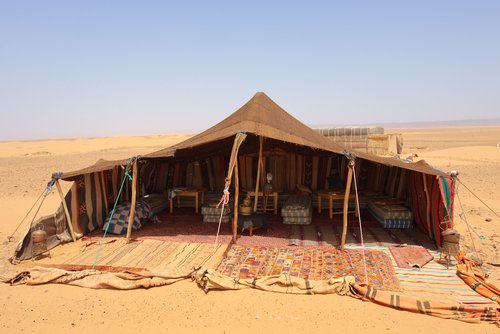
A Tent with Tight Ropes and Firm Pegs
The Federation of Israel
Israel absorbed other tribes too. The twelve tribes were a federation. The tribe of Judah absorbed the remnants of the tribe of Simeon. Judah also incorporated foreign groups like the Calebites and Yerahmeclites. The Calebites were originally outside of the Israelite confederation, according to the Books of Numbers and Joshua. Caleb was the son of Yephunneh the Qenizite, (Numbers 32:12; Joshua 14:6,14). The Calebites had contact with Israel from the time of the sojourn at Qadesh. Caleb’s genealogy was eventually attached to Judah. He was named at Qadesh as Judah’s representative for the exploration of Canaan (Numbers 13:6).
The son of Yephunnch becomes the son of Hesron, son of Peres, son of Judah and brother of Yerahmeel, (I Chronicles 2:9, 18, 24) or another foreign group (I Samuel 27:10) attached to the line of Judah (I Chronicles 2:9). These fusions probably took place frequently.
If a tribe becomes too large, it may have to split up. But the groups retain a feeling of family solidarity and unite for common enterprises. This is the case with two federations of the Syrian desert, the ‘Anezeh and the Shammar. Abram and Lot separated, but when Lot was the prisoner of the four victorious kings, Abram went to his rescue. (Genesis 14: 12-16)
Territory
Tribal members owned the cultivated land in their territory privately. But the tribe owned pastureland in common. However, it was not possible to define the territorial boundaries. This could lead to disputes, especially over the use of wells or cisterns.
Everyone was aware of the location of watering places and knew who their owners were. However, sometimes quarrels would break out between shepherds. Abram’s herdsmen quarreled with Lot’s. (Genesis 13:7) Abimelek’s servants seize a well dug by Abraham. (Genesis 21:25). And Isaac struggled to maintain his rights over the wells he had dug between Gerar and Beersheba (Genesis 26: 19-22). If the tribes could not settle these disputes peacefully, they settled them by war.
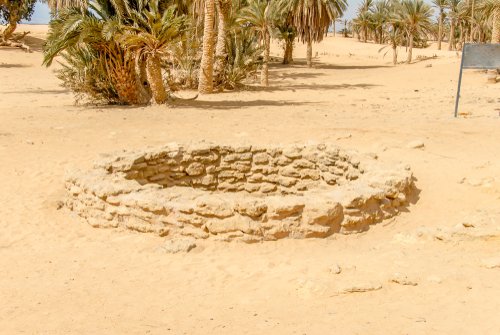
The Author
Roland de Vaux
Roland de Vaux (1903-1971) entered the Catholic priesthood in 1929, and became a Dominican the same year. Jerusalem became his residence in 1934 and he spent the rest of his life there. He was there first as a student, then as a teacher at the Ecole Biblique, a French Catholic theological school in East Jerusalem. He developed an interest in archaeology while in Israel under the influence of William F. Albright, Kathleen Kenyon and Benjamin Mazar. His team took part in the excavations of Khirbet Qumran and several caves near Qumran. The excavations were led led by El-Assouli, caretaker of the Palestine Archaeological Museum. This is now the Rockefeller Museum in East Jerusalem. De Vaux’s sources, include texts about pre-Islamic Arabs, ethnographic studies about the Arabs of today, and his own archaeological work.(Roland de Vaux biography, 6 Feb. 2012, Available: http://www.absoluteastronomy.com/topics/Roland_de_Vaux)