1. Mythology Among the Hebrews and its Historical Development Ignác Goldziher and Heymann Steinthal
Goldziher begins by saying that there are two successive stages in the development of mankind: Nomadic and Agricultural.
“In the former commences the chain of development, which is closed by the formation of perfect true society. First are formed communities, which though still standing only on the base of the family, yet represent a broadening of this base insofar as the notion of the family is first enlarged into the institution of a tribe and then this institution cannot always refuse to take in foreign elements.”
The Nomadic Period in the Development of Mankind
Political division into tribes is an important characteristic of the nomadic period but many civilized nations retain tribal divisions. The people have a “consciousness of belonging to one another”. Their names retain evidence of this heritage. This is evidence of their nomadic history.
“The Kirdic nomadic tribes still call themselves Kötsher, or wandering. The name of the Zulus means ‘homeless‘ or ‘roaming’. This is also the meaning of the name of the Zûzȋm, the Canaanite aborigines, as well as the Canaanite Perizzî.”
The Egyptians gave the name ‘Put’ to the many nomadic tribes that came into their country. The Egyptians also called them the ‘Runners’ and represented them in the hieroglyphs as a hare. The name of the Hebrews, Ibhrim, means the nomads, ‘for the word ‘ȃbhar means to pass through a land, or to cross a river, but also to wander about in general.’
The Nomad’s Search for Pasture and Water
“The nomad’s purpose in wandering is to find pasture for his herds– “green pastures beside still waters” (Psalms 23:2).” So the nomad sees cloudy skies as friendly. The fierce heat of the sun is experienced as an enemy. For this reason, cloudy heaven is personified in the myths of the nomads in the role of the conqueror. The nightly heaven defeated by the day is portrayed as a tragic figure and lamented. A nomad begins a journey in the afternoon and continues it during the night. If he travels at all by day it will be under the cover of clouds.
The Day Begins at Night
The Arabs tell the distance of a journey by the number of nights it will take to arrive at the destination.
“Between Damascus and the place where Walid b. Yazid lived in the desert are four nights.” (Kitab al-aghani)
It is this mode of counting time that holds to nomadic ideas long after a people have become agricultural. Julius Caesar said that the Gauls counted by nights, not by days. Tacitus said the same of the ancient Germans. For both Arabs and Hebrews, the day actually begins with evening.
In the Korân and in the poetry of the Bedawi there are allusions to the starry heaven. The caravan songs refer to night-traveling.
O how journey we, while dew is scattered out
and desert-dust bedecks the lips of sumpter beasts.
O how journey we, while townsmen sleep
With limbs involved in coverlets… (as quoted by Wetzstein)
Names of Nomads and City-dwellers
The nomadic Arabs might call themselves ‘Star’s daughter’; Banû Badr, ‘Sons of the Full Moon’; or Banû Hilâl ‘Sons of the New Moon’. The Banû Temîm, Banû Ḍabbâ, and Banû Azd called themselves ‘Sons of Night’, (Banû Ṣarîm). But the townsman of Mecca called himself ‘child of the Sun’. Darkness, storm, wind and rain are his enemies.
An old Hellenic name of the sun is Zeus Talaios, Tallaios, or simply Talos because he encourages growth. Clouds and rain are connected with Zeus Talaios when they are beneficial to the crops. For this reason, Zeus also becomes the Thunderer and Rain-giver.
The division between solar ideas and the preference for the night sky is not always clear-cut, and nomadic tribes might receive elements of sun worship from townsmen. But according to Goldziher, sun worship always follows the worship of the night sky, never precedes it. (But in the Assyrian language, ‘Ibhrîm’ corresponds to a verb for the sun. I-bar-ru-u kib-ra-a-ti ‘marches, wanders through the lands.‘ This seems contradictory in my opinion.)
The Nomad’s Sense of Superiority to the Agriculturalists and Townsmen
Nomads often cherish a sense of nobility and feel superior to the agriculturalist bound to the earth, and so when a nomadic society begins to settle down they don’t always think of it as an advance. Arabian historian Ibn Chaldûn glorified nomadism against the life of the townsmen. He thought the nomadic stage was a simpler and more uniform stage and surpassed city life in nobility and purity.
Muhammed said, ‘The Divine Glory (al-sakînat=shekhinȃ) is among the shepherds; vanity and impudence among the agriculturists.’
And the Chalif ‘Omar said, “Learn your genealogies and be not as the Nabateans of al-Sawȃd; if you ask one of them where he comes from he says he is from this or that town.”
The Changing Relation to Nature
A nation’s relation to external nature changes when it passes from a hunting life to nomadism, or from nomadism to an agricultural life. Religion eventually drives the myths out, although they may live on in legends, sagas and fables. Monotheism was the first force to deny mythic elements in religion. According to Goldziher, this happened to the Hebrews with the development of Jahveism.
Heroes, Patriarchs, and the National Idea
With the development of the national idea, the Hebrew myths became patriarchs, while the myths of the Hellenes became “Gods and god-born Heroes”. It is possible that the Canaanite influence and the monotheistic tendency discouraged the development of a consistent theology from Hebrew mythology, but the Hebrews did have a memory of Heroic figures. Their heroic age took place between the entrance into Canaan and the time of the Monarchy.
Heroes originally belonged to mythology, rather than theology. They were gigantic characters with no definite time or place. Heroes were localized over time and given a time and chronological framework. They are used to inspire patriotic feeling and so we find their stories at the beginning of national history. Theseus and Herakles were Greek patriots.
The function and meaning of certain mythological figures change in the process of development. In Hesiod’s Theogony for example, the dominion of Uranus came before the dominion of Zeus. For Goldziher this indicates that before the Hellenic people embarked on a settled agricultural life, and brought Zeus, the bright sunny heaven, into the foreground, the center of their world was Uranus (Varuna), the gloomy overclouded sky. This points to the supremacy of the Night.
Chaos, Darkness, and the Underworld
In Hesiod’s theogony, Chaos is one of the powers preceding the rule of Zeus. Chaos signified darkness in general and Tartarus, ‘a gloomy pit never lighted by the sun’. But later the theological meaning of Tartarus becomes the subterranean place to which the souls of the dead go.
Also, the word laylâ merely means ‘night‘. However, Job 36:20 uses the word in the sense of ‘nether world’.
“Salmâweth also means ‘darkness’ in general. But it also refers to Orcus, god of the underworld and punisher of broken oaths.
In mythology Tartarus is father of Typhon and Echidna, and Nyx. This is consistent with the nomadic idea that Tartarus is ‘father of waters and springs,’ and also ‘the first born’.
The Myth of Civilization
All agricultural societies have a myth of civilization, which is a sequence of the solar myth. The nomad has no permanent social system; laws and social order are irrelevant. Arts and manufacturing are inconceivable. He has no need for anything but his tents, herds and pasture ground.
But the myths of the agriculturist speak of the bringer of arts and manufacturing, social order and law, and this is always a solar figure. The musician and smith are solar figures. So is the navigator and founder of cities. Apollo and Osiris were both inventors of agriculture and teachers of the arts. The Hellenes thought the agricultural life was the only morally perfect condition. And Roman poets in times of military conflict regarded peaceful agriculture as the happy state of the innocence of primeval mankind.
On the other hand, the Voguls, who were hunters and fishermen, consider Kulyater, the builder of the first city, to be evil.
“(Kulyater) dwelt in a house locked with seven iron locks. Tarom was angry with him, and seized him by one foot and he fell into the heart of the foaming sea.”
The Persian Jemshîd is a solar hero. He is the builder of cities, the inventor of fine arts, and the cultivator of the vine. According to Goldziher, he was the Iranian Noah. He divided the nation into four classes: Scribes, Warriors, Agriculturists and Artists. There is no mention of the pastoral life in this division; only agriculture. In other words, Jemshîd put an end to nomadic tribal life.
But like Prometheus, the god hurls Jemshîd down for his presumption. This came about because Zohak, ‘from whose shoulders dragons grow up’ conquered him. Jemshîd landed on the shore of China after a fall of 100 years, where he was devoured by the monster waiting for him at the bottom of the sea. However, Jemshîd rose again out of the sea, like Jonah.
According to Goldziher, Zohak’s dragons are the dragons of storm and night. The sun is always at war with the storm and the night sky. In many cultures, it is the moon who weakens the sun and brings the flood.
The Hebrew Myth of Civilization
It is remarkable that in the biblical creation story the sun is the father of the human race. The Arabs call Adam Abû-l-bashar, ‘father of all flesh’. Adam’s name signifies ‘the Red’, which is etymologically the same as Edôm. If we accept the second chapter of Genesis at face value, the nomadic Hebrews have the same parentage as the Greeks, who called the mother of mankind Pyrrha, ‘the Red’.
And the solar lineage continues, uninterrupted, in Cain. The posterity of Seth simply repeats the names of Cain’s descendants. Seth was not part of the original myth.
Cain (Kayin) the Inventor of Agricultural Implements
Cain is Kayin, the inventor of agricultural implements. This creates a problem under Goldziher’s system of interpretation. The killing of Abel appears to be a primitive nomadic idea. In other words, part of the war between the sun and the cloud. But crafts or manufacture would have to be a part of the culture before an artisan or blacksmith figure can be given a part in a people’s myths and the arts. Goldziher proposes that a solar figure would have been the murderer in the primitive myth as well, but he did not receive the name of Kayin until the stage of civilization.2
Noah, the Second Father of the Human Race
Noah, the second father of the human race, was a solar figure as well.
De Vaux interprets the story of Cain (Genesis 4: 11-16) as the Hebrew condemnation of nomadism, arguing that wandering was imposed on him as a curse. But according to Goldziher, the Hebrew conception of the world glorifies the Nomadic life. The Hebrews thought God imposed the curse of agriculture on fallen humanity. Arab nomads agree on this point and include manufacturing and the arts in the same category.
The Meaning of Cain
Goldziher was aware of the confusion concerning the identification of mythical figures and thought this disagreement may have been the result of an error in the writings of Philo Herennius, who used Greek cosmogony to interpret the Phoenician myth of civilization. In Goldziher’s description of the Phoenician myth, Chrysoros was the Opener, Navigator, and Smith, a Solar character, and was the progenitor of Aypos or Ayporfs and Aypvrjpos… ‘From them are derived the agriculturists and those who hunt with dogs. These later are called Wanderers to and fro.’ It is possible that because the sons of Chrysoros were described as hunters and wanderers, hunting and the nomadic life were confused with the origin of agriculture.
“Now hunter and wanderer and as we have seen, are attributes of the Sun, who shoots his rays at the monster of the storm, and is ‘a fugitive and a vagabond,’ engaged in a migration from east to west.”
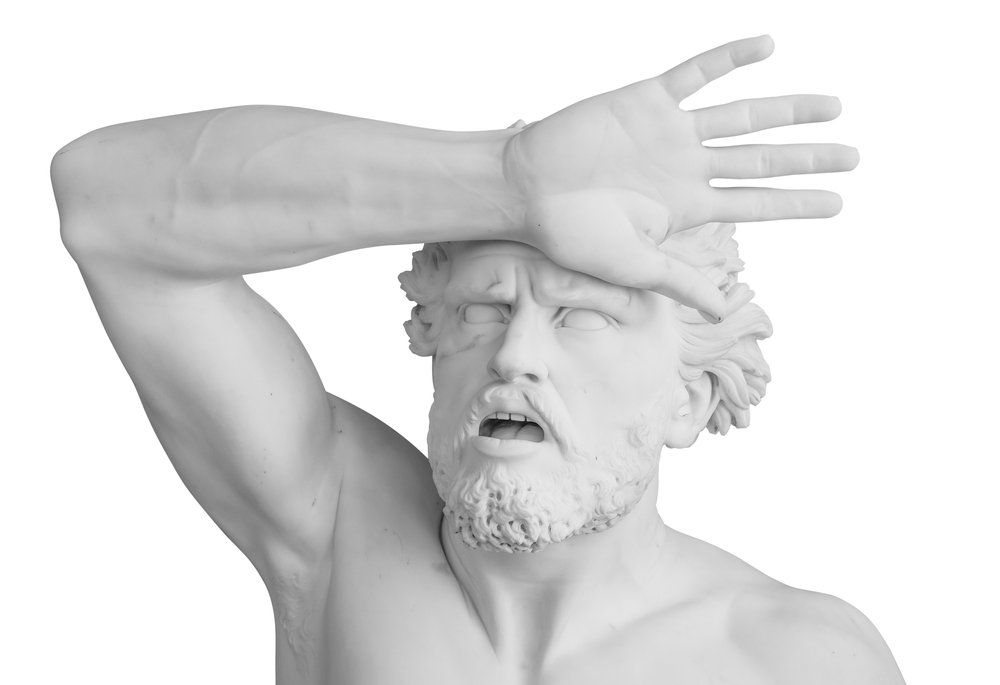
Cain was a hunter and a wanderer, but not a nomad.
The authors:
Ignác Goldziher
Ignác Goldziher (1850-1921) was born in Székesfehérvár, Hungary. In 1868 while attending university in Pest he was awarded a fellowship by the minister of religion and education, Józsf Eötyös, to study abroad. In Berlin one of his professors was Heymann Steinthal, co-author of “Mythology Among the Hebrews”.
Goldziher toured the Middle East between September 1873 and April 1874, where he was the first European to attend lectures at Al-Azhar Theological University in Cairo. While there he formed a friendship with the leader of Pan-Islamism, Jamāl al-Dīn al-Afghānī. Today he is best noted for his work on modern Islamic scholarship. His bibliography was compiled by Bernát Heller in 1927.
“Mythology Among the Hebrews” published in English in 1887, was the first of two major Jewish works. In this book he refuted the thesis of French scholar Ernest Rénan, who denied the existence of Hebrew mythology.3
Heymann Steinthall
Heymann Steinthal (1823-1899) was a German philologist and philosopher. He studied at the university of Berlin, and in 1850 was appointed Privatdozent of philology and mythology. In 1863 he was appointed assistant professor at the Berlin University. From 1872 he was also privatdozent (unpaid lecturer) in critical history of the Old Testament and in religious philosophy at the Hochschule für die Wissenschaft des Judenthums. Steinthal and his brother-in-law, Moritz Lazarus, established the society for the new science of folk psychology in 1860.4
The Problem of Unity
Goldziher uses Steinthal’s and Lazarus’s theory of ‘folk psychology’ to interpret mythology and to explain differences in customs and the process of change from one mode of existence to another; from nomadic life to agricultural life in this case. The influence of Steinthal and Lazarus places the conversation about nomadism in the context of Europe’s pre-World War II conversation about the problem of unity in a nation of diverse people. Steinthal and Lazarus, were ‘emancipated’ Jewish intellectuals, and believed in the superiority of the ‘German spirit’ as expressed in philosophy, science and literature. They saw themselves working toward a unified German nation.
The main criticism of their theory concerned the contradiction between the idea of a unique Jewish identity, and the idea of the German national spirit. The Jews, they claimed, were not a nation but a confession within the German nation and could serve the nation best if they kept their unique character. According to some of their peers, this was not consistent with the idea of a ‘harmonious Volksgeist’, the centerpiece of folk psychology. In spite of the theory’s critics, folk psychology made a contribution to the social sciences when its key concepts were used by scholars such as Georg Simmel and Franz Boas.5
Sources and Recommended Reading:
For further study on this topic, I highly recommend reading Mythology Among the Hebrews and its Historical Development by Ignác Goldziher. It provides invaluable depth to the historical and structural concepts discussed in this piece.
You can find a copy of the text directly through my booklist here: [Mythology among the Hebrews and Its Historical Development a book by Ignác Goldziher – Bookshop.org US
Note: By purchasing books through this link, you directly support local, independent bookstores. This publication also receives a small commission at no additional cost to you, helping to fund the upkeep and research of this ad-free blog.