For several decades our government has behaved as if this country doesn’t belong to us. This can be explained in two ways. Either the country is ours and the government is cheating us, or it never belonged to us at all. Foreign political analysts like to call us Anglo-Saxons. Maybe they know something about our government that we don’t know. Christians say they are strangers and pilgrims on the earth. Maybe it’s fitting for Americans to acknowledge they are strangers and pilgrims in Anglo-Saxon country.
America and the Anglo-Saxon Outlook
I criticized Professor Wen Yang recently when he said Anglo-Saxons are the worst people ever. There may be some truth in this, but it’s too extreme. I think it would be better to explain Anglo-Saxon behavior as the result of a flawed social organization.
Wealth Inequality and the Plight of the Male Sex
Anglo-Saxon wealth inequality stems from a long-standing flaw in social organization. It is fostered and perpetuated by the institution of boarding school. According to Alan Macfarlane, this institution may have even created our economic system. He has argued that boarding school was the beginning of capitalism.
Before boarding school, economic activity took place in the household. However, sons who were sent off to boarding school ceased being part of that household. This severed the link between economic activity and the household.
Boarding school breaks the social bond between a boy and his family and makes him vulnerable to generic male influences and organized male cabals. In addition, his former household looses the connection and benefit derived from his economic activity. He loses benefits as well when his household ceases to participate in his efforts. This explains how capitalism became the stomping ground of independent (i.e. lonely) men.
Great Personal Wealth leads to Radical (i.e. antisocial and inhuman) Independence
There are additional dangers for men who become radically independent. I would put it like this: A man’s mental and spiritual health depend entirely on his family ties. Unaccountable wealth destroys family ties. I would argue that seizing wealth from these men would be more rescue than punishment.
There have always been proposals for small improvements in ruling class behavior. Policy-makers, politicians, and religious leaders in the mold of Pope Francis hold out hope that the existing system can be preserved. However, that hope has proven to be futile.
Conservatives Should Have Appreciated Pope Francis When They Had Him
Pope Francis was economically pragmatic. He fought for justice within the economic system and preached against ‘unfettered capitalism’, but he defended everyone’s part in the system. If the wealthy had listened to him perhaps they could have prolonged their privilege. However, in the last ten years they have demonstrated that capitalism itself is a run-away train. Furthermore, they enjoy riding on that train. The more unequal things get the better they like it. This position never was acceptable, but now the spell has been broken.
Wealth Inequality is a Curse
There is no justification for wealth inequality. It is a curse that can no longer be tolerated. The world’s wealth must be returned to families. That’s where it began and that’s where it should be used. Wealth does no good to anyone in the bank accounts or tax havens of a handful of sociopathic men.
However, in order for a seizure to work, the system must be overhauled. Otherwise these people will return to their old ways. The system must protect the wealth of families first. this can only be done by something like bridewealth, which I have argued for previously. This system served to safeguard a family’s wealth and protect mothers at the same time. Husbands benefitted from the system as well, but there were limits in place. By contrast, economic limits do not exist today. Instead, additional burdens are imposed on women.
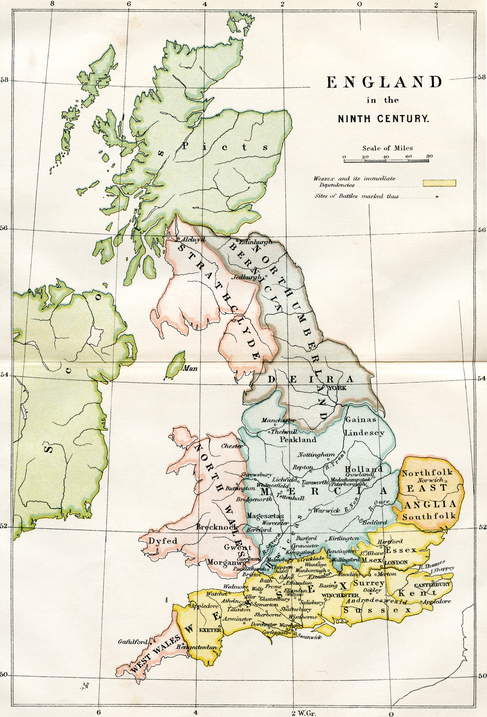
Reading Time: 7minutesAn engraved image showing a 9th century map of the kingdoms of Anglo Saxon Dark Age Britain taken from a Victorian book dated 1882 that is no longer in copyright iStock.com/TonyBaggett
In the video summarized below, Professor Jeffrey Sachs and Professor Wen Yang claim that Western Philosophy has deviated from the right path. A more blunt way of saying it is Anglo-Saxon philosophy lost its way.
I don’t disagree that the West needs guidance. I appreciate Professor Sachs’s speech and I think the Eastern cultures represented by Professor Wen Yang have a lot to offer the West. But I also think it’s important that we don’t end up in someone else’s dream of a traditional society by making choices we don’t understand. I am summarizing this video because these ideas need further discussion.
The video goes back and forth between Professor Jeffrey Sachs and Professor Wen Yang, a researcher at the China Institute, Fudan University. Professor Yang agrees with the speech by Professor Sachs for the most part. He says it is particularly relevant today as we witness the catastrophes taking place in the world. But he disagrees with Sachs in one important way. Sachs cites Aristotle’s works on politics and ethics as a starting place for a sound political philosophy. Professor Yang, on the other hand, thinks we need to go back another 200 years in time. This would bring us to the time of Confucius.
Professor Yang thinks Confucius is more relevant because he dealt with large territorial states, while Aristotle dealt with small city-states. Confucius is also important to Wen Yang’s arguments because both Confucius and Aristotle had the benefits of the Axial Age.
Machiavelli’s focus on power
The video begins by pointing out a strange fact; apparently, there is nothing worth mentioning in Western politics or philosophy between the time of Aristotle and the time of Machiavelli.
It is Sachs who brings up Machiavelli’s handbook for political science. He stresses that, in contrast to the West’s traditional roots, the focus of this handbook was how to hold on to power.
In turn, Professor Wen Yang wonders how it is possible that Machiavelli’s treatise, when it finally appeared, was able to change the course of Western political philosophy. He believes that the core of the problem was the innate deficiencies of Western civilization. And these began very early. The problem with the West is that it did not experience the Axial Age.
Professor Yang on the importance of the Axial Age
The Axial Age is a theory developed by German philosopher, Karl Jaspers. Jaspers proposed that in a relatively short span of years, various cultures experienced a state of spiritualization or self-awareness. This experience gave rise to several religions. These religions include Confucianism and Taoism in China, Hinduism and Buddhism in India, monotheism in Israel, and philosophical rationalism in Greece. Unfortunately, when the current form of Western culture arose in Northern Europe around the year 1000, it was a ‘newborn’ culture which had not experienced its own period of transcendence. Nor did it share the knowledge of older cultures. This was partly due to the fact that it had little contact with them.
According to Wen Yang, the West remained a primitive society, without moral and ethical judgement, and men remained individual and insatiable. He believes that’s why Machiavelli’s writings were adopted as a political philosophy. Such ideas would not have gained wide acceptance in a mature civilization that had experienced an Axial Age.
Professor Sachs on Thomas Hobbes’s view of human nature
Jeffrey Sachs doesn’t respond directly to this description of the problem. The video juxtaposes his speech, which was made independently, with that of Professor Yang. When we return to Sachs, he cites Thomas Hobbes’s work, Leviathan, written in 1640. (This was the period when Western science was taking shape.) Hobbes’s model of human nature was one of unbounded desire. In Hobbes’s view, it was impossible for humans to develop virtue. For that reason, institutions were needed to keep a grip on harsh reality. He believed that in order for people to not kill each other they need an ‘overarching power’, or a Leviathan. There was nothing in Hobbes’s philosophy about cultivating the good. It was all about controlling the bad.
Guanzi’s solution to human reality: four pillars of a civilized state
Wen Yang says there were similar opinions about human nature in China, but the results were not the same. He cites Guanzi in China, who lived more than 2,000 years before Hobbes. Guanzi wrote that there are four pillars to a civilized state: a sense of propriety, righteousness, honesty, and humility. In Wen Yang’s opinion, ‘It would seem that such a level of self-awareness and ethical self-regulation was not attainable in the West, not in Hobbes’s time and not now.’
Bernard Mandeville’s Fable of the Bees: the world view of the British Empire
Sachs speech continues. Theories of empire were added to the West’s philosophical and political development. This began with Bernard Mandeville and his Fable of the Bees. It furthered a world view which led to the British Empire, with its traffic in slavery and all kinds of evil deeds.
Confucius: education leads people in a virtuous direction
By comparison, Confucius had placed great importance on education to shape and lead people in a virtuous direction. To illustrate the difference, Yang tells us that Xunzi had similar insights to Hobbes in the third century BCE. He also saw the negative potential of human nature. He believed that if people were driven by nature and guided by impulses they would be trapped in struggles. So he suggested a system in which intellectuals will bear the responsibility of safeguarding a just society.
Adam Smith: market forces will tame human nature
Professor Sachs continues by describing the thought of Adam Smith in 1776. Smith agreed with Hobbes and Mandeville concerning human nature, but he thought market forces would tame those troublesome traits. Smith was obviously unaware that Xunzi had predicted long before Smith’s time that contentions, or ‘competition’, would lead to poverty.
Two world views, two civilizations
According to Wen Yang, the difference between Smith and Xunzi represents a difference in world views. When Xunzi used the word ‘people’, he meant the world in its entirety, not a small group of individuals. Smith and Mandeville on the other hand, envisioned a small political entity acquiring political power for overseas conquest. Wen Yang tells us that the only way the world can know peace and prosperity is if all the world’s countries choose to cooperate.
Professor Sachs seems to agree on the timeframe and philosophies that were responsible for this difference. He says Anglo-Saxon philosophy broke free of more than 1,800 years of Western tradition, which had been based on Aristotle and Christianity. As a result we got the British Empire, which was focused on power. Next, Sachs traces steps in this downward spiral.
The West forsakes the poor: John Locke, Thomas Malthus and Charles Darwin
The poor became the enemy because they were a drag on society. John Locke, in particular, wanted harsh treatment for the poor so they would not be a burden on society. Then came Thomas Malthus in 1798. He said that all the various ‘hives’ in the world are in competition with each other for survival because there are more people than can be supported. Trying to help the poor will inevitably fail because it will increase the number of poor people.
Then, Charles Darwin and Natural Selection took the stage. Other philosophers after Darwin developed his theories into the idea of a struggle across nations. They imagined that whole peoples were in a struggle with each other for survival. This became known as Social Darwinism.
According to Wen Yang, this phase is the root of the current problem. The British Empire brought extinction wherever it went, and, unfortunately, the US Empire is an extension of the British Imperial Establishment. The main difference is that the United States has the ability to end human existence in a split second. The Anglo-Saxon empires have proceeded exactly as Social Darwinism would predict.
Crimes against humanity
Sachs: This progression gave rise to the worst crimes in history. Nazism is a philosophy based on Social Darwinist pseudo-science. It was based on the idea that either the German people will survive or the Slavic people will survive. As a result, World War II was a war for extermination. Even though that war ended, the West is still in the same mindset, so the crimes continue.
Wen Yang: Noam Chomsky says that 50 to 55 million people around the world have died since World War II as a result of Western colonialism and neoliberalism. Most of these deaths were caused by the United States and justified under the name of freedom and democracy.
Is there a remedy?
Yang returns to 300 BC and the ideas of Mencius. Mencius was a Confucian philosopher who said there are four essences of human nature that are common to all: a heart for compassion, a sense of shame and guilt, a faculty of reverence and a judgement of right and wrong. Suppressing these essences was a precondition of Western liberal capitalism. Philosophical writings in the West fulfilled this precondition. They glorified selfishness and greed in the name of freedom.
The question now is, what can be done? Yang and Sachs offer similar advice. According to Sachs, there are roots of Western culture that we can use to find the ethical path of virtue in politics which was lost by the Anglo-Saxons. He says what we need is for the world to return to the common ethical principles of virtue. These principles were lost mainly as the result of the rise of the British Empire. Later, the British Empire taught United States everything it knows.
As a comparison with Professor Sachs, Professor Wen Yang believes the current problems can’t be explained by saying the West lost its way. He seems to believe that the West never had a way. Because the West never experienced transcendence, it is regressing back to the level that existed before the Axial Age.
If that’s as far as you got in the video, you would say we are doomed. But surprisingly Yang thinks we are at a crossroads. This implies that we can still choose. He ends by asking, ‘Are we going to choose a society based on virtues, or are we going to condone a rat race to the bottom, and assured destruction?‘
Cookie Consent
We use cookies to improve your experience on our site. By using our site, you consent to cookies.