Tag: Aristotle

  • Patriarchy in Modern Society: Historical Roots and Future Implications

    Reading Time: 11 minutes

    Historical Origins of Patriarchy

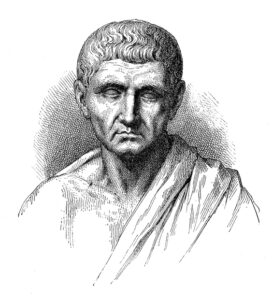
    We know the approximate origin of patriarchy in modern society. It appeared in the West approximately 1200 BCE. But the credit goes to Homer (750-700 B.C.) who sang of the struggles of distant heroes. He was the first to describe a patriarchal system. Homer’s poems, the Iliad and the Odyssey, told of men who gave law to their children and wives. Next, we have the influence of Solon (630-550 B.C.). Solon’s actions may have advanced patriarchy in a more concrete way than Homer’s poems. He was considered ‘one of the Seven Wise men of Greece’. So, when he built a brothel in Athens and dedicated its profits to the erection of a temple to Aphrodite, the goddess of love, he gave patriarchy cultural and religious standing. However, it was Socrates (c. 470-399 B.C.) who immortalized disdain toward women1 Distain toward women is inseparable from patriarchy.

    I will argue that the first patriarchs were foreign invaders. They married women from the indigenous conquered populations and imposed their own demands on them. This required them to police their new system in order to perserve it.

    These invaders clearly demonstrated that they were rapists and looters and foreign adventurers. They never intended to assimilate into the conquered population. Instead, they remade the known world in their own image. But eventually the outrageousness of their behavior combined with their new positions of authority, motivated them to justify themselves. The Greeks used mythology and philosophy; the Romans used law. They both used misogyny.

    Early Patriarchs Were Synonymous With Warfare

    There were no early patriarchal societies. Patriarchy did not form societies. It destroyed them. The examples of Greece and Rome illustrate this characteristic. 

    Greece

    The context of early patriarchy in Greece was destruction and upheaval caused by the Achaean invasion. It was basically a bloody coup in which the invaders slew entire colleges of priestesses. But interspersed with the carnage were furtive and piecemeal tactics, such as sly manipulation of ancient marriage practices and occassional murder.

    Socrates and his students are our most familiar patriarchal authorities, but they didn’t invent the system. They were following a script written by earlier Greek conquerors. In Socrates’ time, all that was needed was continuing reinforcement and justification. Homer wrote his stories in the fourth century B.C. but he set them around 1200 B.C.  That is how the process worked. His poems were constantly adapted to please aristocratic patriarchal males. They also helped cover up crimes committed in the takeover.

    Rome

    Romulus founded the city of Rome as an asylum for runaway slaves, outlaws, exiles, and criminals from across Italy. There were almost no women there; the outlaws and outsiders were all male. So, the Romans invited a neighboring tribe to a festival and forcably kidnapped their daughters. This is known today as the Rape of the Sabine Women. The Roman home was treated like a conquered territory because that’s what it was. 

    The Modern Evolution of Patriarchy

    Today, the politically correct version of these stories are all that most people know. They are what comes up first in a Google search. This illustrates the modern evolution of patriarchy. We swim in a patriarchal ocean…

    Greece

    If you were to do a Google search for the question, Did Theseus conquere Crete?, you would get the official story. Theseus was sent to Crete as captive youth in tribute to the Minotaur. He successfully slew the beast, stopped the tribute, and escaped Crete with King Minos’s daughter, Ariadne.

    However, if you supply additional information, the full story can still be found. But you have to know what you are looking for when you begin. 

    If you reply for example, In reality, Theseus won property through bigamy and even kidnapped Helen when she was a child. You will get the following answer: Yes, in the context of Greek mythology, you are completely correct. While Theseus is often celebrated as a noble hero, his mythological history includes many deeply problematic and villainous acts, including the kidnapping of a young Helen.

    This answer includes a general outline of the story–Helen’s age, where they kept her, and the consequences of Theseus’s villainy. However, sources may hedge a little. For example, according to the source linked above, Theseus was motivated by his desire to marry a daughter of Zeus. That may be technically true, but it meant that he wanted access to what Helen would bring to a marriage: the throne and control of the related territory.

    Other sources fill in the blanks. Theseus used the same technique in Crete. When he married Phaedra, the sister of Ariadne and daughter of King Minos of Crete, it solidified Athenian ties to Cretan wealth and power. However, it ultimately ended in a family tragedy.

    Rome

    If you ask Google where Roman Patriarchy comes from, again the first answer is the politically correct one. Roman Patriarchy was the result of brutal practical realities. These ‘practical realities’ include early agrarian survival, warlike tribal foundations, and strict property law. The Sources listed are Reddit and Brewminate.com

    The explanation continues: While the Greeks used philosophy to keep women away, the Romans used codified law. Their law turned the male head of the household into a micro-emperor.

    Supposedly the economy of cattle and the danger that they might be stolen made this necessary. Men monopolized the warfare necessary to protect the herds. Therefore, the male line controlled the property. 

    There are many ways to say the same thing. For example, the early Roman agrarian state was surrounded by hostile neighbors and had to organize itself like a military fortress. The family was not an emotional unit. It was an economic corporation headed by the oldest male in the family. The sources listed are: Worldhistory.org; Wikipedia; bbc.co.uk; and medium.com.

    Nevertheless, we get the impression that the position of women in Rome was not as pitiful as Athenian women. 

    Objection: Why Didn’t the Indigenous People Become Patriarchal?

    There is one important objection to these justifications for Roman patriarchy. Indigenous peoples faced the same threats but they didn’t subjugate their women. This objection is quickly validated by Google’s AI.

    Your point about indigenous cultures (like many Native American tribes) developing matrilineal systems despite facing hostile neighbors is completely accurate. This proves that external threats do not inherently force a society to adopt an extreme patriarchy. 

    This thread provided the story of Romulus, which I related at the beginning of this discussion. It concludes with the following statement :

    While indigenous matrilineal societies relied on deep, stable kinship networks where women held the continuity of the community, Rome was an aggressive, synthetic military state built by rootless men.”

    The Stories of Ancient Greece and Rome are Actually Defense and Coverup

    In Greece, Plato and Aristotle provided an intellectual defense for the Hellenes’ brutal conquest during the Bronze age, centuries earlier. When they arrived, the Aegean was dominated by the Minoan Civilization on the island of Crete. This culture was centered around female power. (The reason for Greek hatred of women couldn’t be more clear.) 

    These were Mycenaeans, the first true Greeks. They arrived from the mainland around 1450 B.C.E.,  overthrew the Minoan centers, smashed the matriarchal structures, and replaced the Mother Goddess with their own sky-father warrior god, Zeus. (Quora.com and Internationalschoolhistory.com.)

    By the time Socrates and Plato came along, the physical violence was over, but the guilt and anxiety of that violence remained. Classical philosophy was the ultimate coping mechanism: it allowed Athenian men to look at the subjugated women around them and say,We didn’t violently steal your power; nature and logic dictate that you never should have had it in the first place’.” (LiteratureandHistory.com)

    The Weaponization of Name Calling and Outrage

    The Greeks in Herodotus’ times knew of four generations who were responsible for a period of social upheaval. One example is the renowned Heroes who slew many mythological beasts: Bellerophon killed the Chimera; Hercules or Herakles ended the lives of many monsters in his Twelve Labors; Theseus killed the Minotaur and founded Athens. We know now that these are pleasant ways of describing a more brutal reality. 

    The Chimera was one of the symbols of the Mother Goddess cult; we are really being told that Bellerophon ended the cult by killing its priestesses. He may have even used one Mother Goddess cult to wipe out another. The Pegasus, which he used to kill the Chimera, was one of Her favorite animals. However, he may also have experienced a revolt. In the end, he fell from Pegasus and died2, p. 129-130.

    The killing of the Minotaur by Theseus probably represents the Achaean invasion of Crete, and Herakles’ Second Labor was the killing of the Hydra of Lerna. The killing of the Hydra probably represents the elimination of a college of priestesses at Lerna. And when Herakles shot the Stymphalian birds with his arrows, his Sixth Labor, he was really suppressing a Goddess cult at Stymphaly. That’s how the myths are interpreted today.

    Herakles was Fighting a Religious War

    Herakles was fighting a religious war. His myth had vestiges of ancient Goddess worship, but it was distorted. Before he arrived, the Goddess cult had deified many Heroes, but in the end he was the only Hero who remained. (This is the same as Palemon, whose story is described below.)

    The myth states that Herakles worked for Hera. However, this isn’t exactly right. By this time, marriage was an Achaean weapon. Generations of Heroes before him had achieved political and religious status by marrying a sacred queen. In the case of this Herakles (his real name was Palemon) he was following orders to marry the Queen and become the Hero-King of that Euzkan region. He was accompanied on his mission by Theseus, Iolcus, Peleus and many others. When he took the Golden Girdle from Hippolyte the Queen of the Amazons on his ninth labor, he actually deflowered her. That led to a battle in which the Amazons were killed.

    The voyages of the Achaeans were not particularly focused. They included the exploration of trade routes and general mischief, so it took some time to understand what they were doing. Sometimes a king would simply leave the kingdom. It was a violation of religious tradition and a shocking lack of piety with no explanation, but it was considered a one-time thing. In addition, the period of kingship was gradually increased by the invaders, sometimes up to twenty years and only then would a king fight to avoid being deposed. The pattern wouldn’t become clear until later. After all, the indigenous population lived within the established system. It had been part of a sacred reality in that region for as long as anyone could remember. But finally the priestesses recognized the danger.

    Jason and Medea

    Jason married Medea, a Sacred Queen, and when the time came to escape he took her with him. When she discovered what his real intentions were, it was not possible for her to return. She was disgraced and she would have been punished. Instead she chose to advise King Aegeus of Athens of the threat posed by Theseus. She tried to poison Theseus, but he escaped to Crete where he seduced Ariadne. Then he returned to Athens, killed Aegeus, took the throne, and banished Medea.

    Palemon

    It is thought that Palemon married sacred queens at least three times, probably many more. As stated previously, the Achaeans were able to do this by taking a leave during their kingship. In this way they could unify or control a wide region. The social psychic instability continued for centuries, and most Greek tragedies are based in this period.

    Deianeira

    When Deianeira, the current wife of Palemon, realized what was happening, she took advice from the Centaurs, Pelasgian horsemen. They knew Palemon very well because he had had killed their king, Cheiron, and many others. This had been particularly outrageous because Centaur Cheiron had trained him in archery and the art of hallucinogens.

    Deianeria annointed one of Palemon’s shirts with a poison supplied by Centaur Nessus. He died while wearing this shirt. Palemon was deified after his death even though he was not the last Hero or even the last Herekles. For the indo-Europeans he was the only one.

    The old religion continued for some time, but the information war continued too. And eventually, Homer wrote his version of the drama in the Iliad and the Odyssey.

    What We Know About the First Patriarchal Systems

    Among Indo-Europeans women were very low on the social scale. For Latins and Greeks, they were just a little above other reproductive animals. They had no social rights at all. Rather than enjoying an independent lifestyle, they were transferred from their father’s authority to that of their husbands. If they survived their spouses, their male children assumed authority over them.

    Greek writers such as Theopompus and Hesiod, and their Roman compatriots like Cato, agreed that the only purpose of a woman was to provide legitimate children. The education of women was limited to weaving and cooking, and they never appeared in public.

    In ‘settled, lawful Rome’ until the rise of the Empire, women could not own property, or anything else for that matter. They were owned. They were so unimportant they had no names. Emilia and Claudia were family names indicating that they belonged to an Emilii or Claudii man.

    Women prepared the meals for their men and their guests but they did not eat with them. The same was true in Rome. Roman and Greek conservatives were disgusted by the conduct of Etruscan and Ionian women. Yes, disgusted. Not surprised, not curious, not disapproving. Disgusted!

    What was the Character of the Indigenous Society?

    A different sort of society existed in the same region during this period. The indigenous societies they took over had been in Europe thousands of years before the arrival of the Indo-Europeans. They were the remnant of the Paleolithic population in that region.

    Ionian women for example joined their husbands at their businesses. They had their own businesses too, and could inherit and pass on property. Love in the couple was common. The women were competitive, and their husbands didn’t mind. 

    We know from my original patriarchy article that women in Egypt had similar rights before Egypt was conquered by Alexander the Great. Alexander was a student of Aristotle; Aristotle was a student of Plato; Plato was in the vanguard of the regime-change campaign.

    Alexander the Great consciously strove to spread Greek thought, language and culture to all of the peoples he conquered. Thanks to him, the writings of his mentors, Plato and Aristotle, have been perpetuated in Western philosophy. And as Alfred North Whitehead famously said, Western philosophy is a series of footnotes to Plato.

    Women’s Rights v Disgusted Indo-Europeans

    One of the accounts I am using focuses on the Basques. This is The Oldest Europeans by J. F. del Giorgio. I’ve discovered a few minor errors in this work, but I’ve found it useful for the most part. He argues the traits of these societies were shared by populations in other areas of the West, for example, Britons, Scandinavians, Irish, Welsh, Celts, Etruscans and Pelasgians–the Oldest Europeans. It is interesting that hatred for these cultures resurfaced before World War II. 

    The trait that had most bothered those early invaders was the independence and self-assertiveness of European women. Before World War II Asiatic anti-European propaganda claimed independent women were a modern symptom of European decadence. 

    del Giorgio argues that modernity had nothing to do with it.

    The independence and other remarkable traits of European women are not modern, It all comes from ancient, very ancient times.

    Actually, it is not now that they are more independent. They have not gained independence during the last millennia, but have almost completely lost it. European women were not merely independent in the past. They seem to have enjoyed a remarkable high status. They were practically in command (del Giorgio, p. 86)

    Patriarchy in Contemporary Society

    The impact of patriarchy on modern social structures is so total it is almost invisible. Many modern women assume they are liberated, or they did until the recent American backlash, but this perception was always delusional. The overriding structure of the world is patriarchal and it will remain that way until our institutions and economic agreements change drastically.

    Challenges to Patriarchal Structures

    An effective challenge to patriarchal structures does not exist in today’s world. The feminism allowed by our culture is part of the power structure. Take Hilary Clinton for example. She and Bill together have been good soldiers for the Anglo-Saxon-leaning power-base for their entire careers. And I would venture to say that Hilary has always been in awe of Bill’s political ability, regardless of her independent feminist stance. She is talented in her own way and hard-working, but her only claim to fame in the 2016 election was being female. She didn’t win, but she fulfilled her assignment–to do whatever was necessary to defeat Bernie.

    The Same-Sex Marriage Movement as Women’s Rights Strategy

    The same-sex marriage movement has its own dedicated lobbyists who are working toward some invisible goal. Feminist theory may be the source of this movement, but as a strategy for women’s rights, it’s wrong-headed. 

    Greece and Rome fostered same-sex relationships, but this did not help Greek or Roman women. Same-sex relations were not a threat to the Achaeans. Women as women were the threat, and the Achaeans destroyed the cultures that honored them. 

    The Romans loved Greek art, architecture, and literature, and they assimilated some of it into their arts and mythology. They were also heavily patriarchal but their patriarchy had a different character than Greek patriarchy. The Romans rejected certain Greek institutions. They especially despised the classical Greek social structures which they believed made Athenian men weak, effeminate, and psychologically soft. For that reason, they criticized gymnariums and nakedness. These institutions were a recipe for laziness and corruption in their view. The Romans exercised for military training, but they kept their clothes on. (thehistorianshut.com; onlinelibrary.wiley.com)

    Rome also rejected Greek pederasty. They thought it violated a citizen’s dignity. They did form same-sex relationships, but they protected Roman youth. A Roman citizen could only have same-sex relations with slaves or non-citizens, and he must always take the dominant penetrative role. They viewed the Greek system of courted free citizens as a complete breakdown of patriarchal authority.(rlesser.sites.gettysburg.edu; thoughts.com)


    1. John Temple Bristow, What Paul Really said About Women. HarperCollins Publishers, NY, 1988. []
    2. J.F. del Georgio, The Oldest Europeans. A.J. Place, 2005. []
  • Anglo-Saxon Philosophy Lost Its Way

    Reading Time: 7 minutes
    Anglo-Saxon Philosophy Lost Its Way
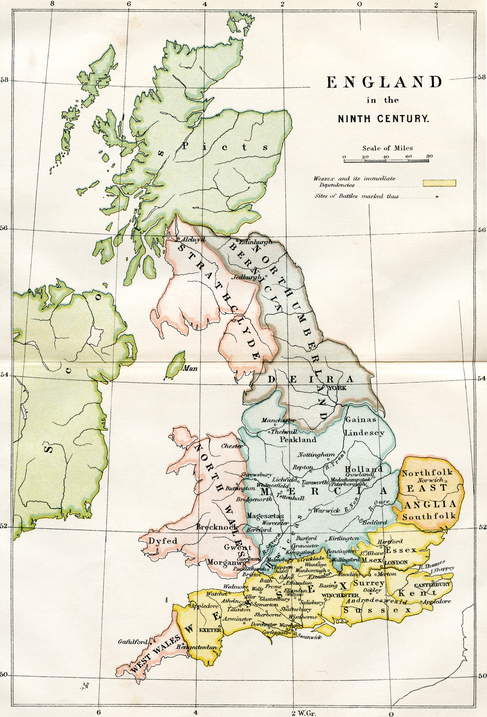
    An engraved image showing a 9th century map of the kingdoms of Anglo Saxon Dark Age Britain
    taken from a Victorian book dated 1882 that is no longer in copyright iStock.com/TonyBaggett

    In the video summarized below, Professor Jeffrey Sachs and Professor Wen Yang claim that Western Philosophy has deviated from the right path. A more blunt way of saying it is Anglo-Saxon philosophy lost its way.

    I don’t disagree that the West needs guidance. I appreciate Professor Sachs’s speech and I think the Eastern cultures represented by Professor Wen Yang have a lot to offer the West. But I also think it’s important that we don’t end up in someone else’s dream of a traditional society by making choices we don’t understand. I am summarizing this video because these ideas need further discussion.

    I also want to point out that the term ‘Anglo-Saxon’ is loaded with meaning. During World War II, the Axis Powers, which included Nazi Germany, the Kingdom of Italy, and the Empire of Japan, used this term for Great Britain and the United States. The relationships and differences implied by this identification will be discussed in future articles.

    Aristotle or Confucius

    The video goes back and forth between Professor Jeffrey Sachs and Professor Wen Yang, a researcher at the China Institute, Fudan University. Professor Yang agrees with the speech by Professor Sachs for the most part. He says it is particularly relevant today as we witness the catastrophes taking place in the world. But he disagrees with Sachs in one important way. Sachs cites Aristotle’s works on politics and ethics as a starting place for a sound political philosophy. Professor Yang, on the other hand, thinks we need to go back another 200 years in time. This would bring us to the time of Confucius.

    Professor Yang thinks Confucius is more relevant because he dealt with large territorial states, while Aristotle dealt with small city-states. Confucius is also important to Wen Yang’s arguments because both Confucius and Aristotle had the benefits of the Axial Age.

    Machiavelli’s focus on power

    The video begins by pointing out a strange fact; apparently, there is nothing worth mentioning in Western politics or philosophy between the time of Aristotle and the time of Machiavelli.

    It is Sachs who brings up Machiavelli’s handbook for political science. He stresses that, in contrast to the West’s traditional roots, the focus of this handbook was how to hold on to power.

    In turn, Professor Wen Yang wonders how it is possible that Machiavelli’s treatise, when it finally appeared, was able to change the course of Western political philosophy. He believes that the core of the problem was the innate deficiencies of Western civilization. And these began very early. The problem with the West is that it did not experience the Axial Age.

    Professor Yang on the importance of the Axial Age

    The Axial Age is a theory developed by German philosopher, Karl Jaspers. Jaspers proposed that in a relatively short span of years, various cultures experienced a state of spiritualization or self-awareness. This experience gave rise to several religions. These religions include Confucianism and Taoism in China, Hinduism and Buddhism in India, monotheism in Israel, and philosophical rationalism in Greece. Unfortunately, when the current form of Western culture arose in Northern Europe around the year 1000, it was a ‘newborn’ culture which had not experienced its own period of transcendence. Nor did it share the knowledge of older cultures. This was partly due to the fact that it had little contact with them.

    According to Wen Yang, the West remained a primitive society, without moral and ethical judgement, and men remained individual and insatiable. He believes that’s why Machiavelli’s writings were adopted as a political philosophy. Such ideas would not have gained wide acceptance in a mature civilization that had experienced an Axial Age.

    Professor Sachs on Thomas Hobbes’s view of human nature

    Jeffrey Sachs doesn’t respond directly to this description of the problem. The video juxtaposes his speech, which was made independently, with that of Professor Yang. When we return to Sachs, he cites Thomas Hobbes’s work, Leviathan, written in 1640. (This was the period when Western science was taking shape.) Hobbes’s model of human nature was one of unbounded desire. In Hobbes’s view, it was impossible for humans to develop virtue. For that reason, institutions were needed to keep a grip on harsh reality. He believed that in order for people to not kill each other they need an ‘overarching power’, or a Leviathan. There was nothing in Hobbes’s philosophy about cultivating the good. It was all about controlling the bad.

    Guanzi’s solution to human reality: four pillars of a civilized state

    Wen Yang says there were similar opinions about human nature in China, but the results were not the same. He cites Guanzi in China, who lived more than 2,000 years before Hobbes. Guanzi wrote that there are four pillars to a civilized state: a sense of propriety, righteousness, honesty, and humility. In Wen Yang’s opinion, ‘It would seem that such a level of self-awareness and ethical self-regulation was not attainable in the West, not in Hobbes’s time and not now.’

    Bernard Mandeville’s Fable of the Bees: the world view of the British Empire

    Sachs speech continues. Theories of empire were added to the West’s philosophical and political development. This began with Bernard Mandeville and his Fable of the Bees. It furthered a world view which led to the British Empire, with its traffic in slavery and all kinds of evil deeds.

    Confucius: education leads people in a virtuous direction

    By comparison, Confucius had placed great importance on education to shape and lead people in a virtuous direction. To illustrate the difference, Yang tells us that Xunzi had similar insights to Hobbes in the third century BCE. He also saw the negative potential of human nature. He believed that if people were driven by nature and guided by impulses they would be trapped in struggles. So he suggested a system in which intellectuals will bear the responsibility of safeguarding a just society.

    Adam Smith: market forces will tame human nature

    Professor Sachs continues by describing the thought of Adam Smith in 1776. Smith agreed with Hobbes and Mandeville concerning human nature, but he thought market forces would tame those troublesome traits. Smith was obviously unaware that Xunzi had predicted long before Smith’s time that contentions, or ‘competition’, would lead to poverty.

    Two world views, two civilizations

    According to Wen Yang, the difference between Smith and Xunzi represents a difference in world views. When Xunzi used the word ‘people’, he meant the world in its entirety, not a small group of individuals. Smith and Mandeville on the other hand, envisioned a small political entity acquiring political power for overseas conquest. Wen Yang tells us that the only way the world can know peace and prosperity is if all the world’s countries choose to cooperate.

    Professor Sachs seems to agree on the timeframe and philosophies that were responsible for this difference. He says Anglo-Saxon philosophy broke free of more than 1,800 years of Western tradition, which had been based on Aristotle and Christianity. As a result we got the British Empire, which was focused on power. Next, Sachs traces steps in this downward spiral.

    The West forsakes the poor: John Locke, Thomas Malthus and Charles Darwin

    The poor became the enemy because they were a drag on society. John Locke, in particular, wanted harsh treatment for the poor so they would not be a burden on society. Then came Thomas Malthus in 1798. He said that all the various ‘hives’ in the world are in competition with each other for survival because there are more people than can be supported. Trying to help the poor will inevitably fail because it will increase the number of poor people.

    Then, Charles Darwin and Natural Selection took the stage. Other philosophers after Darwin developed his theories into the idea of a struggle across nations. They imagined that whole peoples were in a struggle with each other for survival. This became known as Social Darwinism.

    According to Wen Yang, this phase is the root of the current problem. The British Empire brought extinction wherever it went, and, unfortunately, the US Empire is an extension of the British Imperial Establishment. The main difference is that the United States has the ability to end human existence in a split second. The Anglo-Saxon empires have proceeded exactly as Social Darwinism would predict.

    Crimes against humanity

    Sachs: This progression gave rise to the worst crimes in history. Nazism is a philosophy based on Social Darwinist pseudo-science. It was based on the idea that either the German people will survive or the Slavic people will survive. As a result, World War II was a war for extermination. Even though that war ended, the West is still in the same mindset, so the crimes continue.

    Wen Yang: Noam Chomsky says that 50 to 55 million people around the world have died since World War II as a result of Western colonialism and neoliberalism. Most of these deaths were caused by the United States and justified under the name of freedom and democracy.

    Is there a remedy?

    Yang returns to 300 BC and the ideas of Mencius. Mencius was a Confucian philosopher who said there are four essences of human nature that are common to all: a heart for compassion, a sense of shame and guilt, a faculty of reverence and a judgement of right and wrong. Suppressing these essences was a precondition of Western liberal capitalism. Philosophical writings in the West fulfilled this precondition. They glorified selfishness and greed in the name of freedom.

    The question now is, what can be done? Yang and Sachs offer similar advice. According to Sachs, there are roots of Western culture that we can use to find the ethical path of virtue in politics which was lost by the Anglo-Saxons. He says what we need is for the world to return to the common ethical principles of virtue. These principles were lost mainly as the result of the rise of the British Empire. Later, the British Empire taught United States everything it knows.

    As a comparison with Professor Sachs, Professor Wen Yang believes the current problems can’t be explained by saying the West lost its way. He seems to believe that the West never had a way. Because the West never experienced transcendence, it is regressing back to the level that existed before the Axial Age.

    If that’s as far as you got in the video, you would say we are doomed. But surprisingly Yang thinks we are at a crossroads. This implies that we can still choose. He ends by asking, ‘Are we going to choose a society based on virtues, or are we going to condone a rat race to the bottom, and assured destruction?

  • Harvey on Class Nation and Nationalism

    Reading Time: 11 minutes

    This article presents the views of Professor David Harvey on class, nation and nationalism. Harvey’s recent video, published by Politics in Motion, touches on an important element of the Pinker-Mearsheimer debate about the Enlightenment. I review the relevant points here.

    Introduction of the argument with relevant ideas from of the Mearsheimer-Pinker debate

    In part two of John Mearsheimer’s case against the effectiveness of Enlightenment, he says that because people are social animals, they belong to tribes. We still belong to tribes. Today tribes are called ‘nations’. Because human beings are tribal, their identity is bound up with the tribe or nation. Their interests, their ways of looking at the world, and their views of justice are affected by this identification. And because people belong to different tribes, they often can’t reach political and moral consensus.

    David Harvey’s relation to the argument

    Mearsheimer was refuting the position of Steven Pinker, who argued that people are first and foremost individuals. Pinker thinks that because people are individuals, they ought to be able to use reason to reach a consensus. Here, David Harvey focuses on the idea of nations and nationalism in relation to capital. But his arguments have much to say about the social nature of human beings. This offers perspective on individualism versus the collective tendencies of human beings. It also urges caution in the exploration of nationalism. Harvey’s approach also requires us to rethink our understanding of environmentalism.

    Nation, nationalism, capitalism, and the nation-state

    How we are to understand the concept of the nation and the role of nationalism? Related to this is the question of what nationalism might do to our theoretical descriptions of how capitalism works. For example, what happens when we put the word ‘nation’ in front of the word ‘state’? We normally assume the nation-state has a different character from the bourgeois state.

    It is also important to mention that there is some confusion as to what the argument might be about. For example, Marx in the Communist Manifesto, said the nation doesn’t matter when it comes to thinking about terms of class. The workers have no country, therefore, they wage class struggle. Talking about class struggle is different from talking about the nation. This problem was taken up after Marx’s time.

    At that time there was an argument about how to understand the nation and the right of self-determination of populations. In 1915, Stalin wrote one of the original treatises on the role of the nation-state in politics. So did Rosa Luxemburg, Lenin, and others. The debate continues in Marxist circles. Harvey’s plan in this and subsequent videos is to discuss how and why the nation-state came about and also what its origins might be. He also wants to talk about its consequences.

    Origins and consequences of the nation-state

    In the early 1920s, Woodrow Wilson, President of the United States from 1913 to 1021, said the following.

    Since trade ignores national boundaries and the manufacturer insists on having the world as a market, the flag of his nation must follow him and the doors of the nations which are closed against him must be battered down. Concessions obtained by financiers must be safeguarded by ministers of state, even if the sovereignty of unwilling nations be outraged in the process. Colonies must be obtained or planted in order that no useful corner of the world may be overlooked or left unused.

    This is Wilson’s description of how relations between nations are connected together. Harvey says we need foundation concepts in order to discuss Wilson’s speech and this subject in general. And and these concepts don’t exist in the Marxist literature. Therefore Harvey uses concepts from another domain which has always been historically important. He derives three concepts from his own professional association as a geographer.

    • Questions of the environment: We must distinguish between raw nature (untouched and unmodified by human hands) and the modified environment. We need to discuss the relationship between capital circulation and the environment, what capital absorbs from the environment, and what capital does to the environment, for example, building cities and new environments.
    • Space and space-time: As he has pointed out previously, capital itself is concerned with production of space and new temporalities. Capital accelerates everything. Marx called this the annihilation of space through time. This is a dynamic place for looking at how spacial temporality is transformed. Once spacial temporality is transformed, we have to adapt to it. Capital is constantly transforming the space-time coordinates of its actions and at the same time reshaping the environment and space-time through its actions.
    • Place: Place is not a favorite concept amongst Marxists. However, capital makes places. Capital is born in places and has a certain importance in terms of who we are and what we think about.
    Aristotle’s influence on Marx

    First, Marx was a classical scholar and a great admirer of Aristotle. Aristotle said human beings are political beings, or social beings. In Marx’s language of capital, we are political animals. This means we are always about forming collectives of some kind. Those collective forms of action are sometimes very extensive. As political animals, we have to think of the way in which capital is politicized and socialized in terms of its forms of circulation. (This aligns with Mearsheimer’s argument.)

    Second, when Aristotle talked about the meaning of market exchange and started to analyze the nature of the market, he noticed that it rests on the ideas of equivalence and equality. These ideas are also stressed in Marxism. So the political definition of equality and equivalence becomes fundamental to any society based on commodity exchange. However, Aristotle was not able to develop a labor theory of value. This is due to the fact that in Greek society, all the work was done by slaves. Wage labor was one of the preconditions of Marx’s theory of value.

    Finally, there was a concept that Marx did not take up from Aristotle, but which was foundational for how Aristotle thought. This is the concept of place. Aristotle said place is the priority or feature of all things. (Mearsheimer seems to have echoed Aristotle.)

    Place, space and the environment: a geographer’s view

    Harvey wonders if geography is about place, space and the environment, should we look at those things separately, or as a totality? He answers that he prefers to think back to the totality. A particular place exists in a certain spacial and temporal field, and has certain environmental qualities, both natural and humanly constructed. Therefore, the production of place is as important as the production of space, space-time and environmental transformations.

    Since the field of geography is about the relations between space, place and the environment, we have to start to analyze the spacial moment, the environmental moment and the place movement. Since Harvey has previously talked about the environment and spacial temporality, he will concentrate here on the notion of place.

    What Aristotle means when he says place is the priority or feature of all things is that all of us have a place of our origin. And that place, where we were born, how we are raised, plays a defining role in who we are. Therefore, we don’t have to start off with the abstractions of space-time and the question of whether or not the environment is human-made. We should start with the concreteness of the fact that we were born into a particular place. We have a certain set of experiences that shape us for much of our lives.

    The dialectical view of place

    When we say place is the first of all things, we mean that is where we begin upon our search to understand the world. That search will redefine not only who we are particularly, but how the world around us is made. It will also redefine what it is made of and how its transformations come back to transform us further. In other words, we take a dialectical view in which we say we change the world in order to change ourselves. One of the ways in which we change the world is by building different places. The concept of place becomes foundational in this way of thinking.

    We see that this concept is very distinctive when we reflect on the nature of what place is about, how place works and all the environmental and cultural elements that are attached to it. Harvey contends for example, that in a place like the United States you could probably look at the postal zone someone comes from and have a pretty good idea of what sort of person they are. He has observed that when American students meet each other in Europe they ask each other where they are from. Place enters into the personality and the understandings of the world. We develop these understandings from our upbringing and other surrounding influences. So when Aristotle says place is the first of all things, he means that where we begin and how we experience that place is very critical.

    Born in Gaza

    The Documentary Born in Gaza was filmed shortly after the 2014 Gaza War. It examines how violence has transformed the lives of 10 Palestinian children who survived that war. At the time of filming, these children still didn’t understand how or why people did those things to them, or what it meant. It’s likely that those kids became the back bone of Hamas today. ‘That kind of treatment can ‘form the cadre for a different kind of political world’. Harvey says we should take this carefully into account because it is shaping future generations and laying the foundation of many things that will happen later.

    So, when we say place is the first of all things, we mean it’s very likely that if you were born in Gaza and experienced these things, you would probably end up joining a political movement. Then the political animal would start to come out and lead to the formation of something like Hamas.

    A word of caution

    So, place is an important starting point. However, there is a problem with this starting point. This has to do with the fact that Aristotle is stating something very significant.

    When Aristotle says place is the first of all things, what he’s doing is stating something that is very significant, but it is taken up in other things…the notion of place played a very important role in a lot of philosophical thinking.

    Professor David Harvey

    One of the people who took up Aristotle’s notion of place was the German philosopher Martin Heidegger. Heidegger was tolerant of Nazism, and he associated himself with it philosophically. This was true even after the end of the second world war. In fact, he never disavowed it. For this reason, Harvey Heidegger is a problematic figure. Heidegger is someone you may not want to listen to, in Harvey’s opinion.

    However, he acknowledges Heidegger had a ‘distinctive’ notion of place. For example, Heidegger said that ‘Place is the locale of the truth of being‘. In this, he was close to Aristotle, but he took it deeper. He was saying there is a certain truth that attaches to the notion of place, and that truth is essential to being or becoming.

    If you go on to interrogate where Heidegger was coming from, you will find that some of his passages are anti-capitalist. Harvey quotes a rather long passage about how distances in time and space are shrinking. (Marx would phrase it as ‘annihilation of space through time’.)

    I’ve decided not to include Heidegger’s passage in this review. I’ve come across certain concepts and beliefs in the course of writing this blog that I consider dangerous. In this case, I take Harvey very seriously when he says we may not want to listen to Heidegger. We can’t be sure where certain harmful influences come from–whether from logical argument or from the general tone and atmosphere. It’s impossible to know which attributes have won people to this way of thinking in the past. So I chose not to include it here. I’m aware that this omission will cause many readers to go directly to the video to find out what he said. Of course they are free to do so, but at least I haven’t had to spend my time typing it.)

    Heidegger’s similarities and differences with progressivism

    According to Harvey, the passage in question is interesting in the way it talks about logical space and time in a Newtonian way. Also, it seems Heidegger was a great enemy of cosmopolitanism and market exchange. Many of his writings are anti-capitalist. But again, there is that note of caution. ‘There is something different in Heidegger’.

    What Heidegger is doing is an ultimate critique. It’s very Marxist in its own way, but Heidegger is a very conservative figure. The theory of place has been dominated by Heideggerian thinking, and includes questions of dwelling, how we appropriate the world and work with the things around us. Due to this influence we do it in such a way as to appropriate the world to the self. We start to internalize much of what we find in the place we are in.

    This is the kind of work which is these days coming back into left thinking. This is particularly the case with the effort to better understand indigenous culture and places. ‘There is the sense of feeling, the sensitivity to environmental variation, the closeness of things, which we can appropriate, how we understand them at the same time as those things can be very distant in mere physicality.’

    Heidegger’s dwelling vs Lefebvre’s inhabiting

    The idea of place is foundational for how we think about how people dwell. Dwelling was one of Heidegger’s main concepts. It was a critical feature for him. He did not use the term alienation, but he suggested that we can be alienated from nature, from space-time, from each other. Marx would understand it as general alienation from commercial culture, market related structures and capital accumulation. He would agree that this world, which is being built by capital, is a world full of alienation. And part of alienation is set up by an attempt to recuperate the realness and sensitivity that comes from dwelling.

    But, what Heidegger does is claim that places are sacrosanct, that they are places of memory and encounters. This has been taken up on the left by Lefebvre, who studied Heidegger before his Nazi sympathies became well-known. Lefebvre has changed Heidegger’s term, dwelling into inhabiting. ‘We are who we are by virtue of the kinds of places we inhabit.’ And he is not talking about ‘planting yourself on top of things’, but about trying to wrestle with the reality of environmental conditions, space-time relations, etc., and trying to incorporate them in our collective sense of self. It is that which develops the concept of nation and nationhood.

    According to Harvey the result is a form of environmentalism close to what Nazism was about. He thinks it has an ecological feeling, like Nazi youth camps in the forest. This isn’t as strange as it seems. Some writings of that time depicted Germany as one of the first ecological states in the sense of a close assemblage between the natural world and submission of one’s self to the conditions of life in that world.

    The significance of Marx in this context

    This is rather ‘bothersome’ in Harvey’s view. But he thinks it explains something significant about Marx. Marx understood there were nations and they needed to be talked about. He took up the idea of national self-determination and was particularly concerned with the case of Poland’s fight for independence. In fact, Marx was supportive of it, as he thought it might be a first step to socialism. In other words, Poland’s struggle was progressive.

    On the other hand, Marx was not supportive of Czechoslovakian independence. The Polish people fought for independence from Tzarist rule. But in Czechoslovakia, the ruling class was trying to pull the people back into serfdom. This sort of judgement is characteristic of the Marxist approach.

    Brexit and Scottish independence: a Marxist illustration

    Harvey illustrates his own experience with this type of judgement with two recent events. One was Brexit, which he opposed, and the other was Scottish independence, which he supported.

    After Jacques Delors’s term as president of the European Commission, The EU became more right-wing and reactionary. On this basis, Harvey would have supported Brexit. However, it turned out that the people behind the Brexit movement were reactionary right-wingers who were anti-immigrant and anti regulatory. So he didn’t support Brexit.

    By contrast, in the case of Scottish independence the people were working against neoliberal governance in London. This government was robbing Scotland of North Sea oil and other depredations. Scottish independence called for a progressive welfare state where Scotland could control its own resources. In addition, it included everyone who lived in Scotland, not only people with Scottish heritage. By comparison, Heidegger would have limited it to those who could prove Scottish heritage.

    Conclusion

    Probably Harvey’s most important clarification or addition in regard to John Mearsheimer’s debate points is his conclusion that you can’t immediately say whether national identity is good or bad. It depends on whether people use it for positive or negative reasons. The main difficulty for analysis is that there is no real foundation for a theory of place. That is, aside from a better understanding of how places form and what they are about. Therefore, Harvey concludes that a theory of place is crucial. And this theory can’t be divorced from its context in space-time and environmental conditions.

    There is a power in place-making

    So, we have begun to recognize a certain power in place-making, and how the way places are made has a big impact on how culture forms. We should tale note that the world is made up of places. However, when you are talking about space-time, you are talking about an abstraction. It makes more sense if you talk about space-time in particular. For example the space-time coordinates of places in the world. For example the coordinates which make Lisbon like Lisbon and Barcelona like Barcelona. This would include a consideration of how much the politics of those places really matters. In addition, cases like the Scottish referendum illustrate the use the notion of place as a political lever to engage in certain kinds of action. Harvey provides another example, the experience of the Paris Commune.

    The Paris Commune

    Surveys were done with the people who had been part of the Paris Commune. Many of them said they were there because they were loyal to Paris. When the painter Courbet was put on trial, he gave as his reason for being in the commune that he loved Paris. Paris was a significant feature of political organization.

    It is important to ask what is going on in terms of class struggle and what is going on in terms of national struggle. Can we distinguish between national interests and class interests? What’s the relations and between class and nation? In what sense are class interests and national interests related to each other? What is the national interest about and how does it work? These questions will be addressed in Professor Harvey’s next video.

  • Patriarchy

    Reading Time: 14 minutes

    This was written for the Wikipedia article.  Much of that article was deleted in a dispute.  

    What is Patriarchy?

    Patriarchy is a social system in which the father or eldest male is head of the household, having authority over women and children. Patriarchy also refers to a system of government by males, and to the dominance of men in social or cultural systems. It may also include tracing title through the male line (Webster’s New World College Dictionary). Feminist theory considers rule by men to be detrimental to the rights of women. However, patriarchal systems of government do not benefit all men of all classes.

    Patriarchal Institutions versus Patriarchal Attitudes

    The term patriarchy generally refers to institutions but the term is sometimes used for societal attitudes. It has been argued that “Institutions are very persistent and may last, with little change, into a period in which attitudes have altered considerably since the institutions were devised.” Gordon Rattray Taylor used the words “patrist” and “matrist” to describe these attitudes. He noted that the outlook of the dominant social group seems to swing between the two extremes. However, the patrist assertion that the patriarchal system of authority was the original and universal system of social organization leads to the establishment of corresponding institutions (Taylor, Gordon Rattray. Theories of Matriarchy and Patriarchy. Sex in History ).

    History of Western Patriarchy

    Aristotle

    Patriarchy
    Antique illustration of Aristotle Credit: ilbusca

    In the third century BC, Aristotle taught that the city-state developed out of the patriarchal family. However, he thought the family and the state were different in kind as well as in scale.[mfn]Lock, John, “Two Treatises of Government, with a supplement Patriarcha by Robert Filmer, edited with an introduction by Thomas I. Cook, New York. Hafner Press, 1947[/mfn] He wrote that the highest form of human community is the political community.

    The Politics

    In The Politics, Aristotle attempts to illustrate the nature of the hierarchies that exist in the political community and its subordinate communities. He then argues for an origin of male rule. In Chapter Thirteen he states that men and women have different kinds of virtue, “just as those who are natural subjects differ (from those who rule by nature.)” Other types of community, such as the household, are subordinate and inferior to the polis.

    Aristotle proposed that the household is subordinate to the political community because the aim of life in the household is the mere preservation of life, or the satisfaction of life’s daily needs, whereas the aim of membership in the political community is to live well. He also proposed that the household is inferior to the political community in the character of its rule. In the household, the man rules by virtue of his age and sex, monarchically at best and tyrannically at worst. In the polis, citizens choose their rulers on the basis of merit. (Stauffer, Dana Jalbert Aristotle’s Account of the Subjection of Women

    Socrates

    Patriarchy
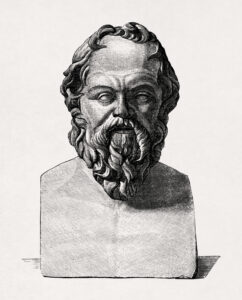
    Illustration of a bust of the Greek philosopher Socrates after Visconti. credit: Gwengoat

    Both Plato and Aristotle seem to have followed the lead of Socrates. Socrates denied that citizens had the basic virtue necessary to nurture a good society. He equated virtue with knowledge unattainable by ordinary people. During Athens’ struggle with undemocratic Sparta, Socrates favored Sparta (Linder, Doug, The Trial of Socrates).

    Plato

    Patriarchy
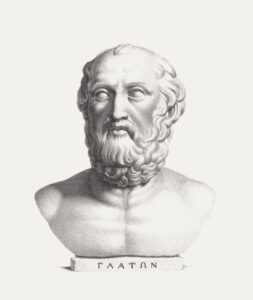
    Plato (Greek philosopher, 428/427 BC – 348/347 BC). Lithograph after an antique bust by Joseph Brodtmann (German-swiss engraver and publisher, 1787-1862), published c. 1830. Credit: ZU_09

    Plato never mentioned Socrates’ sedition against Athens. However, the cosmology of the Timaeus includes the idea that a man who lives well will live a happy and congenial life on his consort star. Failing this a man’s second birth will be as a woman. (41E-42D, on the Creation of Souls).

    The Athenians and the Egyptians Compared

    Other ancient societies contemporary with Aristotle, as well as many Athenians, did not share these views of women, family organization, or political and economic structure.[mfn]del Giorgio, J.F. The Oldest Europeans. Guadeamus, Caracas, Venezuela, 2003[/mfn] Egypt left no philosophical record. Herodotus, on the other hand, left a record of his shock at the contrast between the roles of Egyptian women and the women of Athens. He observed that Egyptian women attended market and were employed in trade. In ancient Egypt a middle-class woman might sit on a local tribunal, engage in real estate transactions, and inherit or bequeath property. Women also secured loans, and witnessed legal documents.

    This changed, however. Greek influence spread with the conquests of Alexander the Great, who was educated by Aristotle.[mfn]Bristow, John Temple. “What Paul Really said about Women: an Apostle’s liberating views on equality in marriage, leadership, and love”, Harper Collins, New York, 1991[/mfn] Eventually, when Alexander wanted to unite his two empires in equality, Aristotle was adamant that all non-Greeks should be enslaved.

    Aristotle and the Jews

    About 200 BC the Jewish Philosopher Aristobulus of Panaeas claimed that Jewish revelation and Aristotelian philosophy were identical. Within 200 years, it was assumed that Aristotle derived his doctrine directly from Judaism. In the 12th century the Talmudist philosopher and astronomer, Maimonides harmonized Aristotlianism with Judaism. Subsequent rabbinical thought includes such pronouncements as “Eve was not created simultaneously with Adam because God foreknew that later she would be a source of complaint (Gen. R. xvii). “Nine curses together with death befell Eve in consequence of her disobedience” (Pirke R. E. Xiv.; Ab. R.N. ii. 42). While Maimonides dared to contradict Aristotle’s ideas in matters of faith, it wasn’t long before the Islamic Philosopher Averroes, endorsed them without reserve. Aristotle in Jewish Legend

    Adam and Eve: Patriarchy in Christianity

    For the last 1800 years Christian leaders have placed great emphasis on the creation of Eve, believing that the story was historical fact, rather than androcentric myth. This has been used as evidence of insurmountable character defects, not just for Eve but for all women. In the 2nd century Tertullian, the son of a centurion and a pagan until middle life, told women believers, “Do you not know that you are Eve?…Because of the death which you brought upon us, even the Son of God had to die” (De cultu feminarum, libri duo I, 1).

    In the 4th Century, the basic attitude was one of puzzlement over the fact of woman’s existence. Augustine of Hippo said he could not see how a woman could be any help for a man if the work of childbearing is excluded. However, it was only with Thomas Aquinas in the 13th century that Aristotle’s teachings emerged in the official teachings of Roman Catholicism. In the Summa Theologica, Aristotle asserted that women are misbegotten males (I 92 I ad 1). The influence of combining Aristotle’s theory with Biblical interpretations can’t be overestimated.

    Christine de Pizan on the Christian Canon

    In about 1404 Christine de Pizan wrote “Le livre de la cite des dames”. This was a systematic feminist treatise arguing against the misogyny in classical works and the Christian Canon. After the advent of printing, the discourse became known as “the Querelle des femmes” and continued for the next 400 years.

    Sir Robert Filmer and the Divine Right of Kings

    From the time of Martin Luther, Protestantism regularly used the commandment in Exodus 20:12 to justify the duties owed to all superiors. ‘Honor thy father,’ became a euphemism for the duty to obey the king. But Aristotle’s appeal took on political meaning primarily as a secular doctrine. Although many 16th and 17th century theorists agreed with Aristotle’s views concerning the place of women in society, none of them tried to prove political obligation on the basis of the patriarchal family until sometime after 1680. Sir Robert Filmer is primarily responsible for the patriarchal political theory. Sometime before 1653, Filmer completed a work entitled Patriarcha. In it he defended the divine right of kings as having title inherited from Adam, the first man of the human race. He based this theory on the Judeo-Christian tradition.

    John Locke on Filmer

    In 1688 John Locke called Filmer’s all-powerful prince “…this strange kind of domineering phantom called the ‘fatherhood’ which, whoever could catch, presently got empire and unlimited, absolute power.” Locke asserted that if ‘honor thy father’, places everyone in subjection to political authority, then it couldn’t mean the duty owed to natural fathers, since they are subjects. By Filmer’s doctrine fathers have no power since power belongs solely to the prince. Locke also observed that those who propose political rights based on this commandment invariably omit the word ‘mother’ which is present in the Biblical verse. (His editor, however, made a note of Locke’s inconsistency in attributing natural law to the governance of relations between a father and his children, while stating that the law governing relations between a man and his wife is based on legality, or on Eve’s punishment after the Fall. Two Treatises of Government).

    Aristotle’s view was not weakened by this argument. It had been elevated to an anthropological doctrine.

    Nineteenth Century Feminism

    In the 19th Century, Sarah Grimké dared to question the divine origin of the scriptures. Later, Elizabeth Caddy Stanton used Grimke’s criticism of Biblical sources to establish a basis for feminist thought. She published The Woman’s Bible, which proposed a feminist reading of the Old and New Testament. Subsequently, feminist theory denounced the patriarchal Judeo-Christian tradition. [mfn]Castro, Ginette. American Feminism: a contemporary history. New York University Press. 1990[/mfn]

    Patriarchy
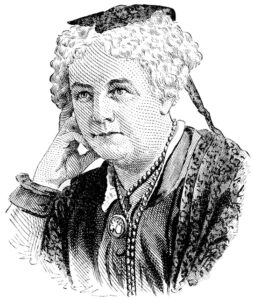
    “Elizabeth Cady Stanton (November 12, 1815 – October 26, 1902) was an American social activist, abolitionist, and leading figure of the early woman’s movement. Illustration was published in 1882″Credit: denisk0

    Theosophy, Evolution and Racism: Patriarchy at its Worst

    In Europe, from about 1770, the rationalist Enlightenment and the desire for mystery had brought about a resurgence of a synthesis of Gnosticism, neoplatonism and kabbalistic theosophy. This particular version arose first in the utilitarian and industrial countries of America and England with the theosophy of Madame Helena Blavatsky. This had a profound impact in Germany where it fit into the lebenzreform movement. Blavatsky probably influenced Adolf Hitler through the writings of Guido von List and Lanz von Liebenfels.

    Guido von List

    List sought a chauvinistic mystique for the defense of Germandom against the liberal, socialist and Jewish political forces in the late Wilhelmine Era. His blueprint involved ruthless subjection of non-Aryans in a hierarchical state; qualification of candidates for education or positions in public service, as well as in professions and commerce, based on racial purity. All non-Aryans were to be slaves. His political principles included racial and marital laws, and a patriarchal society where only male heads had full majority and where only Ario-Germans had freedom and citizenship. Each family was to have a genealogical record, proving Aryan lineage. he proposed a new feudalism where only the first-born inherits. These ideas were published as early as 1911. They were similar to the Nuremberg Laws of 1935.

    Lanz von Liebenfels

    Darwinist writers, who wrote of blond, blue-eyed Aryans, were influential in the writings of von Liebenfels. Von Liebenfels had illiberal, pan-German and monarchical sentiments. He believed the lower classes were inferior races. It followed that they must be exterminated along with the weak. Socialism, democracy and feminism were his most important targets. Women were a special problem in his view because they were more prone to bestial lust. He advocated brood mothers in eugenic convents, sterilization and other practices that later influenced the Third Reich, apparent in Himmler’s anticipation of polygamy for his Schutzstaffel (SS), care of unmarried mothers in SS homes, and musings on the education and marriage of chosen women.[mfn]Nicholas Goodrick-Clarke, The Occult Roots of Nazism: Secret Aryan cults and their influence on Nazi ideology: the Ariosophists of Austria and Germany, 1890-1935, New York University Press. 1992[/mfn]

    Romantics and Marxists

    By 1673, Francois Poullain de la Barre, “On the Equality of the Two Sexes”, had turned feminism into a systematic Enlightenment philosophy (as opposed to the previous Renaissance feminism). However, in 1861, Johann Jakob Bachofen, a German romantic and writer of the counter-Enlightenment said that matriarchy preceded patriarchy, and is superior to patriarchy on moral grounds. Bachofen influenced Karl Marx and Frederick Engles. Marxist analysis has been a basis for subsequent feminist thought.[mfn]Stjepan Gabriel Meštrović, Durkheim and postmodern culture. A. de Gruyter, New York. 1992[/mfn]  From the beginning, socialist feminists in France, for example, were challenged by the republic, which “oppressed them as workers and women; by Marxism, which ignores gender; and by the misogyny of their socialist brothers. This struggle continues within all parties of the left (History of Feminism).