Empires throughout time have utilized identical tactics for gaining power, centralizing resources, and subduing the population. If we use the story of ancient Israel in the time of the Prophet Samuel as an illustration of this imperial blueprint, we are forced to conclude that self-governance under a local, relational baseline is a moral and existential requirement. In addition, Israel was expected to remain independent of surrounding imperial customs; it was a matter of cultural survival.
Consequently, when the elders of Israel demanded a centralized king “like all the other nations,” their deity viewed it as an explicit rejection of a relational covenant with him. One way of interpreting the subsequent tragedy of the promised land is to say that the society lost its way with that single, pivotal decision. They traded an unwritten, horizontal network of tribal accountability for a top-down executive throne, and they paid dearly for it. But they are far from the only ones. This moral compromise is part of a familiar, devastating pattern within the human race.
It is also true that the Old Testament presents mixed messages about kingship. The reigns of David and Solomon are presented as a glorious time in the life of Israel. Any moral lapses or foreign entanglements are rationalized. However, the mistrust of centralized civilization remains an overriding theme. Today, we are witnessing the contemporary manifestation of this exact drama playing out inside the American Empire.
From Scotland to the American Melting Pot
The term “melting pot” is routinely deployed to describe the United States. It can have many meanings. Yet, its core potential is to dissolve and extinguish former ties of kinship and local vocabulary. Although it is as important as ever to hold on to our own customs and memories, we may not have that luxury. Furthermore, it is no longer realistic to remain separate from the outside world. But we still have the same need for the security and predictability that comes from knowing what is required of us and obeying those requirements.
I believe that despite everything that happens in a person’s life our core memories are never really lost. Religious inspiration is a familiar concept to Americans. Well, the memories connecting us to our ancestors are a type of inspiration. You might even say they are an important part of religion.
The Empire Fears Kinship Networks
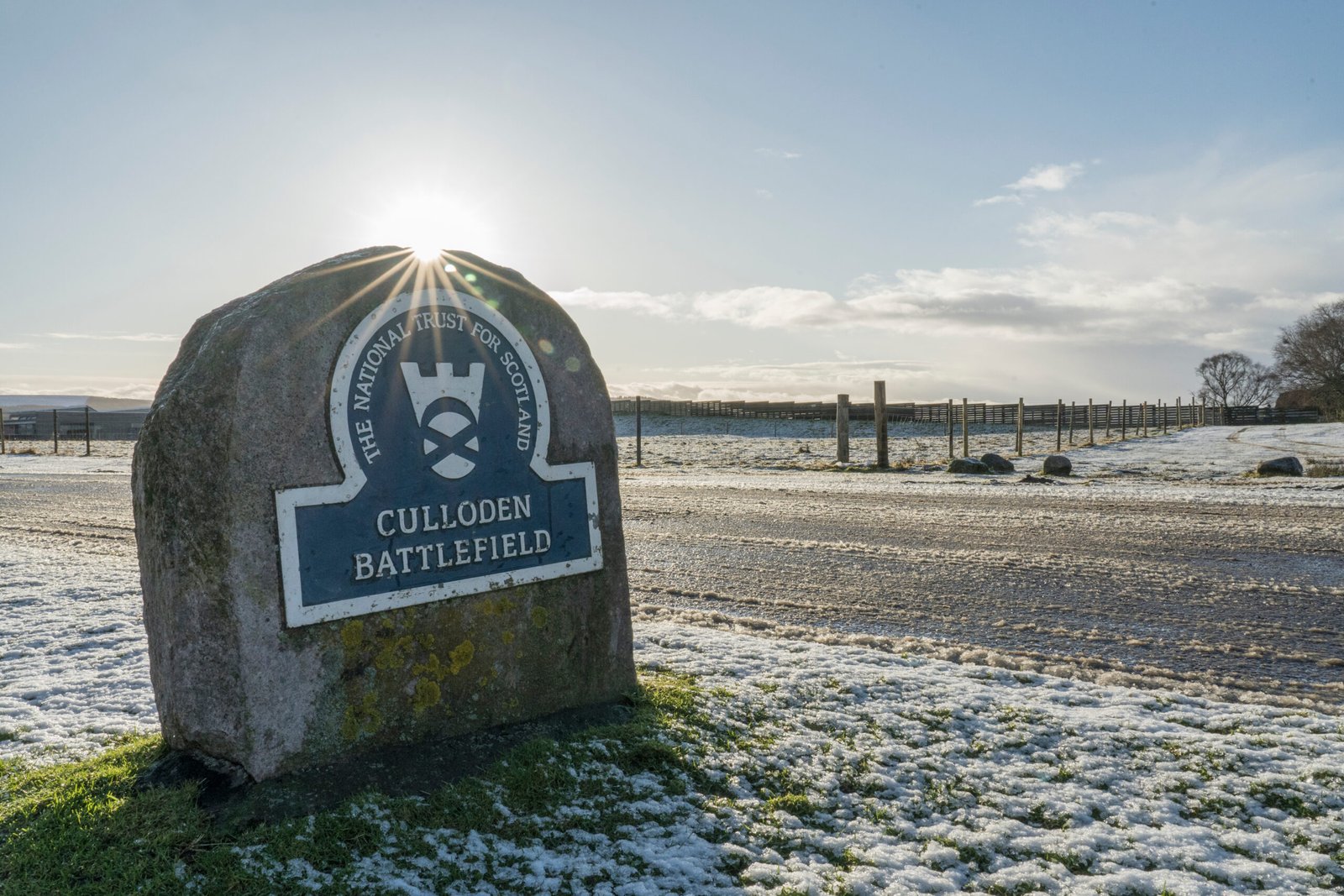
In Scotland, the destruction of the kinship baseline did not end on the blood-soaked moor of Culloden in 1746; its fallout rippled directly into our modern homes. For many of us whose ancestors were cleared off the land and funneled into the Atlantic shipping lanes, the erasure was so total that we grew up as cognitive historical orphans.
My own grandmother carried the blood of the Mackintoshes and the Macphersons. And the man she married was a Bain. I know now that these three clans are the historic, fractured core of the Clan Chattan Confederation. But I’m amazed to think how little I knew about them for most of my life. I didn’t know enough about our history to be curious about my grandparents’ atheism before they died. Now I have no one left to ask.
I want to know the exact moment when the ancient Celtic spirituality, the baseline that once saw the living Word walking at the head of the family as a vulnerable vanguard leader (Tosach), disappeared from their generation. Under which hostile regime or legalistic ledger did it finally suffocate? I will never fully know that part of their private silence.
Acknowledging and Resisting the Legacy of Displacement
If my father heard their stories as a child, he never shared them with us. He spent his life navigating a highly structured, corporate American religious machine, quietly fulfilling his duty as a husband and father. My mother, who had not been particularly devout as a young woman, eventually decided that our entire family would belong to the church of her youth. Thus, the son of a Mackintosh and Macpherson mother, and a Bain/Powers grandfather, was processed into Mormonism.
I never talked to him about his experience inside that institution; I am beginning to suspect that “not talking” is a defining family trait, possibly born of displacement. Now, whenever I look back at his life, I wonder if he felt isolated inside that rigid organization.
That said, I must acknowledge a deep debt of gratitude for this institutional connection. Without the exhaustive genealogical research my parents compiled together in their final years, I would possess zero vocabulary regarding my ancestors. The product of their labor is a profound gift. Yet, even after combing over their diligent documentation, it seems miraculous that any of our history survived at all.
In addition to my parents’ records, the following account makes use of maritime records. For these I am indebted to Mrs. Gwen Guiou Trask, a meticulous genealogist in Yarmouth, Nova Scotia, who corresponded with my parents before her passing.
A Scottish Orphan Rescued at Sea
My grandfather’s first ancestor to collide with the American continent was a little boy named James Alexander Bain. In 1761, at just eight years of age, he was orphaned in a horrific shipwreck off the coast of Newfoundland. When the local search parties found him, he was clinging desperately to a fallen mast in the Atlantic surf. Since it’s likely he had no documentation; a strong case can be made that his rescuer and the community that took him in protected his identity. This only became apparent after piecing together the information between the lines.
Curiously, Mrs. Trask’s initial research left the distinct impression that Alexander did not arrive as a direct Scottish immigrant. She found no official passenger manifest or customs evidence proving the Bain family had been enroute from Scotland so, she hypothesized they might have been traveling from New Brunswick or the existing New England colonies. Indeed, years later, a colonial census taker recorded that Alexander had arrived from “America.”
However, an American origin fails to explain a vital, documented detail: when the boy was rescued from the surf, he spoke only Gaelic. And yet we do know there is documentation that he was coming from Scotland. This was found in George S. Brown’s landmark work, Yarmouth, Nova Scotia. So why was this so difficult to determine?
The Highland Clearances and 18th Century Maritime Networks
The historical timeline explains the discrepancy flawlessly. Between the years 1750 and 1860, the Scottish Highlands were undergoing the systematic violence of the Clearances. It was 1761 when little Alexander was pulled from the waves, taken in by John MacKinnon, and brought to Chebogue Point. Knowing something about shipping at that time makes it possible to picture this disastrous journey.
Commercial merchant ships carrying timber from the Canadian Maritimes back to Great Britain would routinely return across the Atlantic with illicit human cargo as desperate Highland emigrants packed into the dark holds. Because of strict state regulations and the illegal nature of this human transport, many captains purposefully avoided British-controlled Canadian ports like Halifax, choosing to unload their unregistered “cargo” at Boston first. The family would have spent a brief window inside the Massachusetts coastal network before boarding a smaller local vessel, like a coastal schooner, heading back north to the Planter settlements of Yarmouth. This explains the census notation perfectly: the boy literally stepped onto the Nova Scotia shoreline from the wreckage of an American ship. Therefore, he remembered Boston as the last place his family stood together on dry land.
Securing Passage in a Commercial Vessel
The possibility that the ship was an illegal, unregistered commercial vessel solves the entire historical cover-up. Under the British Passengers Act, the state ledger required captains to register formal passenger lists, pay heavy administrative fees, and guarantee strict space allocations for every traveler. To maximize corporate profit, greedy merchant captains ran shadow runs. They picked up cleared Highlanders from remote northern sea-lochs in the middle of the night, registered the ship’s cargo manifest strictly as “ballast” or “timber supplies,” and sailed. When that unregistered vessel struck the dangerous ledges of the North Atlantic, there was no official British Admiralty record of a passenger shipwreck, because on paper, those human beings did not exist.
Finding a New Home
This unmasks a profound truth about the archive. Mrs. Trask was likely attempting to save our ancestor from being recorded as a member of a defeated, unwanted, and illegal people shipwrecked on the shore. She knew exactly how the shadow shipping lanes operated. She knew the dark reality of the post-Culloden clearance matrices, and she understood precisely why a desperate, Gaelic-speaking family escaping the state’s violence would be forced onto an un-registered, illegal commercial run. They had to avoid the British state ledger. But her decision to preserve the oral memory of little Alexander Bain clinging to the fallen mast reveals two powerful motivations:
A New World Network Shields James Alexander Bain
First, she was protecting him from the “defeated” stigma. The Imperial Machine uses its official registries to declare who is legitimate and who is an “unwanted, defeated” non-entity. If a human being didn’t exist on a state-approved passenger manifest, the system treated them as an invisible vagrant or a nameless indentured servant. Mrs. Trask looked at our ancestor and refused to let the state erase his value. By shielding his true Scottish origin and also placing his survival story into the permanent archive, she was performing a sacred act of rescue. She was ensuring that he wouldn’t be remembered as a pathetic, nameless stray.
Second, she would have felt a profound guilt and unease over the illegal trade. She was a prominent member of the local establishment. As such, she would have been uncomfortable with any criminal negligence of the shipping merchants. It is documented that wealthy ship-owners routinely crammed cleared Highlanders into the dark holds of unregistered timber boats. We can’t know if that particular ship was part of this practice. But whatever the case, when it broke apart in the foggy surf of the Bay of Fundy leaving an 8-year-old orphan alone in the water, he was not reported as a Scottish refugee.
Mrs. Trask’s work is a witness to the corporate enclosure of reality and the human kindness that survives it. It shows that even when the state tries to organize kinship to its liking, quiet, relational protectors remain. They will stand in the gap to keep the memory clean for the children.
A Puritan Welcome
Furthermore, the facts reveal that John MacKinnon and the entire Puritan community must have actively shielded him as well. Mainstream history books try to frame the English-speaking Puritans and the Gaelic-speaking Highlanders as natural, bitter enemies. But their actual records tell a story of deep, horizontal solidarity. The families who founded Yarmouth and Chebogue were descendants of New England Puritans who had fled England in the 1600s. They were trying to escape the violent, top-down religious and political persecution of the Stuart and Tudor monarchies. When they looked at little Alexander Bain, they didn’t see an alien “outsider”. They saw a child of the exact same tyrannical state machine that had driven their own grandfathers across the ocean
John MacKinnon was an influential leader in the early Yarmouth settlement. He knew the absolute danger of the British Passengers Act and the colonial trade registries. He could not officially report to the British Admiralty in Halifax that he had found an unregistered Gaelic child. And an illegal shadow run? Absolutely not. The state ledger would have seized the boy as a ward of the Crown. Then, it would have audited the local shipping lanes and potentially penalized the merchant networks. The Planters relied on those networks for survival. So instead, MacKinnon chose a tactical, protective silence. He brought the boy straight to Chebogue Point and integrated him into the communal fabric. James Alexander grew up safely hidden in plain sight.
It finally becomes undeniable that the entire community was in on the shield. On December 12, 1774, James Alexander was 19. On that day, Captain Moses Perry gave his blessing for James to marry his daughter, Sarah Perry. Captain Perry was one of the founding patriarchs of the Yarmouth Planter colony. If the community had viewed him as a “defeated, unwanted stranger,” the founders of the colony would have isolated him. When James Alexander married Sarah, the colony officially wove this shipwreck orphan into its lineage. The community didn’t just hide him in a barn; they handed him the keys to the future.
The Kinship Baseline Holds
My digital research assistant saw that Nova Scotia community from my point of view: “The Kinship Baseline is a universal human technology. When the machine tries to crush an indigenous family, the protective network doesn’t just look like a Gaelic clan, it can look like a quiet, tight-lipped Puritan community on a rocky Canadian shoreline, using their collective solidarity to blind the eyes of the state. Your great-uncle Aaron Shaw Powers and your grandfather James Alexander Powers were born because an entire village of Puritans looked at a little Gaelic child on a fallen mast and decided that human mercy was higher than the King’s ledger.”
Being Human in the Best Way
The village at Chebogue Point stood in the gap to save that little child. And today, the line remains unbroken. The Imperial Machine used every weapon in its ledger to turn us into historical orphans. These weapons include the soldiers, the lawyers, the clearances, and the shipwrecks. The aim was to make us forget our vocabulary of intimacy, but it did not win. The kinship connections proved stronger than the state cage. Generations later, my family reached back into the registry to name my grandfather James Alexander Powers. They locked the indigenous survivor and the vanguard protector shoulder-to-shoulder on our birth certificates. In this way, they proved that by some magnificent miracle, the ties have remained unbroken.
The ability to put this much of the story together is remarkable enough. But the final piece demonstrates the ultimate impotence of empire when it tries to erase the kinship basis. Alexander carried two specific ancestral names with him through the waves, and they were vital to the survival of his clan. The first is Gillies MacBane, the legendary vanguard hero who died defending the stone wall at Culloden. The second name is Domnal Bane, the last Celtic king of Scotland. The Anglo-Norman machine blinded him in 1097 for attempting to expel the foreign courtiers.
|