The American Disconnect
The morning after a devastating political defeat, the silence can feel heavier than the loudest campaign noise. You watch the maps change, feeling a suffocating mixture of disappointment and deep, exhausting discouragement. It feels as though a massive, impersonal machine has rolled over everything you value. You did the work, you held the line—and the system failed you anyway.
If you are standing in that quiet, anxious modern wilderness today, I want to take you out of our current media echo chamber and place you onto a marshy moor in Scotland on April 16, 1746.
Because centuries ago, a community was driven into that exact same wilderness. They were called Clan Chattan.
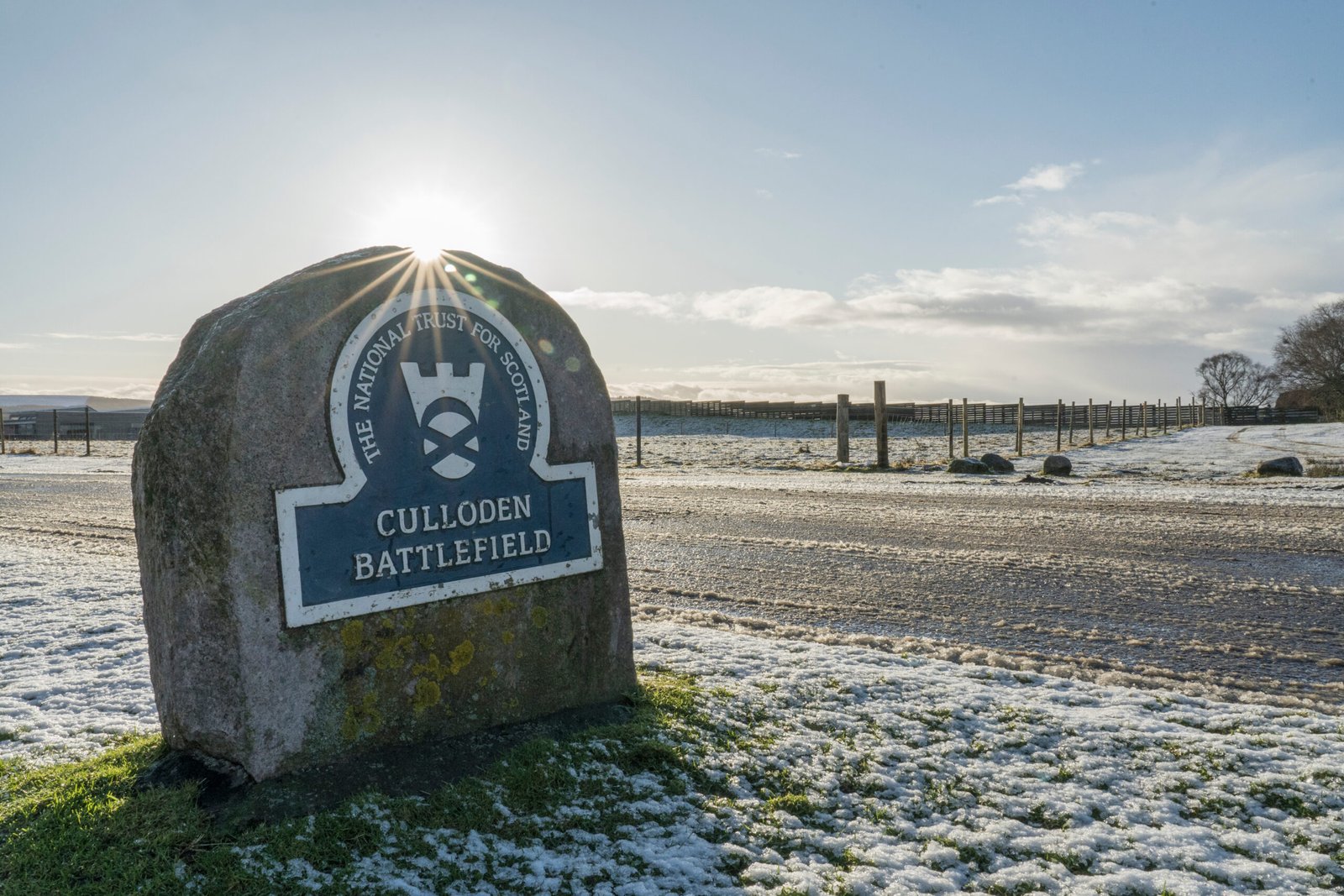
Culloden

Clan Chattan stood at the dead center of the Jacobite front line at the Battle of Culloden. Surrounding them was an era in violent, terrifying transition. The old world they knew—built on localized kinship, sacred oaths of personal loyalty, and historical legitimacy—was being systematically whittled away. First, their ancient kingship had been feudalized; then, great monarchs handed land titles to Norman warlords who turned clansmen into rent-paying tenants.
By 1746, the financial systems of the early Enlightenment had completely rigged the game. Bankrolled by central banking power, global trade networks, and industrial logistics, the British fiscal-military state faced the clans. From a structural and economic standpoint, the old way of life, or rather the Stuart vision for the future of Scotland, never stood a chance. The wilderness of a new global epoch had enveloped them.
The Specter of Betrayal
Worse than the external military threat was the internal rot of the desert. Many neighboring clan chiefs had already succumbed to the ultimate wilderness temptation—the Machiavellian compromise. They collaborated with the new regime, took government commissions, or stayed home to secure their private wealth while their culture burned. They chose comfort and survival over fidelity.
But Clan Chattan was different. In a wilderness defined by betrayal, they chose absolute, unyielding faithfulness to one another.
The chief of the Mackintoshes (the leaders of the Chattan confederation) held a government commission and refused to let his clan participate in the rising of 1745. Yet, in an astonishing act of defiance, his wife, Lady Anne Farquharson-MacKintosh, raised the men of the clan for the cause anyway. She refused to let a compromised leader dictate her clan’s honor.
The Highlanders were obligated to fight by their oath to their clan leader, to Prince Charles Edward Stuart, their rightful king, and to their clan. Of course, there were conflicts of interest between the clans and the Stuarts. The clans were fighting for their lands and for the legal succession of Charles Edward Stuart, while the Stuarts were fighting for a divine king. However, they all fought a common enemy. The enemy was the British global financial system.
The Highland Charge
Immediately after the order to charge the clans were paralyzed under devastating government artillery fire. It was the men of Clan Chattan, standing at the center, who broke forward first into the grapeshot. They could bear the passivity no longer. They charged the lines with staggering physical courage, fighting not because the mathematical odds favored them, but because they refused to betray their identity and each other. And they were systematically mowed down by the more sophisticated weaponry of the British army.

The Ultimate Meaning of Culloden
From an analytical, geopolitical standpoint, Culloden was a total defeat. The old clan system was broken. But from a metaphysical standpoint, Clan Chattan achieved an absolute victory over the wilderness. They survived the spiritual test of the desert by refusing to let outer chaos dictate their inner honor.
But this is true of Clan Chattan’s entire history. Since the time of warlords and feudal kings they fought to defend their own lands. They were not trying to increase their own wealth. Fighting for their land was a matter of survival. At Culloden they fought to honor their obligations to their clan and their king.
In a time of conflicting motives, Clan Chattan was blameless. Today, history does not honor the compromised chiefs who stayed home to count their silver. We honor the blameless center line.
Rethinking One’s Orientation in a Globalized World
When the macro-systems of your world disappoint you, your duty changes. It shifts away from trying to fix a massive, rigged global machine, and moves toward horizontal fidelity—protecting, loving, and standing uncompromised alongside your people.
If the wilderness is here, stop looking to the mountaintops for a political savior or a miraculous rescue. Look to your left and to your right. Double down on your localized values. Fast from the constant consumption of anxiety, audit your life with radical realism, and build deep, unshakeable commitments to your immediate community.
When the systems fail, hold the center line. Protect your own clan.
Long live the clan!
For the Historical Analysis see: The socio-economic evolution of the Scottish clan system from kin-based societies to feudal tenure, and its ultimate clash with the British fiscal-military state, is documented in The Highland Clans by Alistair Moffat and Culloden: Scotland’s Last Battle and the Forging of the British Empire by Trevor Royle.
For Clan Chattan Specifics: The role of Lady Anne Farquharson-MacKintosh (“Colonel Anne”) and Clan Chattan’s position at the center of the Jacobite line is detailed in the historical archives of the National Trust for Scotland and the Battle of Culloden Visitor Centre records.
Shortcode:-
PHP Code:- <?php echo do_shortcode( ‘ ’ ); ?>
Leave a Reply